LED bridge lighting has become a popular choice for cities and towns looking to make their bridges both functional and visually striking. LED technology offers bright illumination, long lifespan, and energy efficiency — U.S. Department of Energy data shows LED roadway fixtures deliver 50 to 75 percent energy savings over high-pressure sodium and metal halide at comparable lumen output. These benefits make it a natural fit for structures that see a lot of traffic and need lighting that’s both reliable and attractive.
But before you install
LED bridge lighting, there are several things to consider. Jumping straight to buying fixtures or picking colors without a clear plan can lead to safety risks, poor energy performance, and wasted money. Thoughtful planning is key — specifying a bridge lighting package means navigating a tighter set of constraints than standard area lighting: ANSI C136.31 vibration ratings, ASTM B117 salt-spray corrosion resistance, IES RP-8 roadway uniformity, and often a historical-design overlay that dictates fixture aesthetics.
A city’s bridge lights can shape its skyline, guide traffic safely, and even turn into a local landmark. Getting this right takes some homework. Start by asking yourself: What is the lighting meant to do?
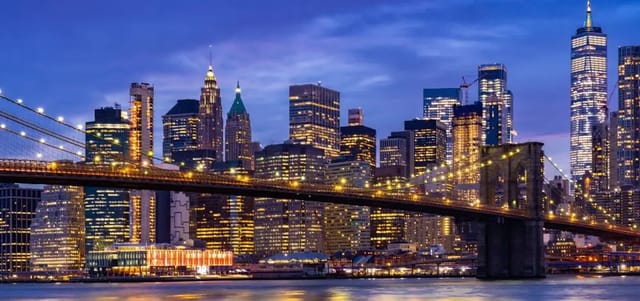
LED bridge lighting has become a popular choice for cities and towns looking to make their bridges both functional and visually striking.
Define the Purpose of the Bridge Lighting
Before you start shopping for bridge light fixtures, think about what you want the lighting to accomplish. Bridges aren’t just pieces of infrastructure — they’re often landmarks, gathering places, and key routes for traffic. LED bridge lighting can meet many goals, but it’s important to define those goals before you invest.
Lighting can improve safety, draw attention to architectural features, support navigation, or simply create an inviting atmosphere. Here’s a closer look at each purpose:
Safety and Visibility
For bridges that handle vehicle or pedestrian traffic, lighting is a basic necessity. Properly lit walkways and roadways help reduce accidents and make people feel more secure after dark. IES RP-8 (the IES Recommended Practice for Design and Maintenance of Roadway Lighting) calls for average maintained illuminance of roughly 4 to 12 lux on local and collector roads and 12 to 24 lux at major intersections, with a uniformity ratio (Emax/Emin) of 3:1 or better — targets that LED optics hit easily with fewer fixtures than legacy HID. LED bridge lighting is a smart choice for safety because it delivers bright, consistent light and can be aimed exactly where it’s needed. You can reduce glare for drivers, highlight pathways for pedestrians, and make sure everyone crosses safely.
Architectural Highlighting
Many bridges have unique shapes, materials, or historical features that deserve attention. With the right lighting, you can turn these structural details into visual focal points that stand out at night. Focused beams from LED spotlights — typically 10 to 30 degree narrow optics — can bring out the textures and lines of trusses, piers, or decorative arches. This transforms an ordinary bridge into an eye-catching piece of the urban or natural landscape and aligns with IES DG-23 landscape lighting design guidance for emphasizing form while controlling upward spill.
Navigation Aid
Bridges that cross waterways need lighting that goes beyond road safety. Boats and maritime traffic rely on clear sightlines and visual markers to pass safely underneath. LEDs can be programmed to different brightness levels, and color-coded lights (typically red and green per U.S. Coast Guard Navigation Rules) can help mark safe passages or clearance heights. This makes bridge lighting an important part of the waterway’s safety system.
Event or Decorative Use
Some bridges serve as backdrops for city events, holidays, or celebrations. Programmable LED systems are great for this. They let you create color displays, patterns, and dynamic effects that match the spirit of the event — controlled via DMX512, DALI, or Bluetooth Mesh protocols that synchronize hundreds of fixtures across a span. With a little programming, you can turn a static bridge into a lively and engaging canvas that brings the community together.
Each of these goals has its own set of needs. Safety lighting should be bright and reliable, while decorative lighting needs flexibility and color control. If your bridge sees a lot of foot or vehicle traffic, safety should come first. If it’s more of a landmark or pedestrian hub, design and decorative features can play a bigger role.
Take the time to define your priorities upfront. This helps you choose the right mix of fixtures and layout for your bridge lighting, saving you time and money down the line.
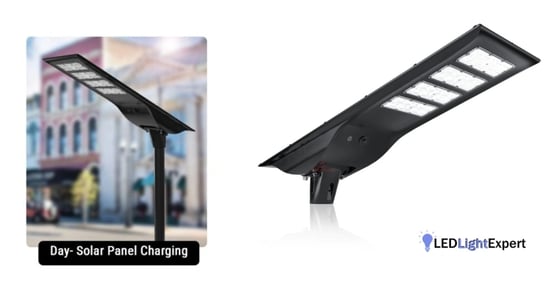
Solar-powered LED lighting significantly reduces installation complexity by eliminating extensive wiring.
Environmental and Structural Conditions
LED bridge lighting has to stand up to tough conditions. Bridges are exposed to the elements every day, and lighting fixtures need to keep working regardless of the weather. That’s why durability and protection are just as important as brightness.
Weather Resistance
Bridges face all sorts of weather: rain, snow, strong winds, and direct sun. LED fixtures should have a high IP (Ingress Protection) rating per IEC 60529 to prevent water and dust from getting inside. At least IP65 (dust-tight, low-pressure water jets from any direction) helps ensure the lights work well no matter the season. For fixtures exposed to driving rain, river-spray, or direct wash-down cleaning, step up to IP66; for underwater or direct-splash architectural features, IP67 (30-minute immersion) or IP68 (continuous immersion) is the right call.
Corrosion Protection
If your bridge is near the coast or exposed to heavy rain, corrosion can be a real problem. Salt in the air and standing water can damage metal parts quickly. Fixtures with corrosion-resistant materials, like powder-coated aluminum or 316 stainless steel, are a good choice. Specify housings that have passed an ASTM B117 salt-spray test at 500 to 1,000 hours minimum — marine-grade hardware for coastal bridges typically runs 2,000 to 5,000 hours. Isolated stainless or galvanized fasteners prevent galvanic corrosion where dissimilar metals meet.
Vibration Resistance
Bridges vibrate. Heavy traffic and constant wind can shake fixtures loose if they aren’t built to handle it. LED bridge lights should be tested for vibration resistance to ANSI C136.31 — the roadway lighting standard writes two levels: 1.5G for normal roadway poles and 3.0G for bridges, overpasses, and high-vibration sign structures. Specifying 3G fixtures means the manufacturer has potted the driver, reinforced LED PCB mounts, and gasketed the optic so solder joints and fasteners survive decades of dynamic loading.
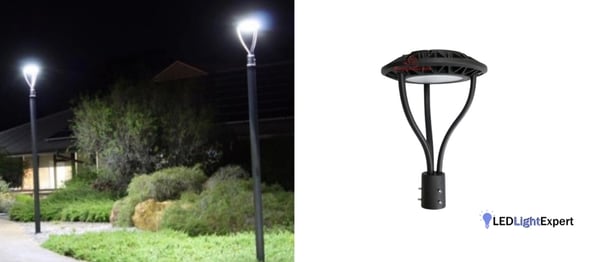
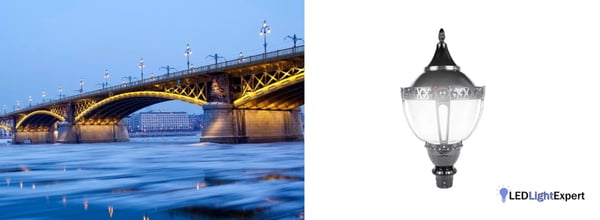
LED Post Top Lights for Bridge Lighting and Pathways — LED Light Expert
Light Placement and Beam Angles
Where you put the lights and how they’re aimed makes a big difference in how the bridge looks and how safe it is to use. Poorly placed lights can cause glare, confuse drivers, or hide important features of the bridge.
Avoiding Glare
LED lights are bright, and if you aim them the wrong way, they can blind drivers or pedestrians. Make sure the fixtures have shields, house-side cutoffs, or lens options to control where the light goes. Aim the beams to light up the road or walkway without creating bright spots that distract or confuse people. Specify flicker-free drivers meeting IEEE 1789 low-risk recommendations so that camera-based traffic and security systems capture clean footage.
Focused Lighting vs. Wide Coverage
Think about whether you want narrow beams to highlight specific parts of the bridge or wider beams to cover large areas. Narrow beams (
spotlights with 10 to 30 degree optics) work well for decorative touches or structural highlights, while wide beams (floodlights with Type II, III, or IV roadway distributions from 60 to 120 degrees) are good for general safety and even coverage per IES RP-8.
Highlighting Key Elements
Many bridges have interesting shapes or important architectural elements — cables, arches, and towers. Aim LED lights at these features to show them off. A well-placed spotlight can turn a simple cable into a dramatic focal point. For tunable-white accents, 2700K to 3000K warm light flatters stone, brick, and painted steel, while 4000K to 5000K neutral-to-cool white brings out exposed steel, concrete, and contemporary finishes.
By planning for the conditions and choosing the right beam angles, you’ll have bridge lighting that works in any weather and shows off your bridge at its best.
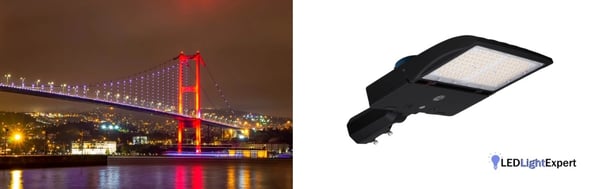
Many bridges have interesting shapes or important architectural elements — cables, arches, and towers.
Electrical Infrastructure and Power Access
Before you can install LED bridge lighting, you need to make sure there’s a reliable power source and that your wiring plan is up to the task. Even the best lighting system won’t work if it’s not powered and safely connected.
Availability of Power Sources
Determining your power source is one of the first decisions in the lighting installation process. There are two primary options:
- Hardwired Power: Ideal for larger bridge installations that require consistent, dependable power. Hardwiring provides a steady electrical supply and is perfect for permanent lighting installations, especially for long-term safety lighting, decorative displays, or high-powered spotlights. Specify 120-277V or 347-480V universal-voltage drivers so the fixture can accept whatever service voltage the bridge’s feeder delivers.
- Solar-Powered Options: Useful in remote areas or where electrical access is limited. Solar-powered LED lighting significantly reduces installation complexity by eliminating extensive wiring. These fixtures typically include integrated LiFePO4 batteries (2,000 to 4,000 charge cycles, roughly 6 to 10 years of service) that store energy, ensuring illumination even in low sunlight conditions. Additionally, solar-powered systems are environmentally friendly and contribute to lower operating costs.
Wiring and Cabling Considerations
Bridge lighting typically involves long-distance wiring and careful cable management. Safe, organized wiring ensures continuous power delivery without disruptions or hazards. Consider the following practices:
- Use weatherproof rigid metal conduit or cable trays specifically designed for outdoor use and rated for the bridge’s expansion and contraction.
- Ensure wiring is robust enough to withstand physical stress from traffic vibration, weather exposure, and potential wildlife interference. Size conductors for voltage drop under 3 percent across long spans.
- Incorporate adequate surge protection — SPDs rated for 20kA or 40kA per ANSI C136.2 — to safeguard fixtures against voltage spikes or electrical storms. Bridges are tall, exposed structures and take a disproportionate number of lightning hits.
Energy Efficiency and Load Capacity
LED lights are notably energy-efficient, but it’s still important to ensure the electrical system can comfortably handle the load. Evaluate your bridge’s existing electrical infrastructure and upgrade if necessary to accommodate the anticipated load safely. Proper load calculation and circuit balancing per NEC Article 220 prevent overload issues, reduce energy consumption, and lower your ongoing operational costs.
As part of an integrated safety strategy, include reliable emergency exit signs with 90-minute battery backup per UL 924 within your lighting design. This ensures visibility during power outages or emergencies, providing essential guidance when primary lighting systems fail.
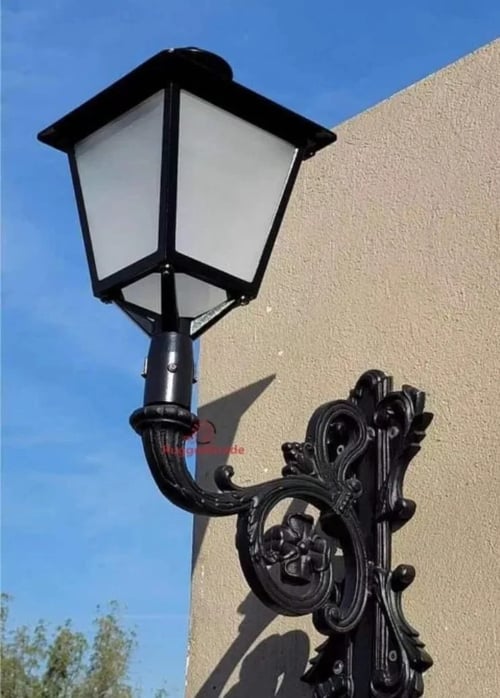
120 Watt — Morati Series — LED Post Top Lights — Color Selectable
Fixture Types and Mounting Options
Selecting appropriate fixtures and mounting solutions directly impacts your bridge lighting’s effectiveness, aesthetics, and ease of maintenance. Carefully chosen fixtures and mounts help deliver illumination tailored to your specific bridge conditions.
Types of Fixtures
Different bridge areas and lighting objectives require distinct fixture types:
- Linear Fixtures: These fixtures are especially useful for footbridges or areas with lots of pedestrian activity, helping to define the edges of walkways and improve visibility at night. They offer uniform, consistent light distribution with a clean visual profile and pair well with extruded-aluminum handrail housings.
- Spotlights: Spotlights produce narrow, focused beams of light (10 to 30 degree optics). Perfect for accentuating specific structural or architectural features, such as cables, support beams, or sculptures.
- Floodlights: Offer broader, more widespread illumination (60 to 120 degree optics), excellent for general visibility, safety, and large-area lighting. Floodlights work well for pedestrian paths, vehicle lanes, high-traffic areas or at entry and exit points and underneath bridge spans.
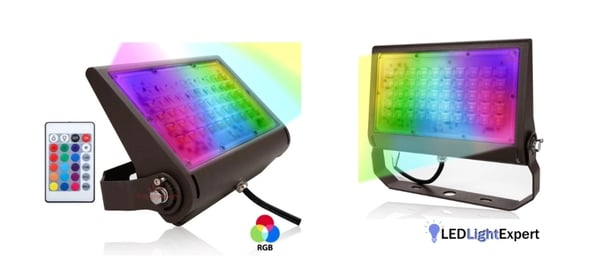
- Color-Changing RGB LEDs: Provide dynamic, programmable color effects ideal for decorative lighting, events, or special occasions. RGB LED fixtures transform bridges into vibrant, engaging landmarks easily tailored to match events or city branding. DMX512 control addresses each fixture individually so scenes run in perfect sync across the span.
- Pole-Mounted LED Fixtures: Effective for higher-mounted lights along pedestrian walkways or vehicle lanes. These fixtures offer consistent overhead illumination, improving safety and visibility over extended areas at 15 to 40 foot mounting heights.
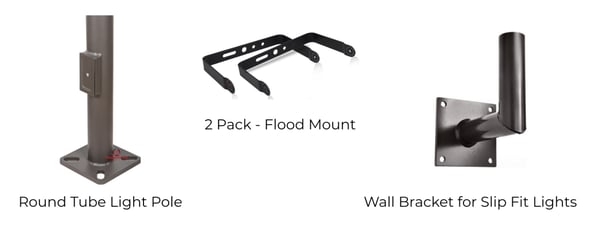
Mounting Hardware
Selecting appropriate mounting hardware is essential for secure and long-lasting lighting installations. The most common solutions include:
- Brackets: Versatile mounting solutions that securely attach fixtures to structural beams or railings. Brackets accommodate various fixture angles and positions, ideal for precise lighting placement. Size per AASHTO LRFD wind-load factors for the bridge’s location and fixture projected area.
- Clamps: Useful for non-permanent installations or where drilling into bridge materials is impractical or prohibited. Clamps securely grip structural elements, allowing fixture repositioning if necessary — especially valuable on historic bridges where through-bolting is restricted.
- Poles: Ideal for overhead or elevated lighting, such as pole-mounted LED fixtures along pathways. Durable steel or aluminum poles specified to AASHTO Standard Specifications for Structural Supports for Highway Signs, Luminaires, and Traffic Signals (LTS-6) resist weather, vibration, and corrosion, ensuring fixtures remain stable and secure.
Accessibility for Maintenance
Planning ahead for ease of maintenance simplifies upkeep and reduces long-term costs. Fixtures and mounts should allow straightforward access, minimizing downtime for replacements or repairs. When designing installation plans, consider:
- Fixture placement within reach of standard lifts or maintenance vehicles (typical 40-60 foot boom reach).
- Quick-release mounts or fixtures with tool-free access panels for easy servicing.
- LED fixtures are designed for long service intervals — 50,000 to 100,000 hours at L70 per IES LM-80/TM-21 projections — reducing maintenance frequency overall.
Efficient fixture selection, strategic mounting, and thoughtful electrical infrastructure planning support bridge lighting that is visually appropriate, durable, and easier to maintain.
Selecting appropriate mounting hardware is essential for secure and long-lasting lighting installations.
Smart Features and Controls
Modern LED bridge lighting goes beyond just turning lights on and off. Smart lighting systems bring impressive capabilities, including dimming, scheduling, color-changing effects, and remote monitoring. By integrating these advanced features, you improve efficiency, visual impact, and ease of management for city departments or maintenance contractors.
Dimming and Scheduling
LED lights naturally lend themselves to dimming and scheduling capabilities, significantly boosting energy efficiency. Specify 0-10V, DALI, or DMX512 control inputs so the fixtures integrate with a bridge-wide controller. You can schedule fixtures to dim during periods of lower traffic or increase brightness during peak hours or special events. Automated dimming schedules that run lights at 50 percent after midnight typically save 20 to 40 percent on top of the LED efficiency gains. This smart approach extends the lifespan of fixtures and lowers operational costs.
Color Control (RGB/RGBW)
Programmable RGB or RGBW LED lights give you unlimited creativity in lighting design. Using DMX512 or Bluetooth Mesh control systems, you can create dynamic color displays, synchronize lighting with city celebrations, or change colors to support local sports teams. User-friendly control systems — often web-based dashboards with mobile apps — make adjustments simple and fast, allowing bridge illumination to stay relevant, attractive, and engaging year-round.
Remote Monitoring
Remote monitoring systems enhance maintenance efficiency and responsiveness. Smart control platforms provide real-time updates on lighting performance, including fixture status, energy usage, and potential faults. Many systems transmit over cellular or LoRaWAN radios, so you do not need to pull data cabling across the bridge. City departments and contractors can detect and address issues immediately, avoiding prolonged outages. Remote monitoring drastically reduces downtime, simplifies maintenance scheduling, and improves overall bridge lighting reliability.
User-friendly control systems make adjustments simple and fast, allowing bridge illumination to stay relevant, attractive, and engaging year-round.
Budget and Long-Term Maintenance
While installing LED bridge lights involves upfront investment, the long-term financial benefits are substantial. Considering both initial costs and ongoing maintenance ensures you choose lighting solutions that provide lasting value and performance.
Initial Costs vs. Long-Term Savings
LED fixtures generally have higher upfront costs than traditional lighting. However, their superior energy efficiency, minimal maintenance, and impressive durability lead to significant long-term savings. LEDs consume 50 to 75 percent less energy than high-pressure sodium or metal halide at the same delivered lumens (U.S. Department of Energy) and last considerably longer than incandescent or halogen bulbs, drastically reducing electricity bills and replacement expenses. Over time, investing in quality LED fixtures proves financially beneficial, making them a smart choice for city budgets — payback on a typical bridge retrofit runs 3 to 7 years depending on utility rates and control depth.
Product Lifespan and Warranty
Always select
high-quality LED lighting fixtures that offer extended lifespans and robust manufacturer warranties. High-grade fixtures typically last between 50,000 to 100,000 hours at L70 tested per IES LM-80 and projected per IES TM-21, translating to 11 to 23 years of consistent performance at 12 hours nightly. Reliable warranties — 5 years minimum, 7 to 10 years preferred for public-infrastructure hardware — protect your investment, providing reassurance that any unexpected issues will be promptly resolved by the manufacturer.
Maintenance Plan
An organized maintenance plan is essential to keep bridge lighting functioning optimally. Establishing clear procedures for cleaning, inspecting, and replacing components ensures consistent illumination and minimizes downtime. Key components of an effective maintenance plan include:
- Regular inspection schedules (typically annual) to identify and address potential issues early.
- Cleaning routines for fixture lenses and gaskets — lens dirt depreciation alone can cut delivered lumens by 20 to 30 percent over two to three years.
- Quick-response strategies for addressing outages or equipment faults, ensuring continuous safety and visibility.
- Technical support partnerships with manufacturers or qualified contractors to ensure rapid repair and replacement services.
With clear maintenance guidelines in place, your bridge lighting stays efficient, attractive, and dependable.
Conclusion
Installing LED bridge lighting is more than picking out fixtures and turning them on; it’s about creating a system that’s safe, durable, and visually impressive. Every decision, from the type of lighting you choose to how you manage power and weather, plays a role in the end result. Thoughtful planning ensures your bridge lighting does more than just shine a light; it becomes part of the bridge’s identity.
Good lighting improves safety for drivers and pedestrians, making every crossing secure and comfortable. It can also highlight the bridge’s design, turning a structure people might overlook into something memorable. Smart features like color control and dimming options add another layer, helping you adapt to different events and seasons. Plus, investing in quality fixtures and a solid maintenance plan means your lighting system will keep working for many years, with lower costs and fewer repairs.
With LED bridge lighting, you can tell that story clearly and beautifully. Every night, your bridge can become more than a way to get across; it can be a landmark, a gathering place, and a point of pride for your community.





 Free Shipping
 Free Extended Warranty