

Quick Answer
They can be useful where trenching is expensive or grid power is unavailable, but sun exposure and battery capacity must match the job.
Planning LED Solar Lights
LED solar lights can be useful where trenching is expensive, power is unavailable, or a standalone fixture is preferred. Late summer can be a practical time to install in many regions, but the real decision should be based on sun exposure, battery autonomy, fixture output, mounting, and site expectations.
What to Check First
- Confirm full-sun panel exposure during the shortest and cloudiest part of the year.
- Match fixture output and operating schedule to battery capacity and charge time.
- Check pole, wall, or ground mounting, theft risk, wind exposure, and maintenance access.
Application Decision Table
| Use Case | Practical Guidance |
|---|---|
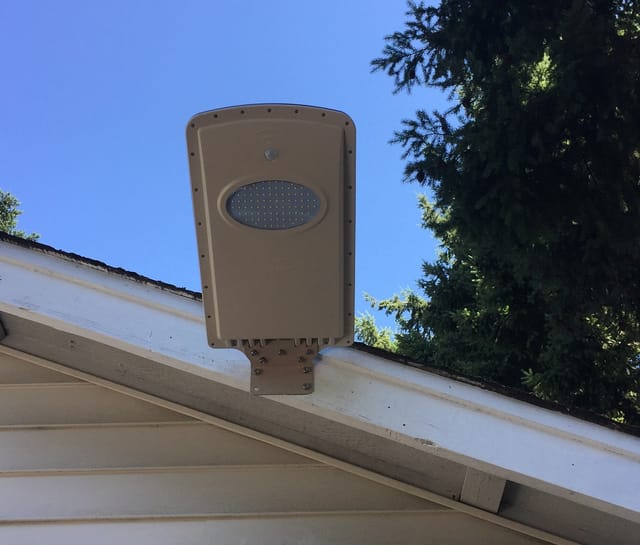
| Solar wall lights | Good for entries, sheds, gates, and low-output security lighting when sun exposure is reliable. |
| Solar flood lights | Useful for remote task areas, but run time and aim must be realistic. |
| Solar parking or street lights | Require careful pole, battery, panel, and photometric planning. |
Common Mistakes to Avoid
- Judging solar lights by panel size or lumens without checking battery autonomy.
- Installing panels where trees, buildings, or seasonal sun angle block charging.
- Expecting grid-powered performance from a small standalone solar fixture.
Solar Lighting Fit Check
Solar LED lighting is strongest where trenching power is expensive, the site has reliable sun exposure, and the required light level is reasonable for the battery and panel size. It is weakest where trees, buildings, long winter nights, vandalism risk, or very high lumen needs exceed the system design.
| Question | Why it matters |
|---|---|
| How many sun hours are available? | Panel size and battery recharge depend on real site exposure, not only the calendar month. |
| How long must the light run? | Dusk-to-dawn, motion-dim, and scheduled output require different battery capacity. |
| What light level is required? | Solar is not a magic replacement for every high-output pole light. |
More Details to Consider
A Great Time for LED Solar Lights Installation. When is the best time to install solar lights? A: Solar lights should be installed during the dry summer season for safer installation and to ensure it's installed correctly. Avoid installing lights in bad weather or low visibility as it increases the risk of accidents and damage to the lights or property. Best Time for LED Solar Lights Installation. If not, then now is the right time to install solar lights.
Using solar lighting is a lifesaver as you will be saving electricity while installation gets easier. The photovoltaic cells absorb the sunlight during the day to charge the batteries. As such, solar lights are powered by the sun and free to run. Combine that with no wiring to run and it's time to go solar lighting! One of the major issues being faced in the world is climatic change and global warming. You should take advantage of the sun and install solar lights.
Here are some of the reasons for installing lights: • Environmental Impact: Solar power produces no harmful emissions that will be dangerous for the environment. It is a clean and renewable process that uses the sun. When you use solar lighting, you reduce the carbon footprint. • Safer: When you install solar lighting, you will be using lower voltage. This means they will provide you quality light that is safer and easier to install. • Cost Saving: Solar lights save energy costs as you won't have to pay for electricity.
Electricity is one of the biggest regular expenses for households. As the costs of electricity increases, the total energy bill also increases. Solar lights will decrease this expensive bill for your household or business. There are 3 different types of solar lights. You can choose from the following: • Solar Wall Lights: Solar wall lights are a simple way to light up your property at night. There is no need for complicated electrical work since there is no electrical connection from the light to your property.
You will just have to install the solar wall light in a location that gets good sunlight. You can enjoy free solar lighting for years. • Solar Street Lights: Another type of solar light is solar street light. There are 2 categories of solar street lights. One is off-grid solar lights; they don't use the power from the grid. They produce their own self-sustaining power. The other one is grid-tied solar street light. It feeds power from the solar panels to the grid during the day.
They are great for minimizing the safety risks caused by vehicles. LED solar street lights are available in warmer color temperatures that reduce roadway glare. • Solar Flood Lights: Solar flood lights have been gaining popularity rapidly. The reason is that they provide lighting in the most remote places for safety. They can be installed in any place without the access to electricity. They provide clear visibility of areas from a distance. As a result, it sheds light on dark or blind spots, providing safety to pedestrians.
It is the best way to deter crime against people and property. • Solar parking lot lights: Solar parking lot lights are a type of outdoor lighting that uses solar energy to power the LED lamps. They are installed on poles or walls and can provide illumination for parking areas, roads, or other open spaces. Solar parking lot lights have many benefits, such as: energy-efficient and cost-effective, as they do not use electricity from the grid and can save money on bills and maintenance.
There are several places where you can install LED solar lights:
- Backyard.
- Side walk.
- Garden.
- Front entrance.
- Patios.
- Parking lots.
- Roads.
- Driveways.
- Large or small open outdoor spaces (such as sports fields or basketball courts). Things to Consider When Buying LED Solar Lights. There are certain things that you must look at when buying solar lights:
- Right Lumens For Your Location: One of the first things you must consider is the lumens.
When buying a solar LED motion light you must know the lumen output that you need. That will determine how much energy is required. • Battery Size: Another thing you must pay attention to is the battery size. You must keep in mind your electricity needs when buying solar lights. • Quality Brand and Vendor: One of the most important things is to choose the best company. You must look for vendors who offer you strong warranties. They must be licensed, insured and must not have major complaints.
Therefore, summer is the right time to install LED solar lights. We have an extensive range of solar lights. Beautify and secure your home with our LED solar lights today.
Frequently Asked Questions
- Are solar LED lights worth it?
- They can be useful where trenching is expensive or grid power is unavailable, but sun exposure and battery capacity must match the job.
- Is August a good time to install solar lights?
- Late summer can be practical in many areas, but the real test is year-round sun exposure and winter performance.
- What should I check before buying solar lights?
- Check panel exposure, battery autonomy, output, controls, mounting, weather rating, and maintenance access.
- Can solar lights replace wired lights?
- Sometimes, but wired lights are often better when high output, long run time, or strict light levels are required.

Ready to Upgrade Your LED Lighting?
Our lighting specialists can help compare options, confirm light levels, and quote products that fit the site.
Call 800-674-9420 or email [email protected]
Monday-Friday, 8am-5pm PST

About the Author
Dara Greaney is founder and CEO of LED Light Expert with deep expertise in commercial LED lighting, retrofits, and photometric planning.
Editing by David Peguero

Trusted by Thousands
Our customers love us — and we love them back.


-
 Free Shipping
On orders over $49.00
-
 Free Extended Warranty
Up to 7 Years Free Warranty On LED Lights
-
100% Satisfaction Guarantee
