

Quick Answer
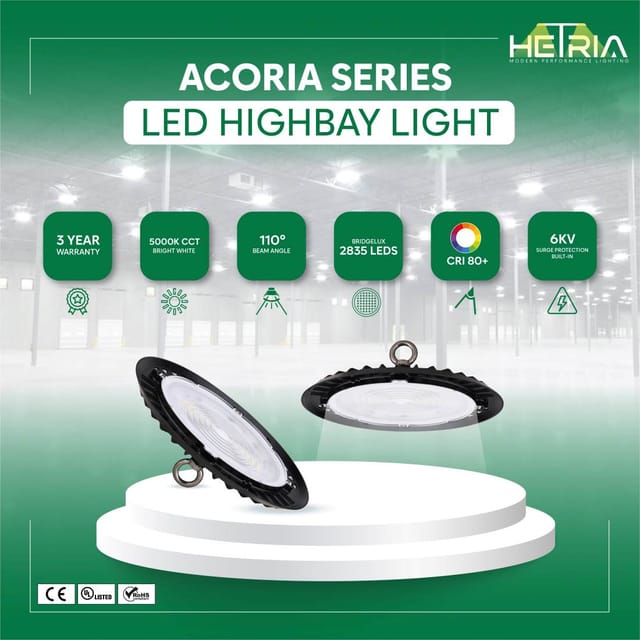
A high bay light is a fixture used in taller spaces where light must travel from a high mounting point to the work area.
High Bay Lights
High bay lights are used in taller spaces where fixtures must deliver useful light from above. Ceiling height matters, but so do task, spacing, optics, glare, controls, temperature, and maintenance access.
What to Check First
- Confirm ceiling height and task light needs.
- Choose UFO, linear, or specialty high bays by layout and distribution.
- Plan controls, sensors, dimming, and emergency lighting coordination.
Application Decision Table
| Use Case | Practical Guidance |
|---|---|
| Warehouse | Uniformity and aisle layout are central. |
| Gym or recreation | Glare and impact protection matter. |
| Manufacturing | Task light, color quality, and maintenance access matter. |
Common Mistakes to Avoid
- Buying by wattage, product name, or old fixture type without checking delivered light and layout.
- Skipping controls, environmental ratings, code requirements, or final commissioning.
- Ignoring glare, maintenance access, documentation, and replacement availability.
High Bay Selection Guide
High bay lights are used where ceilings are typically high enough that ordinary low-bay or shop lights will not deliver the needed light to the floor. The fixture choice depends on mounting height, fixture spacing, aisle layout, task level, glare, controls, ambient temperature, and maintenance access.
| Choice | Best fit | What to check |
|---|---|---|
| UFO high bay | Open warehouses, gyms, shops, and industrial spaces. | Beam angle, glare, sensor placement, and ceiling height. |
| Linear high bay | Aisles, rectangular work zones, retail back rooms, and lower high-bay spaces. | Row spacing, aisle direction, lens, and uniformity. |
| High-temperature high bay | Manufacturing, foundries, and hot industrial areas. | Ambient temperature rating and driver location. |
| Sensor-ready high bay | Warehouses with variable occupancy. | Mounting height rating, detection pattern, dimming setup, and commissioning. |
For warehouses and pole barns, do not rely only on fixture count. A layout should check average footcandles, minimum light level, uniformity, and whether shelves or equipment block the beam.
More Details to Consider
Everything You Want To Know About High Bay Lights. A high bay light fixture is a type of lighting system that is designed to illuminate large indoor spaces with high ceilings, such as warehouses, factories, gyms, or retail stores. High bay light fixtures are usually mounted on the ceiling or suspended from chains, hooks, or pendants. They can use different light sources, such as LED, metal halide, fluorescent, or high-intensity discharge lamps. However, LED high bay lights are the most energy-efficient, durable, and versatile option for modern lighting needs.
What are the Benefits of High Bay Light Fixtures?
Some of the benefits of using high bay light fixtures are:
- They provide bright and uniform lighting for the entire area or specific zones within the space.
- They reduce glare, shadows, and flicker that can affect the visibility and comfort of the users.
- They enhance the aesthetic appeal and atmosphere of the space by creating different effects and patterns with the light.
- They save energy and money by consuming less electricity and lasting longer than conventional lights.
- They require less maintenance and replacement as they are more resistant to shock, vibration, impact, heat, and harsh operating conditions.
Considerations to Finding the Right High Bay Light Fixture. Choosing the right high bay light fixture depends on several factors, such as:
- The size and shape of the space to be illuminated.
- The height of the ceiling and the mounting method.
- The desired brightness and color quality of the light.
- The purpose and function of the lighting.
- The budget and preferences of the buyer. See our warehouse lights buyers guide for more information. How to Choose the Right High Bay Light Fixture?
To help you choose the right high bay light fixture for your facility, here are some tips and guidelines: • Create a lighting plan that shows how bright and even your space can be with different types of high bay lights. You can order a free photometric study to create a lighting plan. • Measure the ceiling height and determine the appropriate type of high bay light fixture.
Generally, low bay lights are suitable for ceilings below 20 feet, while high bay lights are suitable for ceilings above 20 feet. • Calculate the lumens and watts needed for your space. Lumens are a measure of brightness, while watts are a measure of power consumption. You can use an online calculator or lighting layout to estimate the lumens and watts needed for your space. • Choose the color rendering index (CRI) and color temperature (CCT) of your high bay light fixture.
CRI is a measure of how well a light source can reproduce colors accurately, while CCT is a measure of how warm or cool a light source appears. For high bay lighting, a CRI of at least 80 and a CCT of 4000-5000K are recommended. • Choose the beam angle and optics of your high bay light fixture. Beam angle is the spread of light emitted from the fixture, while optics are the components that direct or diffuse the light.
A narrow beam angle is best for concentrated lighting needs, while a wide beam angle is best for wider coverage areas. Optics can be either aluminum reflectors that make the light flow down to the floor or prismatic lenses that spread the light evenly across the space. • Choose the type and style of your high bay light fixture. There are different types of high bay lights available on the market, such as UFO, linear, traditional round, or architectural.
You can also choose from different styles and designs that suit your preference and space. • Choose the installation and compatibility options of your high bay light fixture. You can either mount your high bay light fixture directly to the ceiling or hang it from chains, hooks, or pendants. You can also choose from different wiring and control options, such as hardwired or plug-in, dimmable or non-dimmable, motion sensor or timer. • Compare the cost and quality of different high bay light fixtures.
You can check online reviews, ratings, warranties, certifications, and customer service of different brands and models of high bay lights. You can also compare the initial cost, operating cost, maintenance cost, and return on investment (ROI) of different high bay lights. See our High Bay Lights buyers guide for more details and videos. Select The Right High Bay Fixture Brand. Selecting the right light for high bay lighting can make the difference between the success and failure of your lighting project.
Choose a good LED light manufacturer, who offers not just different options with respect to the selection, but also educates you on any questions you have on your shopping journey. Make sure they answer the phone and have a 4.7 or higher star online review. If you are concerned about the cost of replacing the old lights in your industry, you can go for LED Retrofit lights and can look for high bay retrofit options under this category to get the best benefits from your lighting project.
By following these tips and guidelines, you can choose the best high bay light fixture for your facility that meets your lighting needs and expectations.
Frequently Asked Questions
- What is a high bay light?
- A high bay light is a fixture used in taller spaces where light must travel from a high mounting point to the work area.
- What ceiling height needs high bays?
- Many projects start considering high bays around taller commercial ceilings, but task, optics, glare, and layout matter more than a single cutoff.
- Are LED high bays better than older HID high bays?
- LED high bays often offer better controls, optical choice, and maintenance advantages, but the layout still has to meet the task.
- What controls work with high bays?
- Occupancy sensors, daylight harvesting, dimming, scheduling, and networked controls can all apply.

Ready to Upgrade Your LED Lighting?
Our lighting specialists can help compare options, confirm light levels, and quote the right products for your project.
Call 800-674-9420 or email [email protected]
Monday-Friday, 8am-5pm PST

About the Author
Dara Greaney is founder and CEO of LED Light Expert with deep expertise in commercial LED lighting, retrofits, and photometric planning.
Editing by David Peguero
Tagged Products

Trusted by Thousands
Our customers love us — and we love them back.


-
 Free Shipping
On orders over $49.00
-
 Free Extended Warranty
Up to 7 Years Free Warranty On LED Lights
-
100% Satisfaction Guarantee
