

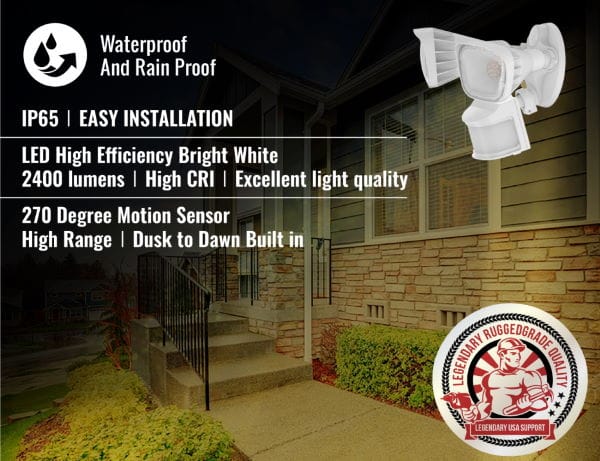
Quick Answer
Flood lights can support visibility, camera usefulness, and wayfinding, but lighting is only one part of site safety planning.
LED Flood Lights for Security Planning
Flood lights can support visibility, camera usefulness, and wayfinding, but lighting is only one part of site safety planning. A good plan uses the right beam angle, aiming, controls, shielding, and placement so light reaches the useful area without blinding people or neighbors.
What to Check First
- Identify entrances, paths, cameras, blind spots, and neighbor-facing views.
- Choose motion, photocell, timer, or dimming controls based on how the site is used.
- Aim down and across the target area, not straight outward.
Application Decision Table
| Use Case | Practical Guidance |
|---|---|
| Motion flood light | Useful for intermittent activity and alerting occupants to movement. |
| Dusk-to-dawn flood light | Useful where continuous night visibility is needed. |
| Camera support | Uniform light and low glare usually help more than raw brightness. |
Common Mistakes to Avoid
- Promising security outcomes from lighting alone.
- Creating glare that hides faces, plates, or paths.
- Leaving lights on all day or aimed into neighboring windows.
Do Flood Lights Deter Burglars?
Flood lights can support deterrence by improving visibility and reducing dark approach areas, especially when they are paired with cameras, motion sensors, trimmed landscaping, and clear sightlines. They are not a complete security system by themselves. Poorly aimed lights can create glare, shadows, or neighbor complaints without improving security.
| Security goal | Lighting choice |
|---|---|
| Reveal movement | Use motion activation or dim-to-bright settings where appropriate. |
| Support cameras | Use even light and avoid glare into the camera lens. |
| Protect neighbors | Aim downward, use shields, and choose the right beam angle. |
| Reduce hiding places | Coordinate lights with landscaping and building sightlines. |
More Details to Consider
Flood lights can support a theft-deterrence plan by improving visibility near doors, paths, yards, loading areas, parking lots, and camera views. They work best as part of a broader plan that also includes locks, cameras, alarms, trimmed landscaping, clear sightlines, and common-sense response procedures.
Different controls solve different problems. Dusk-to-dawn lighting can support continuous night visibility. Motion lighting can draw attention to activity and reduce wasted run time. Timers and smart schedules can make lighting more consistent when people are away.
Aiming is just as important as brightness. Lights should be aimed down and across the target area so they reveal movement without blinding people, washing out camera images, or shining into neighboring windows.
Security lighting should not promise that theft will not happen. The goal is to make approach points easier to see, support camera usefulness, reduce dark hiding spots, and help people move safely at night.
Frequently Asked Questions
- What is the main point of LED Flood Lights for Security Planning?
- Flood lights can support visibility, camera usefulness, and wayfinding, but lighting is only one part of site safety planning.
- What should I check first?
- Identify entrances, paths, cameras, blind spots, and neighbor-facing views.
- Do controls matter?
- Yes. Sensors, timers, dimmers, photocells, and schedules often determine how well the lighting works in daily use.
- When should I ask for help?
- Ask for help when layout, glare, wiring, controls, code, safety, or product compatibility is uncertain.

Ready to Upgrade Your LED Lighting?
Our lighting specialists can help compare options, confirm light levels, and quote products that fit the site.
Call 800-674-9420 or email [email protected]
Monday-Friday, 8am-5pm PST

About the Author
Dara Greaney is founder and CEO of LED Light Expert with deep expertise in commercial LED lighting, retrofits, and photometric planning.
Editing by David Peguero
Tagged Products

Trusted by Thousands
Our customers love us — and we love them back.


-
 Free Shipping
On orders over $49.00
-
 Free Extended Warranty
Up to 7 Years Free Warranty On LED Lights
-
100% Satisfaction Guarantee
