

Quick Answer
LED parking lot lights should be selected by pole height, spacing, distribution, target light levels, glare, spill, controls, voltage, and maintenance access.
What to Know About LED Parking Lot Lights
LED parking lot lights should be selected by pole height, spacing, distribution, target light levels, glare, spill, controls, voltage, and maintenance access. A good parking lot design is about coverage and comfort, not brightness alone.
What to Check First
- Map poles, drive lanes, pedestrian paths, entrances, cameras, and neighboring properties.
- Choose optics, wattage, CCT, controls, and shielding together.
- Commission after dark and document settings.
Application Decision Table
| Use Case | Practical Guidance |
|---|---|
| Retail or customer lot | Comfort, wayfinding, and uniformity matter. |
| Industrial lot | Truck movement, security zones, and durability may matter. |
| Neighbor-sensitive lot | Shielding, warmer CCT, and dimming schedules may matter. |
Common Mistakes to Avoid
- Replacing fixtures without a layout.
- Overlighting to compensate for poor pole spacing.
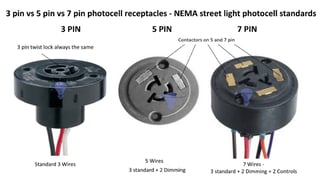
- Ignoring photocells, surge protection, and service access.
Parking Lot Light Planning Checklist
Start with pole height, pole spacing, target area, existing fixture wattage, voltage, mounting arm, controls, and whether neighbors or roads need glare control. A parking lot light should be selected from a layout, not from wattage alone.
| Planning item | Why it matters |
|---|---|
| Optics | Type III, IV, or V distribution changes where the light lands. |
| Controls | Photocells, timers, and dimming reduce wasted run time. |
| Surge protection | Outdoor pole lights are exposed to power events and storms. |
More Details to Consider
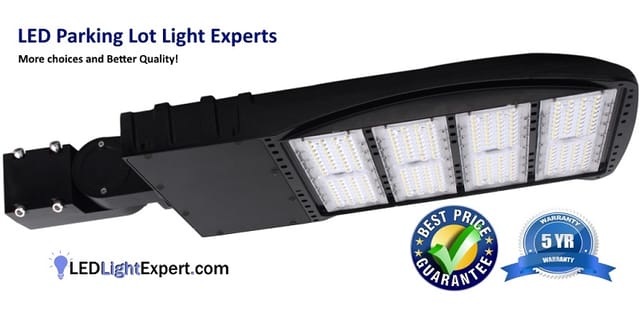
What to Know About LED Parking Lot Lights. *Updated 10/10/23 with current data and edits. LED parking lot lights are a smart choice for businesses and property owners who want to improve the appearance, safety, efficiency, and sustainability of their parking areas. LED Parking lot lights have many advantages over traditional lighting sources, such as metal halide (MH) or high-pressure sodium (HPS) lamps. Here are some of the benefits of LED parking lot lights that you should know: • You are going to save money.
LED parking lot lights are up to 70% more energy-efficient than old metal halide or high-pressure sodium lamps. This means that you can use a lower wattage LED light to replace a higher wattage conventional light and still get the same or better illumination. For example, a 300-watt LED light can replace a 1000-watt MH light, and a 150-watt LED light can replace a 400-watt HPS light in many lots - HPS puts out plenty of raw lumens, but its yellow light has a low S/P ratio, so the eye reads the whiter LED as brighter. This translates into significant savings on your electricity bills and carbon emissions. • They will hold their brightness.
Metal halide lamps can lose substantial light output over time, while well-designed LED parking lot lights usually hold useful output longer when heat and power quality are controlled. This means that you do not have to worry about replacing or adjusting your lights frequently, which can also save you money on maintenance costs and labor. • You have more beam angle choices. LED parking lot lights come in different beam angles to suit different applications and preferences. You can choose from regular wide-angle beams for general lighting, or narrow-angle beams for focused lighting.
Narrow-angle beams can reach farther away and create a more dramatic effect, while wide-angle beams can cover a larger area and create a more uniform effect. • You have less maintenance for you. With long rated lifespans, LED parking lot lights remove routine bulb and ballast changes, though fixtures should still be inspected on a normal maintenance schedule. They are also more durable and resistant to weather, vandalism, and shock than conventional lights. That can mean more reliable lighting for years when the fixture is properly specified and installed. • You have more controls to choose from.
LED parking lot lights offer more options for controlling and customizing your lighting. You can choose from a basic photocell, which will turn the light on at dusk and off at dawn automatically, or a motion sensor, which will turn the light on when it detects movement and off when there is no activity. Motion sensor parking lot lights can enhance security and save more energy by reducing unnecessary lighting.
LED parking lot lights from reputed brands and dealers are designed with the latest technology and quality standards to provide you with the best lighting solution for your parking area. They are easy to install, operate, and maintain, and they can improve the aesthetics, functionality, and sustainability of your parking lot. They can also help you comply with local codes and regulations regarding outdoor lighting. Metal Halide to LED Parking Lot Replacement Guide.
When converting parking lot lights, use the existing metal halides to guide you. • 1000 watt metal halides require about 30,000 to 60,000 lumens. Look at our LED Shoebox Lights with 300watts to 500 watts. • When you are looking for 400 watt metal halide led replacement you have an option of looking at our 100 watt, 120 watt or 150 watt models. For the 400 watt replacement you will need 12,000 to 20,000 lumens. • For a 250 watt metal halide model, you should look at 9,000 to 12,000 lumens.
If you are looking at 80 watt or 100 watt metal halide, 4,000 to 8,000 lumens is good. You can also start to look at LED Corn Light Bulbs at this level - they may be a good solution. • For 150 watt or 175 watt, you should consider 7,000 to 9,000 lumens. One of the questions that people ask when installing LED lights is related to spacing. Spacing depends on how high up you go. The higher up you go, the bigger the fixture you can use and the farther spaced out you will be.
However, be careful because going higher can leave a lot of light up high and you can run into code issues, wind problems, etc. There is a sweet spot that we'll get to. Every setup is different and requires different planning. Retail and sport court require brighter lighting, while lightly used back lots require less. Here are some rules of thumb to start with: Home and small parking lot lights at 15-20 Feet High; About 12,000-18,000 lumen fixtures. (2 per pole is usually best). For light poles with lights at 20-25 Feet High;
30-40ft spacing and 20,000 to 30,000 lumens. High Mast poles of 25-35 Feet High; 40-50ft spacing and 30-70,000 lumens. These are just some general suggestions that you can use as a starting point for your project. However, every parking lot is different and requires a customized lighting design that takes into account all the relevant factors and conditions. You can consult a professional lighting designer or use a computer lighting design software to help you create a more accurate and detailed plan for your parking lot lighting.
Frequently Asked Questions
- What is the main point of What to Know About LED Parking Lot Lights?
- LED parking lot lights should be selected by pole height, spacing, distribution, target light levels, glare, spill, controls, voltage, and maintenance access.
- What should I check first?
- Map poles, drive lanes, pedestrian paths, entrances, cameras, and neighboring properties.
- Do controls matter?
- Yes. Dimming, timers, sensors, photocells, and schedules can change both performance and operating cost.
- When should I ask for help?
- Ask for help when wiring, photometrics, mounting, glare, safety listing, or product compatibility affects the project.

Ready to Upgrade Your LED Lighting?
Our lighting specialists can help compare options, confirm light levels, and quote products that fit the site.
Call 800-674-9420 or email [email protected]
Monday-Friday, 8am-5pm PST

About the Author
Dara Greaney is founder and CEO of LED Light Expert with deep expertise in commercial LED lighting, retrofits, and photometric planning.
Editing by David Peguero
Tagged Products

Trusted by Thousands
Our customers love us — and we love them back.


-
 Free Shipping
On orders over $49.00
-
 Free Extended Warranty
Up to 7 Years Free Warranty On LED Lights
-
100% Satisfaction Guarantee
