

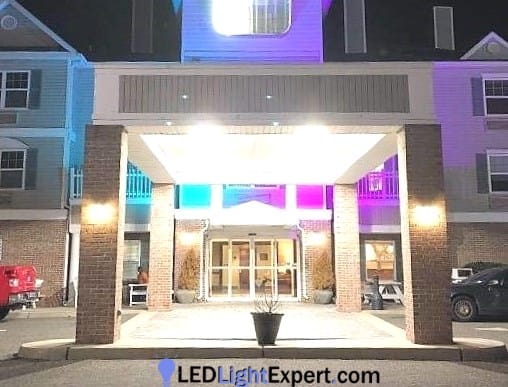
Plan lighting by purpose, not just by fixture style.
Hotel Lighting Lessons for Homes and Commercial Spaces
Five-star hotel lighting is not just about adding more fixtures. Strong hotel lighting plans feel intentional because each area has a job: welcome guests, guide movement, show finishes accurately, support reading or work, and make exterior areas easier to navigate. That same thinking works in homes, restaurants, offices, lobbies, patios, and retail spaces.
What to Check First
- Start with the room purpose before choosing a fixture style.
- Layer ambient, task, accent, and wayfinding light instead of relying on one ceiling source.
- Match CCT, dimming, beam angle, and glare control to the surface and activity.
Application Decision Table
| Use Case | Practical Guidance |
|---|---|
| Lobby or entry | Use warm, welcoming layers plus clear vertical light at faces and signs. |
| Guest room or bedroom | Use dimmable bedside, task, and accent lighting so one setting does not need to do everything. |
| Exterior arrival area | Use controlled flood, canopy, or wall lighting for paths, doors, and vehicle areas without harsh spill. |
Seven Hotel Lighting Habits Worth Copying
- Light the destination before the decoration.
- Use more than one layer in important rooms.
- Keep guest-facing light comfortable at eye level.
- Use accent light to show texture and architecture.
- Make switches and controls easy to understand.
- Treat exterior arrival lighting as part of the guest experience.
- Review the room at night before calling the design finished.
Common Mistakes to Avoid
- Equating luxury with maximum brightness.
- Using one CCT across every room regardless of finishes or task.
- Putting decorative fixtures where task light or glare control is the real problem.
Why Hotel Lighting Feels Intentional
Good hotel lighting guides people through a space without making every surface equally bright. The 5-star hotels lesson is useful at home too: put light where people enter, read, dress, work, relax, and move at night, then keep glare out of direct eye line.
| Hotel lesson | Practical takeaway |
|---|---|
| Layer the room | Use ceiling, wall, table, and accent light for different jobs. |
| Control glare | Choose shades, diffusers, recessed trims, and aiming angles carefully. |
| Make switches obvious | Group controls where people naturally enter, sit, and sleep. |
| Use warmer accents | Keep relaxing areas comfortable while preserving task light where needed. |
Frequently Asked Questions
- What is the main hotel lighting lesson?
- Plan lighting by purpose, not just by fixture style.
- What color temperature works well?
- Warm to neutral light is common in hospitality spaces, but task areas, kitchens, and exterior areas may need a different CCT.
- Do hotels use brighter lights?
- Good hotels usually use better layering and glare control, not simply more brightness.
- Can this work at home?
- Yes. Start with one room, add task and accent layers, and use dimming where the room has more than one use.
More Details to Consider
The best hotel lighting lesson is not simply to add more lights. It is to give each light a job. Luxury hotels use layers to welcome guests, guide movement, support reading and dressing, show finishes accurately, and make exterior arrival areas feel easy to navigate.
Start with purpose. Entries and lobbies need comfortable vertical light so faces, signs, and paths are easy to read. Bedrooms and guest rooms need bedside, task, and accent lighting so one overhead source does not have to do everything. Exterior areas need controlled light for doors, paths, vehicle areas, and landscaping without harsh spill.
Quality matters, but quality means fit as much as price. Look for the right CCT, CRI, dimming behavior, beam angle, glare control, and controls. Decorative fixtures should still provide useful light or work with other layers that do.
A hotel-style plan reviews the room at night before calling it finished. Check switches from the user position, look for glare at eye level, confirm that task areas are lit, and make sure accent light improves the space instead of distracting from it.


Ready to Upgrade Your LED Lighting?
Our lighting specialists can help compare fixtures, confirm light levels, and quote products that fit the site.
Call 800-674-9420 or email [email protected]
Monday-Friday, 8am-5pm PST

About the Author
Dara Greaney is founder and CEO of LED Light Expert with deep expertise in commercial LED lighting, retrofits, and photometric planning.
Editing by David Peguero

Trusted by Thousands
Our customers love us — and we love them back.


-
 Free Shipping
On orders over $49.00
-
 Free Extended Warranty
Up to 7 Years Free Warranty On LED Lights
-
100% Satisfaction Guarantee
