

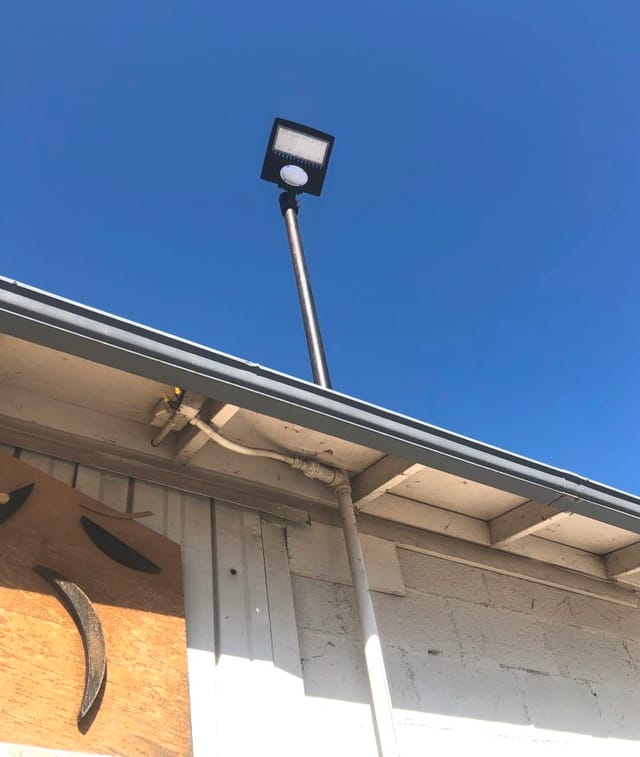
Use them when the lot has long low-activity periods and dimming will not create safety or comfort problems.
Parking Lot Motion Sensor Guide
Motion sensors can work in parking lots, but the goal should not be sudden darkness and sudden brightness. A good parking-lot control plan considers pedestrians, drivers, cameras, neighboring properties, fixture grouping, pole height, detection range, dimming level, hold time, and late-night activity.
What to Check First
- Map vehicle paths, pedestrian routes, cameras, entrances, and dark-adaptation zones.
- Choose sensor type, mounting height, grouping, dim level, and hold time by use case.
- Test after dark with real movement, not just at the pole.
Application Decision Table
| Use Case | Practical Guidance |
|---|---|
| Small private lot | Motion dimming can save runtime while keeping a low standby level. |
| Retail or public lot | Use conservative dimming and avoid dark-feeling zones. |
| Camera-covered area | Coordinate light levels with camera exposure and motion events. |
Settings That Matter
- Standby dim level.
- Hold time after motion.
- Sensor detection pattern.
- Fixture grouping.
- Override and schedule behavior.
Common Mistakes to Avoid
- Turning lights fully off where people need wayfinding.
- Using sensors that do not detect the intended movement pattern.
- Forgetting cameras, accessibility, and neighboring spill concerns.
When Motion Sensors Work Well in Parking Lots
Motion sensors are useful in parking lots with predictable low-traffic periods, but the safest setup is often dim-to-bright rather than full off-to-on. Keeping a low background level helps cameras, pedestrians, drivers, and security patrols while still reducing wasted energy during quiet hours.
| Good fit | Use caution when |
|---|---|
| Employee lots after shift change. | Camera systems need steady light for identification. |
| Remote lots with long empty periods. | Pedestrians may feel unsafe if lights are fully off. |
| Perimeter zones with clear detection paths. | Obstructions, parked trucks, or poor aiming block detection. |
Frequently Asked Questions
- Should I use motion sensors in parking lot lights?
- Use them when the lot has long low-activity periods and dimming will not create safety or comfort problems.
- Should parking lights turn off completely?
- Often a low standby level is better than full off.
- Do sensors work with cameras?
- They can, but camera exposure and timing should be checked.
- Do sensors save energy?
- They can when settings and occupancy patterns reduce unnecessary runtime.
More Details to Consider
Motion sensors can be useful in parking lots when the site has long low-activity periods. The best plan usually keeps a low background level and raises output when vehicles or pedestrians arrive instead of turning the lot completely dark.
Sensor settings should be chosen around real movement paths, pole height, detection range, camera needs, hold time, standby dim level, and fixture grouping. A sensor that works at the pole may miss movement at the edge of the lot if it is aimed or grouped poorly.
Motion controls can reduce energy use, but they should not make people feel unsafe or leave cameras without usable light. Test the lot after dark and adjust the settings before calling the job finished.

Ready to Upgrade Your LED Lighting?
Our lighting specialists can help compare fixtures, confirm light levels, and quote products that fit the site.
Call 800-674-9420 or email [email protected]
Monday-Friday, 8am-5pm PST

About the Author
Dara Greaney is founder and CEO of LED Light Expert with deep expertise in commercial LED lighting, retrofits, and photometric planning.
Editing by David Peguero

Trusted by Thousands
Our customers love us — and we love them back.


-
 Free Shipping
On orders over $49.00
-
 Free Extended Warranty
Up to 7 Years Free Warranty On LED Lights
-
100% Satisfaction Guarantee
