


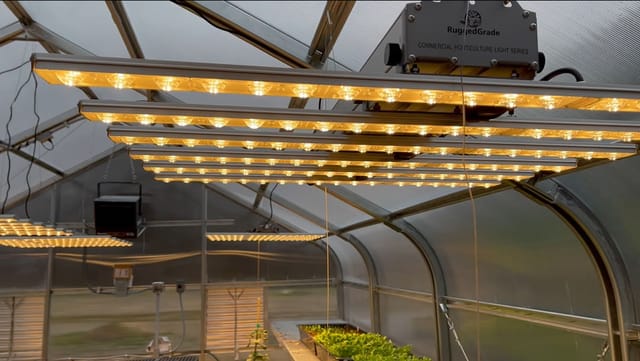
Yes, when spectrum, intensity, distance, and duration fit the plant.
Indoor LED Grow Light Guide
Indoor grow lighting is about giving plants enough usable light for the growth goal. People see brightness through lumens, but plants respond to photons in useful wavelengths, daily light totals, distance, and timing. Seedlings, leafy greens, flowering plants, herbs, and fruiting crops may all need different intensity and schedules.
What to Check First
- Identify plant type, growth stage, growing area, natural light, and daily schedule.
- Compare spectrum, PPF, PPFD, DLI, coverage map, heat, and fixture distance.
- Use timers and adjust height as plants grow.
Application Decision Table
| Use Case | Practical Guidance |
|---|---|
| Seed starting | Use even coverage, a timer, and close but safe fixture spacing. |
| Leafy greens and herbs | Use balanced spectrum and enough daily light for compact growth. |
| Flowering or fruiting | Review intensity, photoperiod, red/far-red balance, and heat. |
Grow-Light Metrics
- PAR describes plant-usable wavelengths.
- PPF describes total photon output.
- PPFD describes photons reaching the plant surface.
- DLI describes the daily total.
- Photoperiod describes the light and dark schedule.
Common Mistakes to Avoid
- Buying by watts or lumens alone.
- Ignoring light distance and edge coverage.
- Running lights too long without giving plants a dark period where needed.
How to Choose an Indoor LED Grow Light
Indoor plants need the right amount of useful light at the canopy for the right number of hours. A good indoor LED grow light plan considers plant type, growth stage, PPFD, DLI, spectrum, coverage area, mounting height, heat, and whether the fixture can dim as plants mature.
| Planning item | What to ask |
|---|---|
| Plant type | Leafy greens, herbs, ornamentals, flowering plants, and fruiting plants need different intensity. |
| Coverage area | Match the fixture's PPFD map to the tray, shelf, tent, or bench size. |
| Photoperiod | Daily hours of light affect DLI and plant response. |
| Distance and heat | Mount high enough for even coverage and low enough for useful intensity. |
More Details to Consider
Indoor LED grow lighting starts with the plant, not the fixture name. Seedlings, herbs, leafy greens, flowering plants, and fruiting crops all need different intensity, coverage, and daily light schedules.
Compare PAR, PPF, PPFD, DLI, spectrum, coverage area, hanging height, dimming, and heat. Lumens and Kelvin describe light for people, but they do not fully describe plant growth performance.
Timers and height adjustment are practical essentials. Plants can stretch under weak light, stress under too much light, or suffer when the fixture is too close. Watch plant response and adjust the setup as the canopy grows.
Frequently Asked Questions
- Can LED lights grow indoor plants?
- Yes, when spectrum, intensity, distance, and duration fit the plant.
- Are lumens useful for grow lights?
- Lumens are less useful for plant growth than PPF, PPFD, DLI, and spectrum.
- How far should grow lights be from plants?
- Distance depends on fixture output, heat, plant stage, and coverage.
- Do seedlings need different light?
- Seedlings usually need even light and consistent duration to avoid stretching.

Ready to Upgrade Your LED Lighting?
Our lighting specialists can help compare fixtures, confirm light levels, and quote products that fit the site.
Call 800-674-9420 or email [email protected]
Monday-Friday, 8am-5pm PST

About the Author
Dara Greaney is founder and CEO of LED Light Expert with deep expertise in commercial LED lighting, retrofits, and photometric planning.
Editing by David Peguero
1 Comments
WILLIAM
Can you suggest a grow light


