

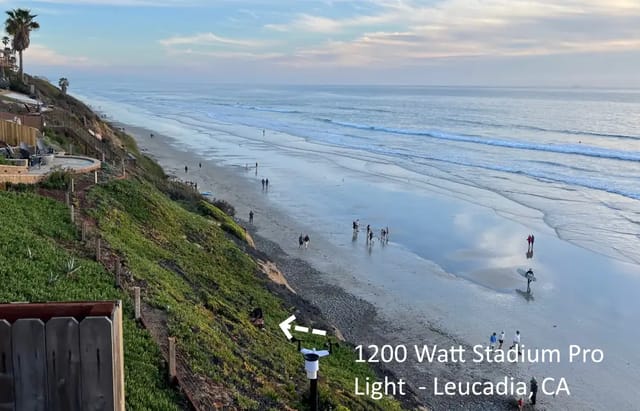
Quick Answer
Beach lights and surfing lights need extra caution because coastal lighting can affect neighbors, local ordinances, dark-sky goals, and sea turtles. Start with local code. Where wildlife may be affected, follow the low, shielded, long-wavelength rule: mount lights low, aim them down and away from the beach, and use amber, orange, or red long-wavelength sources only when lighting is truly needed.
What Are Beach Lights and Surfing Lights?
Beach lights and surfing lights are outdoor fixtures used near the coast to illuminate decks, walkways, beach access points, volleyball areas, surf zones, or waterfront property. They can be useful, but they also create a higher risk of glare, neighbor complaints, ordinance violations, and wildlife impact than typical backyard lighting.
Before buying fixtures, check local rules. Many coastal communities regulate exterior lighting visible from the beach, especially during sea turtle nesting season. If the light is decorative or only mildly convenient, turning it off may be the best design choice.
The Coastal Rule: Low, Shielded, Long
Florida Fish and Wildlife Conservation Commission guidance for sea turtle lighting uses three simple rules: keep it low, keep it shielded, and keep it long wavelength. In practice, that means low mounting height, the lowest useful lumen output, fixtures aimed downward and away from the beach, and long-wavelength amber, orange, or red light where wildlife rules apply.
Do not assume an amber-looking bulb is compliant. Wildlife lighting depends on spectral output, fixture shielding, mounting height, visibility from the beach, and local ordinance language.
Fixture and Beam Angle
Coastal lighting should be targeted. Narrower beams can help reach a specific sand, surf, or activity area from farther away, but they can also create harsh glare if pointed toward people, homes, roads, or the water. Wider beams can feel softer at low mounting heights, but they spill more light if not shielded.
For many beachfront properties, low bollards, shielded step lights, downlights, and carefully aimed low-output fixtures are safer than high-mounted floodlights. Sports-style fixtures should be used only when a real activity area needs them and the aiming can be controlled.
Salt, Moisture, and Corrosion
Coastal air is hard on fixtures. Salt spray and humidity can corrode housings, fasteners, drivers, lenses, and wiring. Choose outdoor-rated fixtures with corrosion-resistant finishes, sealed optics, appropriate IP ratings, stainless or protected hardware, and service access. Even good fixtures may need more frequent cleaning and inspection near the ocean than they would inland.
What Not to Do
- Do not aim unshielded white floodlights toward the surf, dunes, neighboring homes, or public walkways.
- Do not use more lumens than the task needs.
- Do not leave decorative lighting visible from the beach during restricted seasons or hours.
- Do not rely on color alone for turtle-friendly lighting; check wavelength and fixture certification where required.
- Do not install pole lights without checking local code, HOA rules, and wildlife guidance.
Beach Lighting Should Be Useful Without Being Harsh
Beach lights need a different standard than ordinary yard lights. Salt air, wind, glare, reflective sand, nearby homes, local rules, and wildlife-sensitive shorelines can all affect the right fixture. For public beaches or surfing areas, lighting should support visibility and safety without encouraging risky water activity or blasting light across the coastline.
| Planning point | Why it matters |
|---|---|
| Corrosion resistance | Coastal fixtures need suitable housings, hardware, gaskets, and finishes. |
| Glare and shielding | Lower glare helps pedestrians, neighbors, drivers, and anyone looking toward the water. |
| Mounting and aiming | Controlled aiming keeps useful light on paths, entries, stairs, and work areas. |
| Local restrictions | Some coastal areas have outdoor-lighting or wildlife-protection requirements. |
More Details to Consider
Beach and surf lighting should start with local code, neighbor impact, dark-sky concerns, and wildlife rules. In sea turtle areas, follow the low, shielded, long-wavelength principle and confirm whether a product is accepted by the local authority.
Fixture choice is only part of the design. Mounting height, aiming, shields, beam angle, color, lumen output, timers, and whether the light is visible from the beach all matter. Decorative light that is not needed should often be turned off.
Coastal air also changes the durability requirements. Choose corrosion-resistant housings, sealed optics, suitable hardware, and a maintenance plan for salt, moisture, wind, and cleaning.
Frequently Asked Questions
- Are beach lights legal?
- Beach lighting rules are local. Many coastal communities restrict lights visible from the beach, especially during sea turtle nesting season. Always check city, county, HOA, and wildlife rules before installing surf, beach, deck, or dune-facing lights.
- What makes beach lighting turtle-friendly?
- FWC guidance uses three basic rules: keep it low, keep it shielded, and keep it long wavelength. That means low mounting height, the lowest useful lumens, downward-directed shielding so the source is not visible from the beach, and amber, orange, or red long-wavelength light where wildlife rules apply.
- What beam angle works for beach or surf lighting?
- Beam angle depends on mounting height and distance. Narrower beams can help reach a target area from farther away, but they can also create glare if aimed poorly. The safest design uses low output, careful aiming, shielding, and only enough light for the task.
- What should you avoid with surf lights?
- Avoid unshielded white floodlights, excessive brightness, uplight, decorative lights visible from the beach, and fixtures aimed at neighbors or public walkways. If the light is not needed for safety, turning it off is often the best option.

Ready to Upgrade Your LED Lighting?
Our lighting specialists can help compare options, confirm light levels, and quote the right products for your project.
Call 800-674-9420 or email [email protected]
Monday-Friday, 8am-5pm PST

About the Author
Dara Greaney is founder and CEO of LED Light Expert with deep expertise in commercial LED lighting, retrofits, and photometric planning.
Editing by David Peguero

Trusted by Thousands
Our customers love us — and we love them back.


-
 Free Shipping
On orders over $49.00
-
 Free Extended Warranty
Up to 7 Years Free Warranty On LED Lights
-
100% Satisfaction Guarantee
