

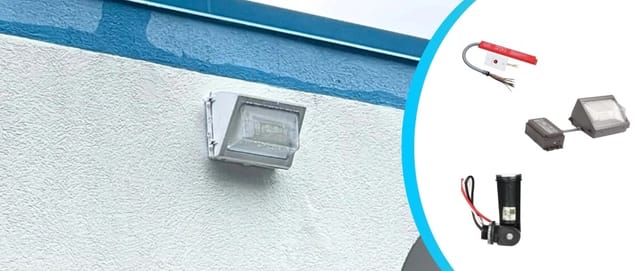
Quick Answer
Common accessories include shields, photocells, motion sensors, emergency backup, wire guards, mounting arms, and selectable controls.
LED Wall Light Accessories
Wall-light accessories can change performance as much as the fixture itself. Shields, photocells, motion sensors, emergency backup, mounting arms, wire guards, and selectable settings should be chosen for the wall, task, glare risk, and maintenance plan.
What to Check First
- Use shields or cutoff accessories where glare and spill matter.
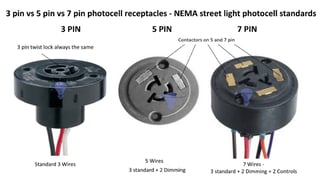
- Confirm photocell, motion sensor, and dimming compatibility.
- Check mounting hardware, wire guards, and emergency options before ordering.
Application Decision Table
| Use Case | Practical Guidance |
|---|---|
| Shielding | Controls spill and high-angle glare. |
| Controls | Photocells and sensors reduce unnecessary operation. |
| Mounting accessories | Solve wall clearance, aiming, and wiring issues. |
Common Mistakes to Avoid
- Buying by wattage, product name, or old fixture type without checking delivered light and layout.
- Skipping safety listing, environmental rating, controls compatibility, or commissioning.
- Ignoring glare, maintenance access, documentation, and replacement availability.
Accessories That Make LED Wall Lights Work Better
LED wall light accessories are small parts with a large effect on performance, safety, and maintenance. The right photocell, motion sensor, mounting plate, wire guard, shield, junction-box adapter, surge protector, or replacement lens can turn a basic wall light into a better fit for the building. The wrong accessory can cause glare, nuisance switching, poor weather sealing, or installation delays.
Start with the fixture family and mounting location. Some accessories are model-specific, while others are universal only within a voltage, thread, knockout, or mounting pattern. Check whether the wall light uses integrated controls, external controls, field-installable options, or factory-installed options. If the accessory affects the listing, seal, or wiring method, confirm compatibility before purchase.
Controls, Protection, and Mounting Details
Photocells are useful when wall lights should run automatically from dusk to dawn. Motion sensors are useful for side entrances, service doors, alleys, and intermittent traffic areas. Shields and glare-control accessories help keep light away from windows, roads, neighbors, and cameras. Surge protection is worth considering for exterior fixtures exposed to storms or unstable power.
Mounting accessories should solve a real installation problem. Adapter plates can cover old wall marks or fit a new fixture to an existing box. Wire guards can protect fixtures in gyms, warehouses, loading areas, and vandal-prone locations. Replacement lenses and gaskets help keep older fixtures in service without replacing the whole light.
- Confirm accessory compatibility with fixture model, voltage, controls, wet-location rating, and mounting pattern.
- Use shields or full-cutoff options where glare, uplight, or light trespass is likely.
- Choose motion settings based on detection range, time delay, standby level, and camera needs.
- Keep spare lenses, gaskets, and control modules documented for faster maintenance.
Essential LED Wall Lights Accessories: Buyer and Maintenance Checks
A good decision on LED wall light accessories starts with the real installation conditions, not just the product name. Check the application, mounting height, voltage, light level, glare, controls, wet or dust exposure, service access, and whether a photometric layout or qualified installer is needed before ordering.
| Check | Why it matters |
|---|---|
| Application | Confirms the fixture, lamp, control, or accessory fits the actual space and task. |
| Mounting and wiring | Prevents fit, voltage, access, and safety problems during installation. |
| Controls and maintenance | Protects energy savings, usability, troubleshooting, and long-term performance. |
More Details to Consider
Wall light accessories can make the fixture more useful when they solve a real field problem. Common examples include photocells, motion sensors, shields, mounting adapters, wire guards, surge protection, and emergency backup where supported.
Match the accessory to the exact fixture and installation environment. A part that fits one wall pack may not be listed, sealed, or wired correctly for another.
Controls should be tested after installation so the light level, detection zone, dusk-to-dawn behavior, and glare control match the space instead of creating nuisance operation.
Frequently Asked Questions
- What accessories do LED wall lights use?
- Common accessories include shields, photocells, motion sensors, emergency backup, wire guards, mounting arms, and selectable controls.
- Do shields matter?
- Yes. Shields can reduce glare, spill, and high-angle light.
- Can wall lights use photocells and motion sensors together?
- Often yes, but compatibility and wiring must be checked.
- What should I document?
- Document wattage, CCT, control settings, accessory part numbers, and installation date.

Ready to Upgrade Your LED Lighting?
Our lighting specialists can help compare options, confirm light levels, and quote the right products for your project.
Call 800-674-9420 or email [email protected]
Monday-Friday, 8am-5pm PST

About the Author
Dara Greaney is founder and CEO of LED Light Expert with deep expertise in commercial LED lighting, retrofits, and photometric planning.
Editing by David Peguero

Trusted by Thousands
Our customers love us — and we love them back.


-
 Free Shipping
On orders over $49.00
-
 Free Extended Warranty
Up to 7 Years Free Warranty On LED Lights
-
100% Satisfaction Guarantee
