High hat lights -What are they and what are the new High Bay Lights?
What Is a High Hat Light?
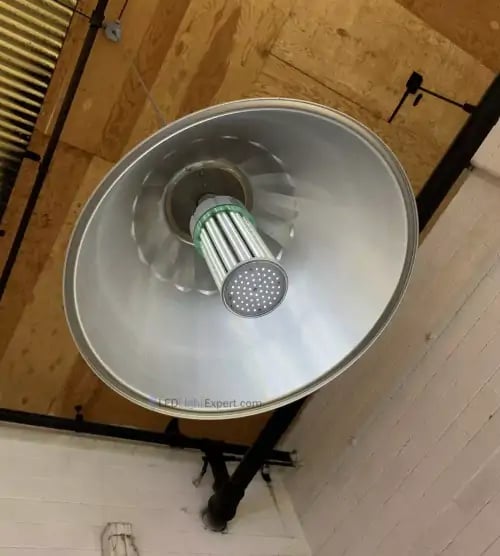
A high hat light is a fixture named for its deep, hat-shaped reflector that sits over the bulb. People use the term two ways. In commercial and industrial spaces, "high hat lights" is another name for
high bay lights - the tall-ceiling fixtures in warehouses, gyms, and factories. In residential and office work, a "high hat" usually means a recessed can light. This guide covers both, starting with the high-bay meaning most people searching "high hat lights" are after, and shows how modern LED fixtures replaced the old reflector "hat."
Another name for high bay lights
"High hat lights" is another name for
high bay lights which are used to illuminate areas with ceilings 15 ft above the ground. The lights provide illumination over large spaces such as warehouses, gymnasiums, and commercial buildings. The lights are used in kitchens, hallways, basements, and offices. These high-hat lights are installed and suspended on the ceilings of these structures. The work efficiency of these spaces is dependent on the quality of light supplied. The recession results from the fixation of the lights in the ceiling with the exposure of the reflectors.
Today, stylish models of the hat lights are available for any space. These lights are manufactured with improvements in the traditional modalities, for example, LED hat lights. LED technology is the newest popular trend due to its high standard and energy efficiency. These LED hat lights are manufactured with various benefits, for example, dimming, and energy conservation.
High bay LED lights are also made with special reflectors of aluminum or prismatic components. The aluminum components are shaped to increase light flow to the surfaces illuminated. They reduce glare formation increasing the diffusion capacity of the lights. High bay lights are also manufactured with different lenses to increase the light spread.
Name comes from that the reflector looks like a hat.
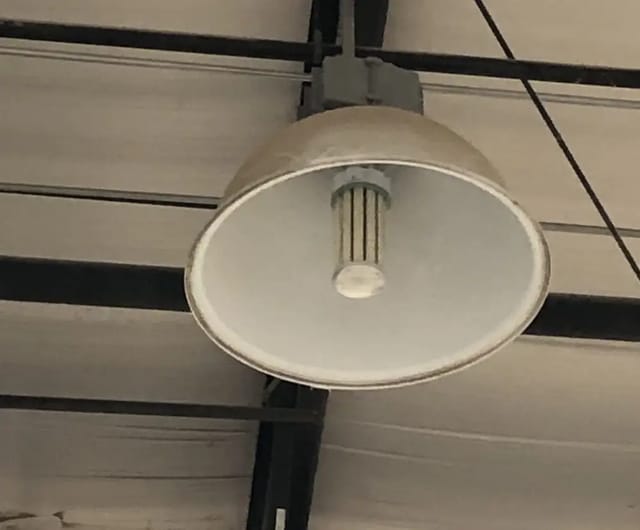
The high bay/hat lights are unique because the name comes from that the reflector looks like a hat over the bulb. Their reflectors are manufactured to focus the light and reduce glare production from the lights. The reflectors are concave and have and hollow with one end having a larger diameter than the other. The end with the smaller diameter allows the fixation of the light while the end with the larger diameter enables the exit of light. The concave hollow nature provides a wider angle for the reflection of the light beam produced by the light. The outcome is the concentration of the light that increases the space illumination capacity.
The hat reflector geometry — narrow top, wide mouth — was not aesthetic; it was physics. Legacy HID sources (metal halide, high-pressure sodium, mercury vapor) emit light in all directions from a point arc. Without a reflector, half that light fires uselessly into the ceiling. The deep specular hat catches the upward lumens and redirects them back down toward the floor, and the wider mouth at the bottom determines the beam spread. That is why every warehouse, gym, and factory built before roughly 2012 is lit by rows of identical deep-drawn aluminum or prismatic hats suspended from chains or pendant stems.
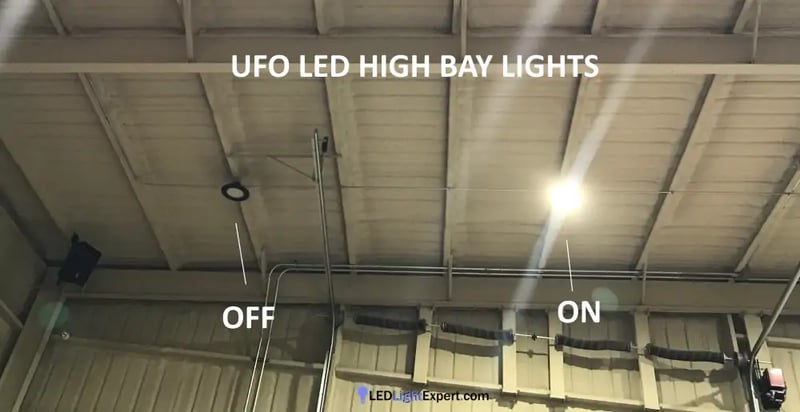
Replace High Hat Lights with Either a Retrofit bulb or UFO style high bay lights like these
Reflectors not needed in a good LED high bay fixtures
Replacing the hat with sleek modern technology
Replacing the hat reflectors with sleek modern technology has been fundamental in improving the lighting quality of the lights.
LED light fixtures have been utilized due to their high refraction ability. These LED lights also have a high light concentration ability that results in increased illumination. The high bay fixtures are manufactured with various lenses that refract and magnify the light rays produced from the LED. These lenses increase the light's concentration enhancing illumination. The reflectors installed on the LED fixtures are last 25 times more than the hat fixtures. This reduces the expenditure costs of replacement and maintenance of the light fixtures. High bay fixtures are manufactured with easy installation features over the hat fixtures. These allow you to take advantage of the special rebates provided and lower disposal costs. Most of the high bay light fixtures are manufactured with dimming abilities providing you with an opportunity to adjust the quantity of light produced.
LED optics are directional by nature. Each LED die emits light within roughly a 120° cone, so you can skip the reflector entirely and let silicone or PMMA lenses shape the beam. The result is dramatically higher delivered lumens per watt — a modern UFO high bay at 150 lm/W puts more light on the floor than a 400W metal halide ever did, at 150W of draw. The fixture also loses the fragile glass bulb, the failure-prone ballast, the 10-minute warm-up, and the hot-restrike delay that plagued HID.
What are high bay lights?
High bay lights are fixtures designed for tall open spaces, typically about 14 to 40 feet from the floor. They are common in warehouses, factories, gyms, shops, storage areas, hangars, and big-box retail spaces. Older versions used HID lamps with deep reflectors; modern LED high bays use integrated optics, lenses, and drivers to put useful light on the work area with less wasted energy.
High bay light fixtures are uniquely manufactured with the shine-on modality that ensures maintenance of the light beam angles. The beam angles available for these high bay lights include 60D, 90D, and 120D. The beam angle is a fundamental property that determines the beam width produced by the high bay fixture. Beam width is the ground area illuminated by the light fixture at any given height of the light fixture. Also, the beam width is essential to ensuring adequate diameter during illumination. The higher the beam angle the wider the diameter of illumination for your facility. This can enable you to use few light fixtures for a wide facility. High bay light fixtures with a narrow beam angle produce a sharp and focused concentrated ray of light. The diversity of these beam angles increases the light fixture uniqueness for your facility.
Why are High Bay Lights so popular?
High bay lights have been known for their wide range of lumen production enabling the adjustment of the quality of light produced. Most of the high bay lights employ LED light technology that provides lumen production ranges of 350 - 16,000 lumens for
LED corn bulb retrofits and 15,000 - 50,000+ for integrated UFO and linear fixtures. The diversity of these lumens provides an opportunity for brightness adjustment at the facility which enhances productivity. With the ranges of lumen production, the priority of the high bay lights is focused on a higher value. This is because of the distance of the light fixture from the ground. The higher the lumen production the better the lighting process and prevention of shadow formation. Also, these lights are manufactured with variable Correlated Color Temperature measured on the Kelvin scale. The temperature produced by the light fixture can range from warm to white enhancing the ambiance of the facility.
High bay lights are unique because of the different materials used to hang them from the fixed ceiling positions that include chains, pendants, and ceiling hooks. The high bay lights have a variety of fixtures for example linear high bays, round high bays, grid mount high bays, and architectural high bays. These provide you with a wide range of choices to make depending on the nature of your facility. As a customer, you are provided with full control of the lighting needs at your facility. Also, these high bay lights can be fixed directly in the ceiling of your facility, thus fewer concerns regarding the mounting costs. The illumination patterns from the light fixtures are influenced by the type of mounting used thus making your priority based on your lighting desires is key.
When do you use high bay lights?
The right time to use high bay lights is when you have an open space from 12-25 feet tall and want to produce quality illumination at your facility. High bay lights are quite popular in commercial and industrial places and can be installed at any moment depending on your preference. The choice of installation depends on the area of illumination and the quantity of lighting required. The
LED UFO high bay lights can be installed during lighting upgrades for the facility. If you have been using fluorescent, metal halide, or other older fixtures, LED high bays can be a practical upgrade when the layout, light level, and fixture type fit the space. They can reduce energy use and maintenance while improving visibility when installed correctly. The LED component in the high bay lights provides an efficient mechanism for low energy consumption while producing high-quality illumination. Using high-hat lights is the best option to improve the productivity of these areas.
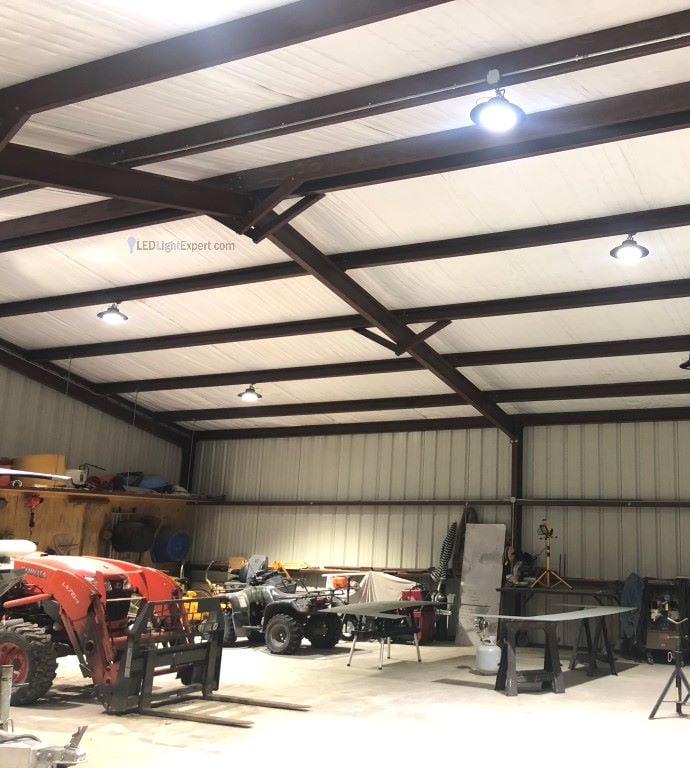
High bay lights are used during the retrofitting process of the existing lighting fixtures. LED bay lights are preferred with different components, for example, slip fitter brackets, trunnions, and an arm. These kits are time and money-saving compared to other light fixtures. High bay fixtures are preferred when a more powerful lighting fixture is required to illuminate the entire space of your facility.
Put in dollar terms: a 400W metal halide high bay at end-of-life draws about 460W (lamp + ballast losses) and delivers roughly 18,000-20,000 floor-level lumens after dirt and lumen depreciation. A 150W LED UFO high bay at 150 lm/W produces 22,500 raw lumens and holds 70%+ of that output through L70. Running 12 hours a day at $0.12/kWh, that is $242/year per fixture in MH versus $79/year in LED — a $163/fixture/year savings before maintenance, rebates, or the cost of lamp changes at the end of every two years.
In residential work, high hat lights usually means recessed can lights. In some commercial conversations, people use high hat to describe high bay lights for tall ceilings. The safest move is to clarify the ceiling height, fixture shape, mounting method, and light output before ordering.
Frequently Asked Questions
What is a high hat light.
"High hat light" is an older industry nickname for a high bay light — a commercial fixture used to illuminate large open spaces with ceilings 15-40 feet above the floor. The name comes from the deep reflector, which resembles a top hat sitting over the bulb. High hat lights are commonly installed in warehouses, gymnasiums, factories, and big-box retail.
Are high hat lights and high bay lights the same thing.
Yes — in commercial and industrial lighting they refer to the same class of fixture. "High hat" is the older nickname based on the hat-shaped reflector; "high bay" is the modern industry term that describes the application (mounted high up in an open-bay space). Today most new installations use LED UFO or linear high bay fixtures, which replace the deep hat reflector with integrated LED optics.
What ceiling height do high hat / high bay lights require.
High bay fixtures are designed for ceiling heights between 14 and 40 feet. Below 14 feet, use low bay fixtures or linear strips to avoid glare. Above 40 feet, step up to architectural or sports-grade high bays with narrower beam optics. The right fixture height and beam angle preserve uniform footcandles on the work plane without dark spots.
What beam angle should I choose for a high bay fixture.
Common LED high bay beam angles are 60°, 90°, and 120°. A 120° wide beam spreads light across more floor area — ideal for 15-20 ft ceilings and open warehouse floors. 90° is the general-purpose choice for 20-30 ft ceilings. 60° narrow beams concentrate output directly below the fixture and are preferred for racked warehouses, 30+ ft ceilings, or aisle lighting where you need light to punch down between racks.
Can I retrofit an old high hat fixture to LED.
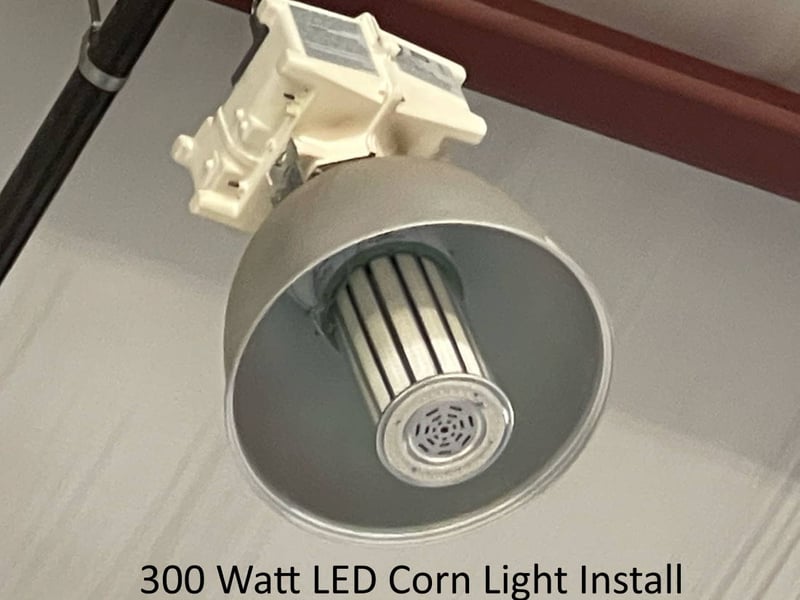
Yes. Two approaches work: an LED corn bulb that screws into the existing E39 mogul socket — fast and inexpensive, typically non-dimmable, and the old ballast should be bypassed or removed. Or a full LED retrofit kit that replaces the ballast and lamp with an integrated LED driver and module — supports dimming, higher efficacy, and longer life. For fixtures over 15 years old or with corroded reflectors, a direct UFO high bay replacement often costs less over the fixture's lifetime.
How many lumens per watt should a modern LED high bay deliver.
Current best-in-class LED high bays deliver 140-170 lumens per watt. DLC Standard listings start around 120 lm/W; DLC Premium requires 150+ lm/W. For context, legacy metal halide at end-of-life delivers about 50-60 lm/W and high pressure sodium about 70-90 lm/W — so an LED upgrade typically cuts energy use 50-70% while boosting maintained footcandles.





 Free Shipping
 Free Extended Warranty