

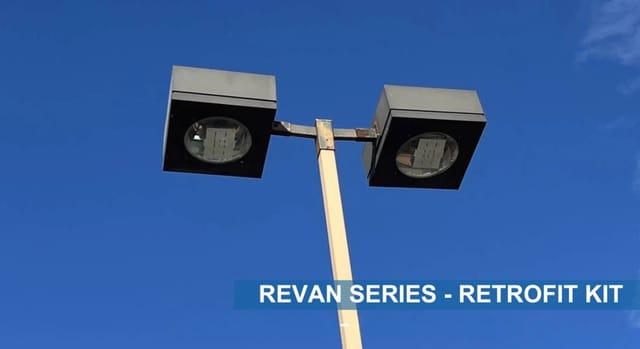
It is upgrading an existing lighting system to LED while reusing part of the existing fixture, housing, mount, or layout.
Why LED Retrofitting Is Popular
LED retrofitting is popular because many sites have usable housings, poles, mounts, or layouts but outdated lamps, ballasts, or drivers. A retrofit can be the right choice when it improves light quality, reduces load, simplifies maintenance, and avoids unnecessary fixture replacement. It is not automatic. The existing fixture condition, heat, wiring, listing, ballast, controls, and labor all matter.
What to Check First
- Inspect housing condition, sockets, wiring, gaskets, reflectors, heat paths, and mounting hardware.
- Decide whether a corn bulb, retrofit kit, driver replacement, or full fixture replacement is the correct approach.
- Confirm ballast bypass, line voltage, listing, dimming, controls, and installation instructions.
Application Decision Table
| Use Case | Practical Guidance |
|---|---|
| Corn bulb retrofit | Can work in some HID-style fixtures when heat, orientation, ballast bypass, and fit are correct. |
| Retrofit kit | Often improves optics and thermal design while keeping the housing or mount. |
| Full replacement | Best when the old housing, optics, wiring, or listing no longer supports the application. |
When a Retrofit Makes Sense
- The fixture body and mount are still sound.
- Labor access is difficult and fewer changes reduce disruption.
- The new LED kit can deliver the needed light pattern.
- Controls and surge protection can be added cleanly.
- The installed result remains code-compliant and serviceable.
Common Mistakes to Avoid
- Promising a fixed savings timeline without site math.
- Leaving old ballasts in place when the LED product requires bypass.
- Keeping damaged housings, yellowed lenses, or failed gaskets because retrofit sounds cheaper.
Retrofit or Replace: How to Decide
LED retrofitting is popular because it can preserve existing housings, poles, mounting points, or ceiling openings while improving efficiency and maintenance. It is not always the right answer. If the housing, lens, gasket, wiring, or socket is failing, a new fixture may be the better long-term choice.
| Choose retrofit when | Choose replacement when |
|---|---|
| The housing and mount are still solid. | The fixture is damaged, leaky, corroded, or badly aimed. |
| The goal is lower watts with similar coverage. | The layout, optics, or controls need a full redesign. |
| Access and labor favor a targeted upgrade. | Old components create recurring maintenance risk. |
What LED Retrofitting Is
A retrofit converts an existing fixture — fluorescent, CFL, incandescent, or HID — to LED without replacing the whole housing. It is popular for the obvious reasons: energy efficiency, compact size, low maintenance, and high CRI, plus smart options like dimming and PIR or microwave occupancy sensors. Retrofits come in every common socket (E26/E27, E14, bayonet, GU10), so most upgrades are straightforward.
It Cuts Energy Cost, a Lot
An LED retrofit saves roughly 70% of the energy of the metal halide or HID it replaces, and it is nearly ten times as efficient as old incandescent. The best-value retrofit kits and high bays already run around 140 lumens per watt, and like computer technology the efficiency keeps climbing while cost falls — 200+ lm/W at a reasonable price is on the horizon. That trajectory is what makes switching a straightforward decision.
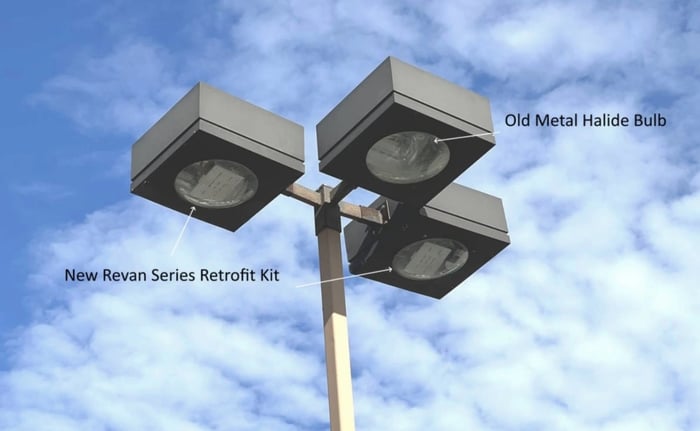
Corn Bulbs vs. Retrofit Kits
There are two main paths, and the difference matters:
- LED corn bulbs screw into an existing socket. If the old lamp used a ballast, bypass or remove it — leaving it in place wastes up to 10% extra energy and shortens the driver and lamp life, and it will eventually fail anyway. Give a corn bulb 1–2 inches of clearance to cool, and note that bulbs over about 150W generally need an open (not enclosed) fixture. Omni-directional "corn cob" bulbs replace 360-degree lamps directly; directional "paddle" bulbs focus light where it is needed, so you can drop the reflector and use lower wattage since no lumens are lost.
- Retrofit kits use a full-size LED driver, which adds longevity and supports dimming and built-in surge protection. Corn bulbs, by contrast, do not dim well with current technology — forcing it causes flicker and premature failure — so if dimming is a must, choose a kit, not a "dimmable" corn bulb.
Cheaper and Easier Than Full Replacement
Retrofit bulbs and kits usually cost far less than a whole new fixture, and the install can be as simple as swapping a bulb, which keeps labor down. Retrofitting is also the only option when a decorative or hard-to-match fixture can't be replaced. The upfront cost pays for itself: many properties reach full payback within about two years while cutting electrical operating cost by up to 70%. That said, when a spot needs a lift to reach or you want the absolute highest efficiency, a purpose-built new fixture can be the better long-term buy.
Retrofitting works indoors or out, residential or commercial — for the outdoor side (parking lots, streets, facades), see our guide to outdoor LED retrofit lighting, and size your kit with the retrofit kit buyer's guide.
More Details to Consider
LED retrofitting is popular because many buildings already have usable housings, poles, mounts, or ceiling openings but outdated lamps and ballasts. A retrofit can lower wattage, improve controls, and reduce relamping without replacing every part of the existing system.
The decision should start with condition. If the housing, lens, gasket, reflector, wiring, socket, or mounting hardware is damaged, a new fixture may be the better long-term choice. If the existing fixture is solid and the retrofit kit fits correctly, reuse can save labor and reduce waste.
Corn bulbs, retrofit lamps, and retrofit kits all have limits. Check enclosed-fixture ratings, heat clearance, ballast bypass requirements, dimming compatibility, driver placement, surge protection, and safety labeling before installation.
Savings claims should be based on site math: fixture count, existing watts, new watts, run hours, utility rate, controls, labor, rebates, and maintenance history. Retrofitting can pay back quickly on high-hour sites, but no single timeline applies to every project.
A retrofit is not automatically the budget answer and a new fixture is not automatically overkill. Compare both paths using light output, optics, controls, installation cost, service access, and future replacement support.
Frequently Asked Questions
- What is LED retrofitting?
- It is upgrading an existing lighting system to LED while reusing part of the existing fixture, housing, mount, or layout.
- Is a retrofit automatically cheaper?
- No. Labor, condition, wiring, controls, and long-term maintenance can make full replacement the better value.
- Should the ballast be bypassed?
- Many LED retrofit products require ballast bypass, but installers must follow the product instructions and code requirements.
- How do I estimate savings?
- Use fixture count, current wattage, new wattage, run hours, utility rate, controls, labor, and maintenance history.

Ready to Upgrade Your LED Lighting?
Our lighting specialists can help compare fixtures, confirm light levels, and quote products that fit the site.
Call 800-674-9420 or email [email protected]
Monday-Friday, 8am-5pm PST

About the Author
Dara Greaney is founder and CEO of LED Light Expert with deep expertise in commercial LED lighting, retrofits, and photometric planning.
Editing by David Peguero

Trusted by Thousands
Our customers love us — and we love them back.


-
 Free Shipping
On orders over $49.00
-
 Free Extended Warranty
Up to 7 Years Free Warranty On LED Lights
-
100% Satisfaction Guarantee
