Quick Answer
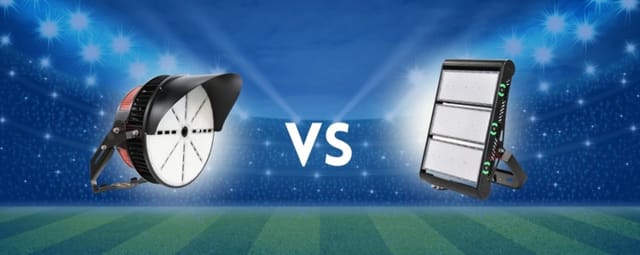
Round LED stadium fixtures throw soft, overlapping circles — best for broad, multi-use fields and even coverage with minimum dark spots. Square fixtures project sharp NEMA Type II–V rectangular cutoff — best for focused zones, broadcast-grade vertical illuminance, and BUG-restricted sites near neighbors. Both hit 130–150 lm/W at DLC Premium and 50,000–100,000 hours TM-21 L70 life. For most competition fields (IES RP-6 Class II–IV), square asymmetric optics win on uniformity per watt; for smaller recreation venues and decorative pole placements, round gives cleaner aesthetics and easier aiming.
For lighting large spaces like stadiums, the right lighting isn't just a matter of function—it's also about enhancing the experience for spectators and players alike. The shape of LED stadium lights, whether round or square, plays a key role in both performance and aesthetics. It drives beam optics, field uniformity, light trespass, and how many poles the venue actually needs.
The decision between these shapes can impact everything from light distribution to the overall ambiance of a venue. In this post, we'll explore the differences between round and square LED stadium lights, helping you make an informed decision that aligns with your sport lighting needs. We break it down against IES RP-6 targets, NEMA beam classifications, TM-21 life projections, and real field data, so the specification is defensible on paper and on the job.
Understanding LED Stadium Lights
LED stadium lights have transformed the way we illuminate large sports and event venues, offering superior energy efficiency, longer lifespans, and precise control over brightness and color temperature compared to traditional lighting solutions. These lights ensure clear visibility regardless of time or weather, enhancing the experience for both in-person and at-home viewers. Their durability and low maintenance needs make them ideal for large venues, while their versatility allows stadium operators to create the perfect atmosphere for any event. Understanding these foundational benefits is key as we compare the advantages of round versus square LED stadium lights. Dimmability lets operators hit IES RP-6 sport-specific setpoints — full game level, practice level, and maintenance level — without swapping fixtures. See our foundational buyer guide to
LED stadium lights and the full
stadium lights guide for selection fundamentals before comparing shapes.
Two specifications anchor every stadium lighting decision: horizontal illuminance (foot-candles or lux on the playing surface) and uniformity ratio U0 (minimum divided by average across the field). IES RP-6 sports lighting practice defines four classes of play — Class I through Class IV — each with a recommended illuminance and uniformity floor. A Class III high school football field needs 30 fc average with U0 = 0.6; broadcast television Class I competition needs 100 fc horizontal and U0 = 0.7 with vertical illuminance for camera work. The shape of the fixture is how you hit those numbers efficiently.
Round LED Stadium Lights
Design and Optics
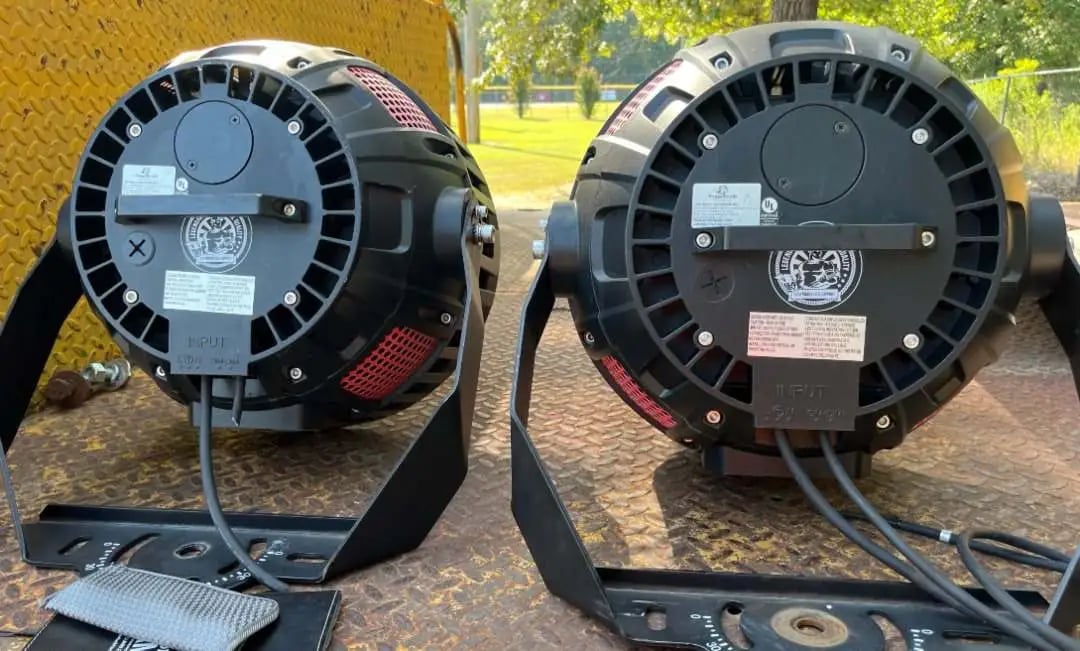
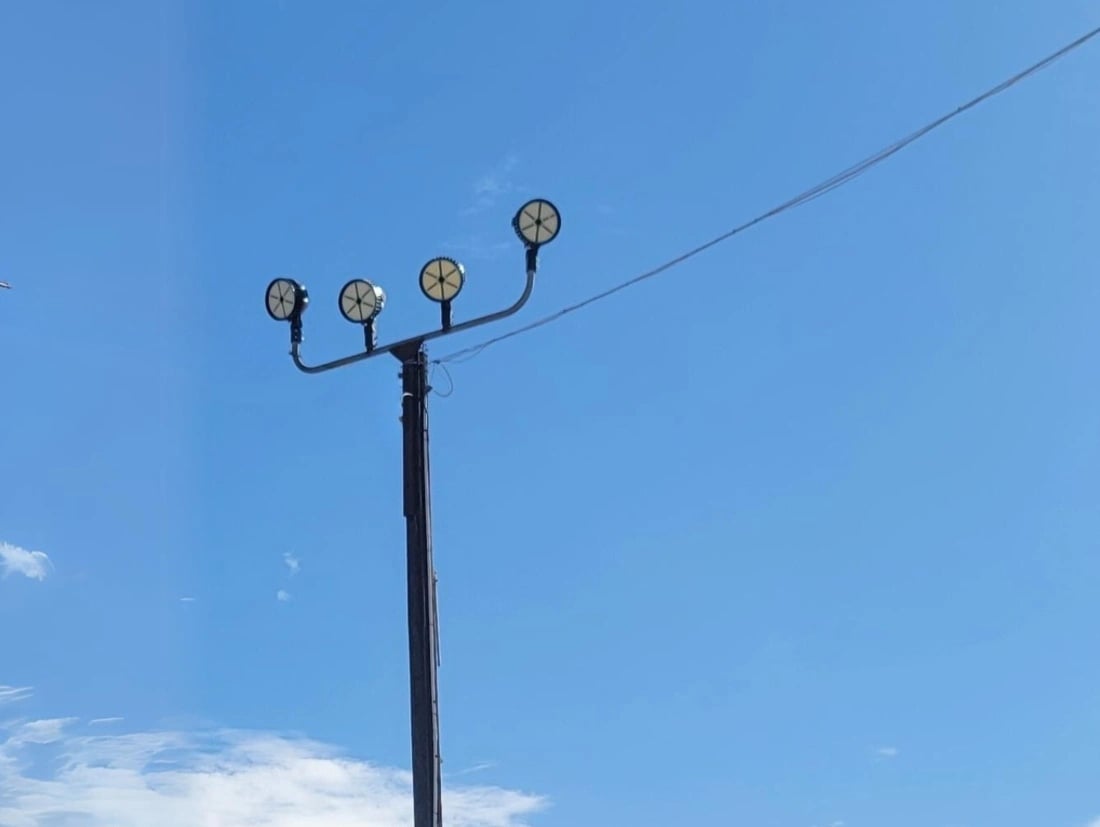
Round LED stadium lights feature a sleek, circular design that allows for uniform light distribution, ensuring even illumination across a venue. With adjustable beam angles, such as the 20, 30, or 40-degree options available in the Stadium Pro IV, these lights offer versatility for different events. Boasting up to 78,000 lumens, round LED lights provide powerful illumination ideal for sports settings, while various wattage options allow for a balance between brightness and energy efficiency. Their robust NEMA classification ensures durability and protection against harsh outdoor conditions. At 500 watts the StadiumPro IV delivers roughly 156 lm/W at the fixture — among the highest LPW in the round stadium class. Aluminum heat sinks around the perimeter dissipate thermal load, and aerodynamic profiles reduce EPA (Effective Projected Area) wind load on poles — a real concern in high-wind zones where
LED sport and stadium lights sit on 60 to 100 foot poles.
Advantages
Light Distribution: One of the best advantages of round
stadium light fixtures is their superior light distribution. The circular design allows for an even spread of light, minimizing dark spots and ensuring consistent illumination across the entire field or venue. The axially symmetric beam overlaps smoothly with neighboring fixtures, giving clean U0 uniformity on circular or multi-use venues. For outdoor rinks, tennis courts, and small rec fields, round fixtures are often the path of least resistance to IES RP-6 Class IV (20 fc) or Class III (30 fc).
Aesthetic Appeal: Round LED stadium lights also score high on aesthetic appeal. Their modern, streamlined design adds a contemporary touch to any stadium or event space. The round shape is often perceived as more visually pleasing and can enhance the overall look of the venue, especially when paired with other modern architectural elements. University stadiums, multipurpose civic venues, and waterfront facilities often spec round for visual harmony. The lower EPA also means cleaner-looking pole tops with less visual clutter on crossarms.
Installation Flexibility: Round LED stadium lights offer significant installation flexibility, with options like Flood Mount for wide-area coverage and Slip Fit Mount for precise aiming. This versatility allows for optimal placement to achieve the desired lighting effect, whether for a football field or a concert stage. Additionally, these lights are easily adjustable after installation, enabling fine-tuning of light direction and intensity to meet the varying needs of multi-purpose venues. For pole mounting on fiberglass or steel crossarms, verify
beam angle selection against field geometry before aiming.
Square LED Stadium Lights
Design and Optics
Square
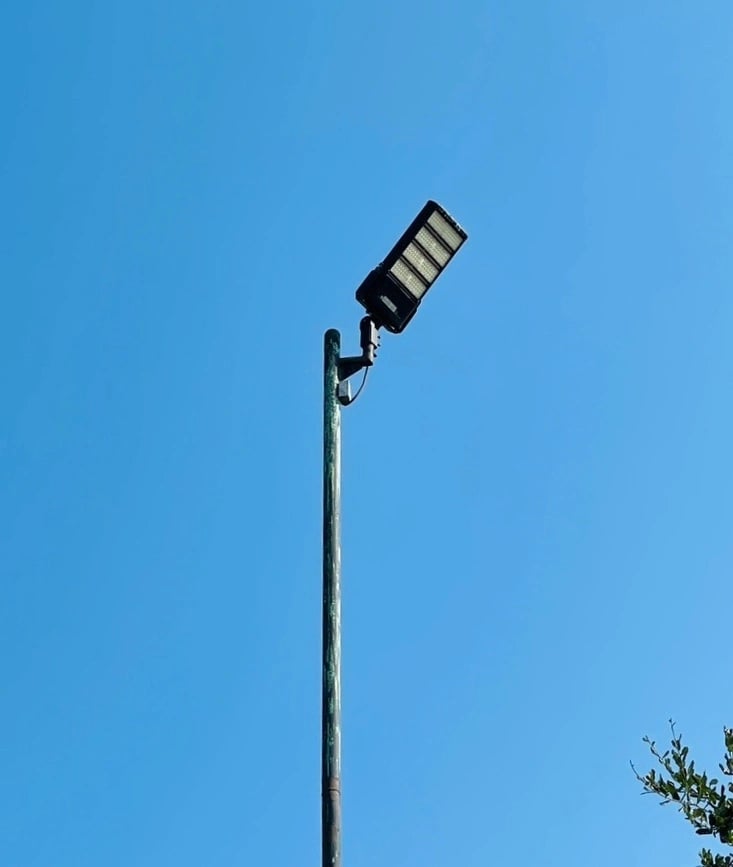
LED stadium lights feature a distinct, angular design that enables precise, focused light projection, making them ideal for controlled lighting scenarios. These lights offer adjustable beam angles, such as in the 1000-watt LED sport area light, which produces up to 140,000 lumens, ensuring bright illumination for even the largest stadiums. With various wattage options, square lights balance energy efficiency and brightness. Their robust construction and advanced cooling systems enhance durability, allowing them to perform reliably in harsh outdoor conditions while minimizing maintenance needs. The rectangular die-cast housing uses asymmetric reflector optics — the beam pattern is a rectangle rather than a circle. Manufacturers align LED modules behind individually-tuned lenses to produce NEMA Type II (rectangular wide forward throw), Type III (wide but narrower than II), Type IV (forward throw for placement along field edge), and Type V (symmetric square). A 1000W sport area light delivers 140 lm/W, with asymmetric optics that push light onto the field and away from the sky and neighbors. Extruded aluminum heat fins and forced convection protect driver and LED junction temperatures, extending TM-21 projected life.
Advantages
Focused Lighting: One of the key advantages of square LED stadium lights is their ability to provide focused illumination. The angular design allows these lights to direct light more precisely, making them ideal for situations where specific areas need to be highlighted. By concentrating the light where it's needed most, square LED lights help to enhance visibility and ensure that the action is always well-lit. For competition fields where IES RP-6 calls for both horizontal and vertical illuminance (camera work, player visibility on high balls), square asymmetric optics beat symmetric round in lumens-on-target per watt. This matters most on wide fields (football, soccer, lacrosse) where the target area is rectangular and overshoot is wasted energy.
Versatility: Square LED stadium lights are incredibly versatile, making them suitable for a wide range of sports and event setups. Whether you're lighting a football field, a baseball diamond, or an outdoor concert stage, square lights can be adjusted to meet the specific requirements of the event. Their adaptability is further enhanced by the variety of mounting options available, allowing them to be installed in different configurations depending on the layout of the venue.
Lower BUG ratings, better dark-sky compliance. Square fixtures with precision asymmetric optics typically carry BUG scores of B1-U0-G1 to B2-U0-G2 — backlight minimal, zero uplight, low glare. Round fixtures without external shielding often run B3-U2-G3 or higher. Municipalities with dark-sky ordinances (IDA-certified zones, Title 24 Part 6 LZ1/LZ2 outdoor zones in California, many coastal and residential-adjacent sites) effectively require the square cutoff or a shielded round variant. For stadium lighting near residential property lines, the
high voltage versus low voltage tradeoff and BUG-rated optics are both non-negotiable spec items.
Durability: Durability is another major advantage of square LED stadium lights. These lights are designed to withstand harsh weather conditions, including heavy rain, snow, and extreme temperatures. The robust construction and high-quality materials used in square LED lights ensure that they remain operational even in the most challenging environments. This durability makes them an excellent choice for outdoor stadiums and arenas where exposure to the elements is a constant concern. Additionally, the advanced cooling systems in these lights help to prevent overheating, further extending their lifespan and reducing the need for maintenance. Square housings tend to carry heavier extruded aluminum heat fins and IP66 or IP67 ingress protection with NEMA 4X outdoor rating. The larger surface area and fin geometry hold driver case temperature below the 70°C LM-80 test point, protecting the Arrhenius thermal budget that drives TM-21 L70 projections to 100,000 hours.
Performance Comparison: Round vs Square
Lumens per Watt and Overall Brightness
For light output and efficiency, both round and square
LED stadium lights offer impressive performance, but there are subtle differences that can influence your choice depending on your specific needs. One of the primary metrics for evaluating LED lights is lumens per watt, which measures how much light is produced for each watt of electricity consumed. Generally, both round and square LED stadium lights are designed to maximize lumens per watt, providing high levels of brightness with minimal energy consumption. However, square LED lights often have a slight edge in terms of focused light output, as their design allows for more directed illumination. This can result in a higher perceived brightness in specific areas, even if the overall lumen output is similar to that of round lights. DLC Standard listed stadium fixtures clear 110 LPW; DLC Premium clears 130 LPW; best-in-class 2025 stadium products hit 150 LPW. For instance, square LED lights like the 1000-watt LED sport area light can deliver up to 140 lumens per watt, making them highly efficient in terms of energy use while providing intense brightness. While round LED lights, such as the Stadium Pro IV, offer excellent light output with up to 78,000 lumens at 500 watts, striking a balance between broad illumination and energy efficiency.
For a 200 ft by 360 ft soccer field to IES RP-6 Class III (30 fc, U0 = 0.6), rough counts based on our
photometric study methodology: 12 to 14 square fixtures at 750W each versus 16 to 18 round fixtures at 500W each. Square wins total connected load (roughly 10 kW versus 8.5 kW), but fixture count and install labor favor square by 25 to 30 percent. On
difficult field layouts (offset pole placement, pole height constraints, non-rectangular venues), the math changes — round may actually win on fixture count.
Wattage and Lumen Reference
| Fixture Shape / Product | Wattage | Lumens | LPW |
|---|
| Round — StadiumPro IV (small) | 320 W | 51,200 lm | 160 LPW |
| Round — StadiumPro IV (mid) | 500 W | 78,000 lm | 156 LPW |
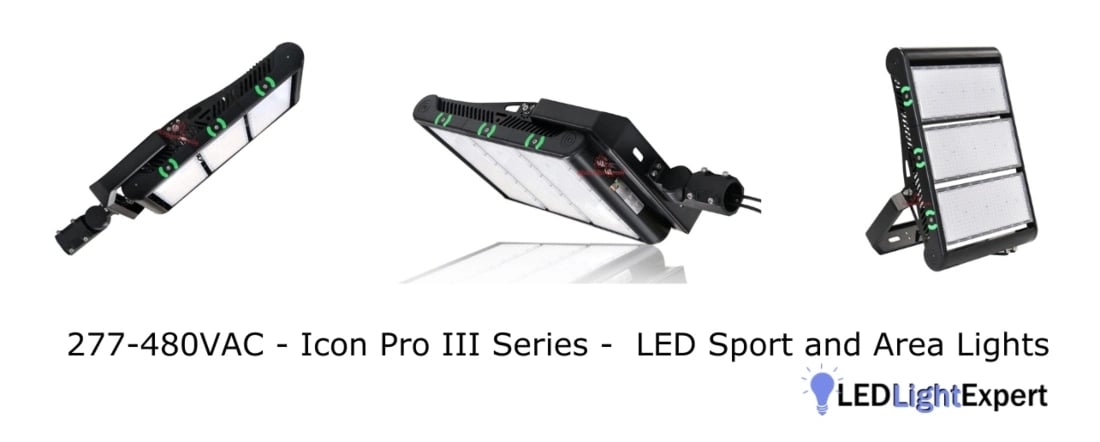
| Square — Icon PRO III 750W | 750 W | 105,000 lm | 140 LPW |
| Square — 1000W Sport Area Light | 1000 W | 140,000 lm | 140 LPW |
Energy Consumption and Cost Savings
Both round and square
LED lights are significantly more energy-efficient than traditional lighting solutions, leading to substantial cost savings, especially in large venues. While both shapes offer similar energy-saving benefits, square LED lights, with their focused beam angles, may provide better efficiency in targeted lighting applications, potentially reducing the number of fixtures required. This can result in further cost savings in both energy consumption and installation. The choice between the two shapes should be based on your venue's specific lighting needs. A typical metal halide retrofit drops connected load by 50 to 70 percent for the same or higher illuminance. Pair either shape with 0-10V or DALI-2 dimming and ANSI C136.41 7-pin receptacles for photocell, scheduling, and zone control — then run the facility at 100 percent for competition, 50 percent for practice, and 20 percent for maintenance. That control layer typically saves another 30 to 50 percent of annual kWh on top of the LED base savings. For rebate eligibility, confirm current DLC status, utility program rules, and any tax-incentive requirements before budgeting savings; rebate programs and tax rules change by location and year.
Durability and Lifespan
Lifespan Differences: Both types of LED stadium lights are known for their long lifespan, often lasting tens of thousands of hours. However, slight differences in design and thermal management can affect their longevity. Round LED lights typically have a streamlined design that enhances heat dissipation, which helps extend their lifespan. Square LED lights, while durable, may have more complex internal structures that can slightly reduce heat dissipation efficiency. However, advancements in cooling technology, like integrated heat sinks, have mitigated these differences, ensuring that square LED lights still offer excellent longevity. Both types routinely publish 50,000 to 100,000 hours projected life at L70 (the point where the fixture has lost 30 percent of its initial lumens). Square housings with extruded fin stacks hold lower case temperatures and project longer TM-21 life at higher wattage bands — the extra thermal budget is why the 1000W and 1500W ratings are typically square designs. Always demand the LM-80 driver test data and TM-21 Ts case-temperature report from the manufacturer before spec.
Resistance to Weather and Wear: Both round and square LED stadium lights are designed to endure harsh outdoor environments, but they differ slightly in their resilience. Round LED lights have a compact, aerodynamic design that minimizes the impact of wind and environmental factors, making them ideal for storm-prone regions. In contrast, square LED lights are built with reinforced materials that offer superior resistance to physical wear and tear, making them suitable for venues where they might face direct impacts. Additionally, square lights often feature high IP ratings, ensuring excellent protection against dust and water ingress, further enhancing their durability. Both carry IP65 or IP66 ingress protection at minimum; premium stadium products are IP66 or IP67 with NEMA 4X outdoor rating, UL 1598 listed for wet locations and UL 8750 listed for LED driver safety. Round aerodynamic housings take less wind load (lower EPA) — worth 10 to 20 percent on pole moment calculations in coastal and high-plains sites.
NEMA Beam Classifications and BUG Ratings
The NEMA beam classification system defines seven spread types for outdoor luminaires (Types I through V plus specials). Round stadium fixtures default to Type V (symmetric square or round beam). Square stadium fixtures are spec'd to Type II (rectangular wide, pole placement on one side), Type III (asymmetric forward throw, most common for perimeter-mounted field lighting), Type IV (forward throw, zero back-light, ideal for property-line placement), and Type V (symmetric for center-pole applications). Match beam type to pole layout before committing to shape.
IES TM-15 BUG ratings quantify three kinds of spill: Backlight (B0-B5), Uplight (U0-U5), and Glare (G0-G5). Zero is ideal (no spill in that direction); higher numbers are progressively worse. A modern asymmetric square fixture on a properly-aimed perimeter pole will score B1-U0-G1 or B2-U0-G2, meeting IES RP-8 roadway criteria and most municipal dark-sky ordinances. A round fixture at the same mounting geometry without external shielding typically scores B3-U2-G3 — failing LZ1 and LZ2 outdoor zones under California Title 24 Part 6. If the venue is within 1000 ft of residential property, or within an IDA dark-sky zone, BUG ratings typically dictate square or fully shielded round optics.
Broadcast TV and Slow-Motion Considerations
Sports broadcasting imposes its own illuminance and quality floor. HD broadcast needs 2000 lux (200 fc) horizontal with U0 = 0.7 and CRI = 80. 4K broadcast and slow-motion replay demand 2500 lux (250 fc), CRI = 90, R9 red rendering above 50, and flicker below 1 percent per IEEE PAR1789. Vertical illuminance matters as much as horizontal — cameras see players from the side, not from above, so fixtures must project enough light onto the player face and jersey at camera height (typically 4-6 ft above field surface). Square fixtures with tight asymmetric optics and tunable CCT (3000K warm, 5000K daylight, 5700K cool) are the default specification for broadcast-grade venues. For local-access broadcasts on smaller venues, well-aimed round fixtures can meet HD specs; above HD, square is the answer.
Mounting, Controls, and Pole Geometry
Both shapes ship with three primary mount types: trunnion (U-bracket for flat surface or crossarm), slipfitter (2" or 2-3/8" round tenon slide-on), and direct-pole knuckle (adjustable tilt on a threaded boss). Match mount to pole geometry: slipfitter for galvanized steel poles with tenon crossarms, trunnion for fiberglass or square steel, knuckle for field-replacement retrofits on existing tenons. Verify pole EPA rating against fixture projected area and local wind-load (ASCE 7 per zone) before installation. For poles in high-wind zones (Category II, basic wind speed = 120 mph per ASCE 7-22), round aerodynamic housings may be the difference between passing and failing the pole engineering.
Controls are where modern stadium lighting delivers real operating savings. Pair either shape with 0-10V or DALI-2 dimming drivers and ANSI C136.41 7-pin twist-lock receptacles. Add a networked controller (LoRa, Zigbee, or cellular LTE-M node) for wireless scheduling, zone control, photocell override, and remote diagnostics — the StadiumPro IV and Icon PRO III both support these. For multipurpose venues (baseball + soccer + concert), zone-by-zone dimming lets one fixture installation serve all three uses without a relighting capital project. See our
stadium lighting control systems guide for the full control architecture.
Selection Guide by Sport and Venue Class
| Venue / Use | IES RP-6 Class | Recommended Shape | Notes |
|---|
| Multi-use rec field | Class IV (20 fc) | Round (symmetric) | Broad coverage, simpler aiming, lower fixture cost |
| High school football / soccer | Class III (30 fc) | Square (Type III or IV) | Better U0, fewer fixtures, lower BUG scores |
| College / Division I competition | Class II (50 fc) | Square (Type II or III) | Broadcast-ready vertical illuminance, CRI = 80 |
| Pro broadcast / 4K venue | Class I (100 fc) | Square (precision asymmetric) | CRI = 90, R9 > 50, flicker < 1%, tight cutoff |
Codes, Standards, and Compliance
Professional stadium lighting specification sits on a stack of codes and standards. Match the specification against the project permit and the owner's performance requirements before selecting shape. Key references: IES RP-6 (sports lighting recommended practice), IES TM-15 (BUG ratings), IES TM-21 (LED lumen maintenance projection), IES LM-80 (LED test method), IEEE PAR1789 (flicker and stroboscopic effects), ANSI C136.41 (outdoor lighting control receptacles), UL 1598 (luminaires), UL 8750 (LED driver safety), DLC QPL (DesignLights Consortium Qualified Products List), California Title 24 Part 6 (outdoor lighting zones LZ0 through LZ4), NEC 410 (luminaire installation) and NEC 250 (bonding and grounding), OSHA 29 CFR 1926.501 (fall protection during pole and crossarm work), and FAA L-810 (obstruction lighting for poles over 200 ft AGL). Legal disposal of legacy metal halide heads falls under the EPA Universal Waste Rule for mercury-containing lamps.
Conclusion
So when we compare round and square LED stadium lights, the best choice ultimately depends on the specific needs of your venue. Round LED lights offer superior light distribution and a modern aesthetic, making them ideal for venues that require broad, even illumination. Both shapes offer significant advantages in terms of energy efficiency, longevity, and adaptability, ensuring that whatever choice you make, your venue will benefit from top-tier lighting performance. By considering factors like venue size, event type, and budget, you can select the right shape and brand of LED stadium lights to meet your unique requirements and enhance the overall experience for players and spectators alike. Square LED fixtures win on asymmetric optics, uniformity per watt, BUG compliance, and broadcast-grade vertical illuminance — the spec for competition and pro-level venues. Both deliver 130-150 LPW at DLC Premium and 50,000-100,000 hours TM-21 L70 life. By running the field geometry against IES RP-6 class targets, NEMA beam types, BUG limits, and broadcast requirements, you can pick the right shape the first time and avoid a relighting project five years out.
Round vs. Square LED Stadium Lights: Buyer and Maintenance Checks
A good decision on round vs square LED stadium lights starts with the real installation conditions, not just the product name. Check the application, mounting height, voltage, light level, glare, controls, wet or dust exposure, service access, and whether a photometric layout or qualified installer is needed before ordering.
| Check | Why it matters |
|---|
| Application | Confirms the fixture, lamp, control, or accessory fits the actual space and task. |
| Mounting and wiring | Prevents fit, voltage, access, and safety problems during installation. |
| Controls and maintenance | Protects energy savings, usability, troubleshooting, and long-term performance. |
Frequently Asked Questions
How do I choose between round and square LED stadium lights.
Selecting the right shape of LED stadium lights for your venue involves considering several factors to ensure optimal performance and value. Match the fixture shape to the job: large venues benefit from square LED lights (focused, high-intensity illumination), while smaller venues typically get broader, even coverage with round LED lights and no dark spots. Round housings use symmetric reflector optics that throw soft, overlapping circles — ideal for broad, multi-use fields where you want even coverage and minimum dark spots. Square housings use asymmetric rectangular optics (NEMA Type II, III, IV, V) that deliver sharper cutoff and keep light on the playing surface and off neighboring properties. For a 200 ft by 360 ft soccer or football field, a mix of 750W-1000W square fixtures on the long sides typically beats round on both uniformity (U0 = 0.6) and BUG light-trespass scores.
Which shape is more energy efficient per IES RP-6 uniformity targets.
Both types of LED stadium lights are designed with energy efficiency in mind, but their performance can vary slightly depending on the application. Round LED lights are generally designed for broader light distribution, which can sometimes mean they consume slightly more energy to cover larger areas evenly. Due to their focused beam angles, square LED lights can be more energy-efficient in scenarios where precise lighting is required. By directing light exactly where it's needed, square lights can reduce energy waste, potentially leading to greater cost savings over time. Published lumens-per-watt values, optical efficiency, and field uniformity should be checked on the current fixture spec sheet and verified in a photometric layout for the project class.
Do round or square stadium lights deliver better broadcast-grade TV quality.
Broadcast-grade sports lighting demands CRI 80 or higher, R9 red rendering above 50, minimum 2000 lux horizontal for HD and 2500 lux for 4K, and flicker below 1 percent per IEEE PAR1789. Both shapes can meet this, but square fixtures with precision NEMA Type V asymmetric optics win on broadcast vertical illuminance (the camera's perspective) because they project directional light onto players rather than lost into the sky. Round fixtures work for local HD broadcast on smaller venues; square is the specification for 4K and slow-motion replay.
What is the TM-21 L70 life expectancy for LED stadium fixtures.
IES TM-21 projects lumen maintenance from LM-80 test data using Arrhenius thermal aging. Well-engineered LED stadium fixtures published with TM-21 L70 of 50,000 to 100,000 hours at 25 C ambient. At 4 hours per night 300 nights per year that is 42 to 83 years of projected life before reaching 70 percent initial lumens. Thermal design drives it: aluminum die-cast housings with integrated heat sinks win; plastic or undersized aluminum lose 20-30 percent of rated life. Ask for the LM-80 driver and TM-21 Ts (case temperature) report before you buy.
How do NEMA BUG ratings affect stadium light selection near neighbors.
NEMA and IES developed BUG (Backlight, Uplight, Glare) ratings to control light trespass under IES TM-15. B rates rearward spill onto neighboring property; U rates skyward light pollution; G rates glare toward observers. Square asymmetric fixtures typically carry lower BUG scores (B1-U0-G1 to B2-U0-G2) because reflector geometry cuts off backlight and uplight sharply. Round fixtures without external shielding run B3-U2-G3 or worse. Municipalities with IDA (International Dark-Sky Association) zoning or ordinances (common in residential-adjacent fields) effectively mandate square or fully shielded round fixtures.
What mounting and control options work with each shape.
Both shapes ship with trunnion (U-bracket) flood mounts, slipfitter mounts for 2 inch or 2-3/8 inch round tenons on crossarms, and direct-pole knuckle mounts. Square housings more commonly offer 0-10V and DALI-2 dimming for IES RP-6 sport-specific setpoints (game vs practice vs maintenance levels at 100 percent, 50 percent, 20 percent). ANSI C136.41 7-pin receptacles enable photocells, wireless node controllers, and zone scheduling. For multipurpose venues where lighting modes matter, pair square fixtures with networked controls.
More Details to Consider
When it comes to lighting large spaces like stadiums, the right lighting isn't just a matter of function - it's also about enhancing the experience for spectators and players alike. The shape of LED stadium lights, whether round or square, plays a pivotal role in both performance and aesthetics. The decision between these shapes can impact everything from light distribution to the overall ambiance of a venue. In this post, we'll explore the differences between round and square LED stadium lights, helping you make an informed decision that aligns with your sport lighting needs.
Understanding LED Stadium Lights
LED stadium lights have transformed the way we illuminate large sports and event venues, offering superior energy efficiency, longer lifespans, and precise control over brightness and color temperature compared to traditional lighting solutions. These lights ensure clear visibility regardless of time or weather, enhancing the experience for both in-person and at-home viewers. Their durability and low maintenance needs make them ideal for large venues, while their versatility allows stadium operators to create the perfect atmosphere for any event.
Understanding these foundational benefits is key as we compare the advantages of round versus square LED stadium lights.
Round LED Stadium Lights
Round LED stadium lights feature a sleek, circular design that allows for uniform light distribution, ensuring even illumination across a venue. With adjustable beam angles, such as the 20, 30, or 40-degree options available in the Stadium Pro IV, these lights offer versatility for different events.
Boasting up to 78,000 lumens, round LED lights provide powerful illumination ideal for sports settings, while various wattage options allow for a balance between brightness and energy efficiency. Their robust NEMA classification ensures durability and protection against harsh outdoor conditions. One of the best advantages of round LED stadium lights is their superior light distribution. The circular design allows for an even spread of light, minimizing dark spots and ensuring consistent illumination across the entire field or venue. Round LED stadium lights also score high on aesthetic appeal.
Their modern, streamlined design adds a contemporary touch to any stadium or event space. The round shape is often perceived as more visually pleasing and can enhance the overall look of the venue, especially when paired with other modern architectural elements. Round LED stadium lights offer significant installation flexibility, with options like Flood Mount for wide-area coverage and Slip Fit Mount for precise aiming. This versatility allows for optimal placement to achieve the desired lighting effect, whether for a football field or a concert stage.
Additionally, these lights are easily adjustable after installation, enabling fine-tuning of light direction and intensity to meet the varying needs of multi-purpose venues.
Square LED Stadium Lights
Square LED stadium lights feature a distinct, angular design that enables precise, focused light projection, making them ideal for controlled lighting scenarios. These lights offer adjustable beam angles, such as in the 1000-watt LED sport area light, which produces up to 140,000 lumens, ensuring bright illumination for even the largest stadiums. With various wattage options, square lights balance energy efficiency and brightness.
Their robust construction and advanced cooling systems enhance durability, allowing them to perform reliably in harsh outdoor conditions while minimizing maintenance needs. One of the key advantages of square LED stadium lights is their ability to provide focused illumination. The angular design allows these lights to direct light more precisely, making them ideal for situations where specific areas need to be highlighted. By concentrating the light where it's needed most, square LED lights help to enhance visibility and ensure that the action is always well-lit.
Square LED stadium lights are incredibly versatile, making them suitable for a wide range of sports and event setups. Whether you're lighting a football field, a baseball diamond, or an outdoor concert stage, square lights can be adjusted to meet the specific requirements of the event. Their adaptability is further enhanced by the variety of mounting options available, allowing them to be installed in different configurations depending on the layout of the venue. Durability is another major advantage of square LED stadium lights.
These lights are designed to withstand harsh weather conditions, including heavy rain, snow, and extreme temperatures. The robust construction and high-quality materials used in square LED lights ensure that they remain operational even in the most challenging environments. This durability makes them an excellent choice for outdoor stadiums and arenas where exposure to the elements is a constant concern. Additionally, the advanced cooling systems in these lights help to prevent overheating, further extending their lifespan and reducing the need for maintenance.
Round vs Square LED Stadium Lights - Performance Comparison
When it comes to light output and efficiency, both round and square LED stadium lights offer impressive performance, but there are subtle differences that can influence your choice depending on your specific needs. Lumens per Watt and Overall Brightness: One of the primary metrics for evaluating LED lights is lumens per watt, which measures how much light is produced for each watt of electricity consumed. Generally, both round and square LED stadium lights are designed to maximize lumens per watt, providing high levels of brightness with minimal energy consumption.
However, square LED lights often have a slight edge in terms of focused light output, as their design allows for more directed illumination. This can result in a higher perceived brightness in specific areas, even if the overall lumen output is similar to that of round lights. For instance, square LED lights like the 1000-watt LED sport area light can deliver up to 140 lumens per watt, making them highly efficient in terms of energy use while providing intense brightness.
While round LED lights, such as the Stadium Pro IV, offer excellent light output with up to 78,000 lumens at 500 watts, striking a balance between broad illumination and energy efficiency. Energy Consumption and Cost Savings: Both round and square LED lights are significantly more energy-efficient than traditional lighting solutions, leading to substantial cost savings, especially in large venues. While both shapes offer similar energy-saving benefits, square LED lights, with their focused beam angles, may provide better efficiency in targeted lighting applications, potentially reducing the number of fixtures required.
This can result in further cost savings in both energy consumption and installation. The choice between the two shapes should be based on your venue's specific lighting needs. Both types of LED stadium lights are known for their long lifespan, often lasting tens of thousands of hours. However, slight differences in design and thermal management can affect their longevity. Round LED lights typically have a streamlined design that enhances heat dissipation, which helps extend their lifespan. Square LED lights, while durable, may have more complex internal structures that can slightly reduce heat dissipation efficiency.
However, advancements in cooling technology, like integrated heat sinks, have mitigated these differences, ensuring that square LED lights still offer excellent longevity. Both round and square LED stadium lights are designed to endure harsh outdoor environments, but they differ slightly in their resilience. Round LED lights have a compact, aerodynamic design that minimizes the impact of wind and environmental factors, making them ideal for storm-prone regions.
In contrast, square LED lights are built with reinforced materials that offer superior resistance to physical wear and tear, making them suitable for venues where they might face direct impacts. Additionally, square lights often feature high IP ratings, ensuring excellent protection against dust and water ingress, further enhancing their durability. How to Choose Between Round and Square LED Stadium Lights? Selecting the right shape of LED stadium lights for your venue involves considering several factors to ensure optimal performance and value. Here's a step-by-step guide to help you make the right choice:
Large venues: Square LED lights are ideal for focused, high-intensity illumination. Smaller venues: Round LED lights offer broad, even coverage with no dark spots. Varied events: Round lights with wide beam angles are versatile for diverse lighting needs. Sports-specific: Square lights provide precise, targeted illumination for specific sports. Initial costs: Round lights may be easier and cheaper to install. Long-term savings: Both shapes are energy-efficient, so consider the overall cost over time. Modern look: Round lights are sleek and contemporary. Industrial/classic look: Square lights suit venues with a more structured design.
Which Shape is More Energy Efficient? Both types of LED stadium lights are designed with energy efficiency in mind, but their performance can vary slightly depending on the application: Round LED Lights: These lights are generally designed for broader light distribution, which can sometimes mean they consume slightly more energy to cover larger areas evenly. Square LED Lights: Due to their focused beam angles, square LED lights can be more energy-efficient in scenarios where precise lighting is required.
By directing light exactly where it's needed, square lights can reduce energy waste, potentially leading to greater cost savings over time. In terms of specific statistics, square LED lights like the 1000-watt LED sport area light can deliver up to 140 lumens per watt, making them one of the most energy-efficient options on the market. Round LED lights, while slightly lower in lumens per watt, still offer impressive efficiency and are often more versatile in terms of application. Do Round or Square Lights Provide Better Coverage?
When it comes to coverage area and light spread, the choice between round and square lights depends largely on the layout and specific lighting needs of your venue: Round LED Lights: These lights excel in providing wide, even coverage across large areas. Their circular design naturally spreads light in all directions, reducing the likelihood of dark spots and ensuring consistent illumination. This makes them ideal for venues that require comprehensive lighting across the entire field or court. Square LED Lights: Square lights, on the other hand, are better suited for focused lighting applications.
Their beam angles can be adjusted to concentrate light on specific areas, making them ideal for venues where certain sections require more intense illumination. However, this can sometimes result in less even coverage across broader spaces. What Are the Best Brands for Round and Square LED Stadium Lights? Choosing the right brand is as important as selecting the right shape of LED stadium lights. Here are some top brands that offer high-quality options for both round and square LED lights:
StadiumPro IV: A leading choice for round LED stadium lights, the StadiumPro IV offers excellent light distribution, multiple beam angle options, and high lumen output. It's designed for durability and performance, making it a top choice for modern stadiums. Icon Pro: The Icon Pro series is well-regarded for its square LED lights, offering focused illumination with advanced cooling technology and robust construction. These lights are ideal for venues that require precise lighting and long-term reliability.
NextGen IV: Another strong contender in the square LED light market, NextGen IV lights offer high lumens per watt and are designed for energy efficiency and durability. They are versatile enough for a range of sports and event applications. These brands are known for their innovation and commitment to quality, making them reliable choices for any stadium lighting project. So when we compare round and square LED stadium lights, the best choice ultimately depends on the specific needs of your venue.
Round LED lights offer superior light distribution and a modern aesthetic, making them ideal for venues that require broad, even illumination. Both shapes offer significant advantages in terms of energy efficiency, longevity, and adaptability, ensuring that whatever choice you make, your venue will benefit from top-tier lighting performance. By considering factors like venue size, event type, and budget, you can select the right shape and brand of LED stadium lights to meet your unique requirements and enhance the overall experience for players and spectators alike.
Frequently Asked Questions
- How do I choose between round and square LED stadium lights?
- Match the fixture shape to the job. Round housings use symmetric reflector optics that throw soft, overlapping circles — ideal for broad, multi-use fields where you want even coverage and minimum dark spots. Square housings use asymmetric rectangular optics (NEMA Type II, III, IV, V) that deliver sharper cutoff and keep light on the playing surface and off neighboring properties. For a 200 ft by 360 ft soccer or football field, a mix of 750W-1000W square fixtures on the long sides typically beats round on both uniformity (U0 = 0.6) and BUG light-trespass scores.
- Which shape is more energy efficient per IES RP-6 uniformity targets?
- Both round and square DLC Premium listed fixtures deliver 130-150 lumens per watt at the fixture. The efficiency difference is in total fixture count, not per-fixture watts. Square asymmetric optics can put more lumens on the target zone, but fixture count and uniformity should be verified in a current photometric layout against the project class and governing sports-lighting criteria. Round fixtures throw wider, so for a single-zone field they may require 15-25 percent more total fixtures to hit the same U0 — which offsets any per-fixture optical gains.
- Do round or square stadium lights deliver better broadcast-grade TV quality?
- Broadcast-grade sports lighting demands CRI 80 or higher, R9 red rendering above 50, minimum 2000 lux horizontal for HD and 2500 lux for 4K, and flicker below 1 percent per IEEE PAR1789. Both shapes can meet this, but square fixtures with precision NEMA Type V asymmetric optics win on broadcast vertical illuminance (the camera's perspective) because they project directional light onto players rather than lost into the sky. Round fixtures work for local HD broadcast on smaller venues; square is the specification for 4K and slow-motion replay.
- What is the TM-21 L70 life expectancy for LED stadium fixtures?
- IES TM-21 projects lumen maintenance from LM-80 test data using Arrhenius thermal aging. Well-engineered LED stadium fixtures published with TM-21 L70 of 50,000 to 100,000 hours at 25 C ambient. At 4 hours per night 300 nights per year that is 42 to 83 years of projected life before reaching 70 percent initial lumens. Thermal design drives it: aluminum die-cast housings with integrated heat sinks win; plastic or undersized aluminum lose 20-30 percent of rated life. Ask for the LM-80 driver and TM-21 Ts (case temperature) report before you buy.
- How do NEMA BUG ratings affect stadium light selection near neighbors?
- NEMA and IES developed BUG (Backlight, Uplight, Glare) ratings to control light trespass under IES TM-15. B rates rearward spill onto neighboring property; U rates skyward light pollution; G rates glare toward observers. Square asymmetric fixtures typically carry lower BUG scores (B1-U0-G1 to B2-U0-G2) because reflector geometry cuts off backlight and uplight sharply. Round fixtures without external shielding run B3-U2-G3 or worse. Municipalities with IDA (International Dark-Sky Association) zoning or ordinances (common in residential-adjacent fields) effectively mandate square or fully shielded round fixtures.
- What mounting and control options work with each shape?
- Both shapes ship with trunnion (U-bracket) flood mounts, slipfitter mounts for 2 inch or 2-3/8 inch round tenons on crossarms, and direct-pole knuckle mounts. Square housings more commonly offer 0-10V and DALI-2 dimming for IES RP-6 sport-specific setpoints (game vs practice vs maintenance levels at 100 percent, 50 percent, 20 percent). ANSI C136.41 7-pin receptacles enable photocells, wireless node controllers, and zone scheduling. For multipurpose venues where lighting modes matter, pair square fixtures with networked controls — see our stadium lighting control systems guide.
Ready to upgrade? Tell us the space and we will size it with you.
Our lighting specialists can help compare options, confirm light levels, and quote the right products for your project.
Call 800-674-9420 or email [email protected]
Monday-Friday, 8am-5pm PST
Dara Greaney is founder and CEO of LED Light Expert with deep expertise in commercial LED lighting, retrofits, and photometric planning.
LinkedIn X (Twitter)
Editing by David Peguero





 Free Shipping
 Free Extended Warranty