


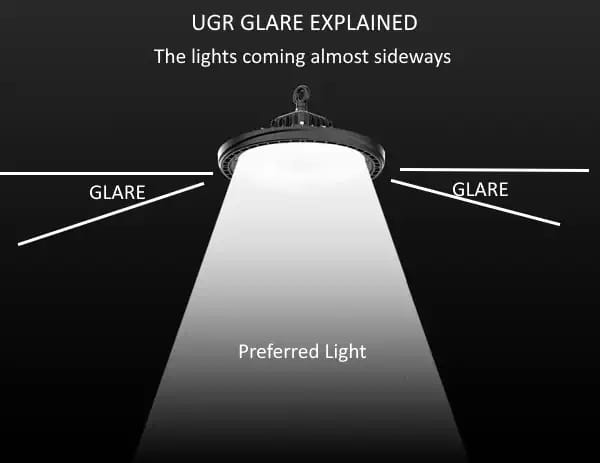
Quick Answer
UGR, or Unified Glare Rating, estimates discomfort glare in an indoor lighting layout. Lower is better. Reduce UGR with shielded optics, lower luminaire brightness, correct mounting height, careful aiming, better background luminance, and a photometric plan rather than simply buying the brightest fixture.
UGR Glare Rating of Lights and DLC 5.1 Explained
What is Glare, and Why is it Bad?
- Discomfort glare - The central characteristic of discomfort glare is that people cannot stand it and naturally turn away. If a High-Intensity Discharge (HID) floodlight is switched on and aimed directly at you from only a few meters away, you will experience a severe example of uncomfortable glare. And it is natural that you will turn away.
- Disability glare - This form of glare reduces visibility, but not to the point that people feel uncomfortable and automatically turn away. Examples of disability glare include driving under the rain in a two-way street and staring at a screen with a light source(s) behind you.
What is DLC Rating in Lighting?
What does DLC 5.1 mean for glare and lighting purchases?
- Which kind of product are you installing?
- What is its appropriate rating and intended use?
- In what way is it used?
- What is the projected lifespan and warranty?

What is UGR Rating in Lighting?
- Size and shape of space
- The brightness of the surface walls
- Floor
- Ceilings
- Large areas

Why is UGR Rating Important?
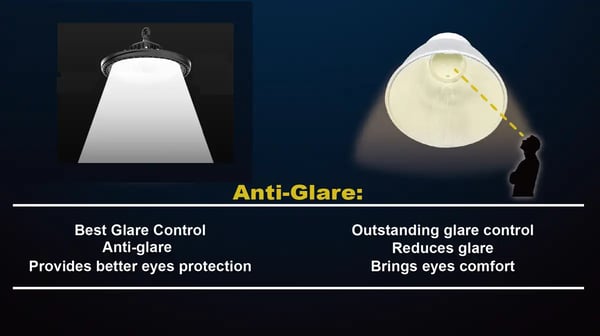
How to Reduce UGR of an Installation
- Decrease the luminance of the light fittings as perceived by the viewer. In other words, use lower-luminance optics, shielding, diffusers, or a better fixture layout rather than simply overpowering the space.
- Increase the background luminance. This step is usually among the initial measures you can take when reducing UGR.
- Ensure that the angle of light fittings is away from the users or occupants of the room. Make sure that the light does not shine directly into their eyes.
UGR Is Useful, But It Is Not a Universal Glare Score
UGR helps compare discomfort glare in indoor spaces where the calculation assumptions fit the room. It is most useful for offices, classrooms, and similar work areas. It is less useful when applied loosely to outdoor poles, sports lighting, wall packs, or any project where aiming, viewing angle, mounting height, surface reflectance, and task position are not part of the calculation.
| To reduce glare | Check this first |
|---|---|
| Fixture optics | Lens, reflector, cutoff, shielding, and luminous area. |
| Placement | Mounting height, spacing, aiming, and viewer position. |
| Output | Too much light can be as uncomfortable as too little. |
| Surfaces | Glossy floors, screens, and bright walls can create reflected glare. |
Frequently Asked Questions
A lower UGR glare rating correlates directly with reduced visual fatigue, which is why designers targeting DLC 5.1 certification now treat it as a non-negotiable specification rather than a nice-to-have metric.
Light Fixture Beam Angles – What are they and Why Should I Care? LED Lighting Guide For you to properly light a space, there are several aspects that you must consider including color, lumens,
Beam Angles in Lighting: What Are They and Why You Should Care? LED Lighting Guide Understand the importance of beam angles in lighting with LED Light Expert.

How to Reduce Eye Strain with Proper LED Office Lighting LED Lighting Guide Discover how to reduce eye strain with proper LED office lighting in this guide from LED Light Expert.
More Details to Consider
UGR Glare Rating of Lights and DLC 5.1 Explained. What is Glare, and Why is it Bad? Glare is a visual sensation in the field of vision caused by improper distribution of lighting intensity or extreme contrast in the intensity of light in time or space. Glares can occur directly or by reflection and can cause reduced visibility and discomfort. As a result, glare limits an individual's ability to distinguish objects and details. There is a direct relationship between the generation of glare and the following aspects: installation height, optical height, use, and arrangement of
the environment of lights. It is also important to note that glare sensitivity varies widely from one person to another. It should be noted that the high sensitivity to glare among older people is attributed to the aging characteristics of their eyes. Depending on its effects, there are two forms of glare: Discomfort glare - The central characteristic of discomfort glare is that people cannot stand it and naturally turn away. If a High-Intensity Discharge (HID) floodlight is switched on and aimed directly at you from only a few meters away, you will experience
a severe example of uncomfortable glare. And it is natural that you will turn away. Disability glare - This form of glare reduces visibility, but not to the point that people feel uncomfortable and automatically turn away. Examples of disability glare include driving under the rain in a two-way street and staring at a screen with a light source(s) behind you. As recommended by International Commission on Illumination (CIE), the unit for measuring glare is UGR (unified glare rating). It is based on the ratio of light-source luminance to background luminance. UGR can take values from
as low as 5 to as high as 40. Glare is essential in lighting design because the lack of good lighting design in industrial and commercial settings adversely affects productivity, comfort, and safety. What is DLC Rating in Lighting? According to its website, Design Lights Consortium's (DLC) mandate is to promote quality, energy efficiency, and performance of commercial sector lighting solutions. It achieves this goal through a collaboration among its state, federal, and regional energy efficiency program members, lighting designers, luminaire manufacturers, and other stakeholders across the US and Canada. DLC is an independent
agency responsible for certifying LED light bulbs and led lights. DLC is a rating system used to identify the lighting products that are generally regarded as acceptable for their intended application through the assessment of the manufacturer data and testing. DLC compiles and maintains a list of lighting products with outstanding quality, efficiency, and acceptable standards. This list is called Quality Products List (QPL). Therefore, DLC lights are the ones that are tested and certified by DLC. These lights are highly recommended because they confirm that the products have undergone a series of
tests before their release into the market. The tests prove the lights are efficient, high-quality, and, most importantly, meet the manufacturer's claim of light quality and lumen output. In other words, an active DLC listing helps verify reported color rendering and lumen output, but buyers should still confirm the current QPL entry and product spec sheet. What is DLC 5.1, and How Does It Impact Lighting Purchases? DLC Version 5.1 is outlined in the Solid State Lighting (SSL) program as a list of technical requirements. It is a policy that ensures a greater quality of light color. The groundwork for DLC v5.1 was laid
back in 2020 when DLC v5.0 was passed. The goal of DLC v5.1 is to maximize energy savings while improving light quality. DLC v5.1 most recent updates focus primarily on discomfort glare, color performance, and light distribution. Something to note is that the older lighting products that do not attain the v5.1 requirement have since been removed from the qualified products list (QPL) in July 2021. With the latest changes, about two-thirds of the current DLC list will be removed. Approximately 80 percent of LED HID replacement products have been removed. This is a
significant alteration, even though more than 200,000 lighting products still have retained their positions on the list. Buyers should always remember that the absence of a product on the QPL does not necessarily mean that it is unsafe; instead, it implies that it does not meet the highest available standards in the market for users' satisfaction. The following questions should help you make the most informed decision: Which kind of product are you installing? What is its appropriate rating and intended use? In what way is it used? What is the projected lifespan
and warranty? What is UGR Rating in Lighting? Unified glare rating, or UGR, is the measurement used to calculate glare from light fixtures or luminaires. It is a parameter or value that gives information about the extent of the psychological glare of a luminaire in an indoor space. A scale running from about 5 to 40 is used to describe UGR. If you desire to determine the likelihood of a lighting source causing discomfort to persons around it, the UGR rating is the aspect to assist you do so. According to the EN 12464-1 standard for European
indoor lighting standards, UGR values are based on fittings and regular patterns. A lower UGR rating denotes low glare. Additional factors that determine the value of UGR include: Size and shape of space. The brightness of the surface walls. Floor. Ceilings. Large areas. Why is UGR Rating Important? Glare is a common issue in workspaces. Excessive brightness due to inappropriate lighting reflects on surfaces like whiteboards, computer screens, windows, and ceilings, causing eye troubles and headaches, often disrupting workflow. Therefore, it is necessary to attain the correct lighting level in your workspace to ensure
clear visibility for staff and visitors. A UGR level of 16 to 21 is recommended for office lighting. UGR levels of 22 to 27 are acceptable for industrial settings such as warehouse lighting. A UGR level of more than 28 is generally considered bad practice. The DLC's mission is to assist the lighting industry in raising the standard of lighting in built environments and ensuring that workplaces are secure and welcoming for people. With a UGR requirement for premium items, lighting decision-makers can select from the premium list for more confidence in the
glare performance of the devices they specify or install. The only indoor lighting primary uses under the premium categorization subject to the UGR standards in V5.1 are linear ambient products, troffers, low bays, and high bays. For Standard classification items (in the aforementioned primary uses) requesting an effectiveness allowance for improved glare reduction, UGR standards also apply. How to Reduce UGR of an Installation. There are several measures that, when taken during the design of an installation, can help reduce the UGR. For instance, it is advisable to keep in mind the position
of the room occupants of the light fittings and also the choice of your light fittings. In summary, the following are the things that you need to do to reduce UGR: Decrease the luminance of the light fittings as perceived by the viewer. In other words, decrease the wattage or narrow the beam angle. Increase the background luminance. This step is usually among the initial measures you can take when reducing UGR. Ensure that the angle of light fittings is away from the users or occupants of the room. Make sure that the light
does not shine directly into their eyes. These are a few measures you can take during installation to reduce UGR for proper visibility in a given space.
Frequently Asked Questions
- What is Glare, and Why is it Bad?
- Glare is visual discomfort or reduced visibility caused by excessive brightness, poor optical control, harsh contrast, or light aimed into the viewer's field of vision. Glare can occur directly or by reflection and can cause reduced visibility and discomfort. As a result, glare limits an individual's ability to distinguish objects and details. There is a direct relationship between the generation of glare and the following aspects: installation height, optical height, use, and arrangement of the environment of lights. It is also important to note that glare sensitivity varies widely from one person to another. It should be noted that the high sensitivity to glare among older people is attributed to the aging characteristics of their eyes. Depending on its effects, there are two forms of glare: Discomfort glare - The central characteristic of discomfort glare is that people cannot stand it and naturally turn away. If a High-Intensity Discharge (HID) floodlight is switched on and aimed directly at you from only a few meters away, you will experience a severe example of uncomfortable glare. And it is natural that you will turn away.Disability glare - This form of glare reduces visibility, but not to the point that people feel uncomfortable and automatically turn away. Examples of disability glare include driving under the rain in a two-way street and staring at a screen with a light source(s) behind you. As recommended by International Commission on Illumination (CIE), the unit for measuring glare is UGR (unified glare rating). It is based on the ratio of light-source luminance to background luminance. UGR can take values from as low as 5 to as high as 40. Glare is essential in lighting design because the lack of goodlighting designin industrial and commercial settings adversely affects productivity, comfort, and safety.
- What is DLC Rating in Lighting?
- According to its website, Design Lights Consortium's (DLC) mandate is to promote quality, energy efficiency, and performance of commercial sector lighting solutions. It achieves this goal through a collaboration among its state, federal, and regional energy efficiency program members, lighting designers, luminaire manufacturers, and other stakeholders across the US and Canada. DLC is an independent agency responsible for certifying LED light bulbs and led lights. DLC is a rating system used to identify the lighting products that are generally regarded as acceptable for their intended application through the assessment of the manufacturer data and testing.DLC compiles and maintains a list of lighting products with outstanding quality, efficiency, and acceptable standards.This list is called Quality Products List (QPL). Therefore, DLC lights are the ones that are tested and certified by DLC. These lights are highly recommended because they confirm that the products have undergone a series of tests before their release into the market. The tests prove the lights are efficient, high-quality, and, most importantly, meet the manufacturer's claim of light quality and lumen output. In other words, an active DLC listing helps verify reported color rendering and lumen output, but buyers should still confirm the current QPL entry and product spec sheet.
- What does DLC 5.1 mean for glare and lighting purchases?
- DLC Version 5.1 is part of the Solid State Lighting technical requirements. It raised the bar for efficiency and quality of light, including color performance, light distribution, and discomfort-glare reporting for affected product categories. If a rebate or specification depends on DLC listing, confirm the product is still active on the current QPL before purchase. Also check intended use, mounting height, glare-control needs, projected lifespan, and warranty.
- What is UGR Rating in Lighting?
- The UGR (Unified Glare Rating) is a numeric scale that rates the discomfort glare produced by a lighting installation. UGR is one of three metrics for evaluating discomfort glare in European and International standards. The scale ranges from 10 to 30, with lower values indicating less glare and better visual comfort. UGR 10 is like staring at a clear sky, while UGR 30 is like standing in direct sunlight. It is the standard for European indoor lighting.
- Why is UGR Rating Important?
- Glare is a common issue in workspaces. Excessive brightness due to inappropriate lighting reflects on surfaces like whiteboards, computer screens, windows, and ceilings, causing eyestrain, headaches, and reduced visual comfort, often disrupting workflow. Therefore, it is necessary to attain the correct lighting level in your workspace to ensure clear visibility for staff and visitors. A UGR level of 16 to 21 is recommended for office lighting. UGR levels of 22 to 27 are acceptable for industrial settings such aswarehouse lighting. A UGR level of more than 28 is generally considered bad practice. The DLC's mission is to assist the lighting industry in raising the standard of lighting in built environments and ensuring that workplaces are secure and welcoming for people. With a UGR requirement for premium items, lighting decision-makers can select from the premium list for more confidence in the glare performance of the devices they specify or install. The onlyindoor lightingprimary uses under the premium categorization subject to the UGR standards in V5.1 are linear ambient products, troffers, low bays, andhigh bays. For Standard classification items (in the aforementioned primary uses) requesting an effectiveness allowance for improved glare reduction, UGR standards also apply.
Ready to Upgrade Your Lighting?
Our LED lighting experts can help you find the right fixtures for your project.
Call 800-674-9420 or email [email protected]
Monday–Friday, 8am–5pm PST

Tagged Products
">

1 Comments
gregoryfromfnaf
Very good products!


