


LED lights do not use a traditional ballast. Fluorescent, metal halide, mercury vapor, and many HID lamps use ballasts to start and regulate lamp current, while LEDs use drivers to convert and regulate power for LED chips. When retrofitting older fixtures, the old ballast is often bypassed or removed unless the LED lamp is specifically designed as a ballast-compatible plug-and-play product.
Magnetic Ballast
Electronic Ballast
Function of a Ballast
Why LEDs don’t use a Ballast
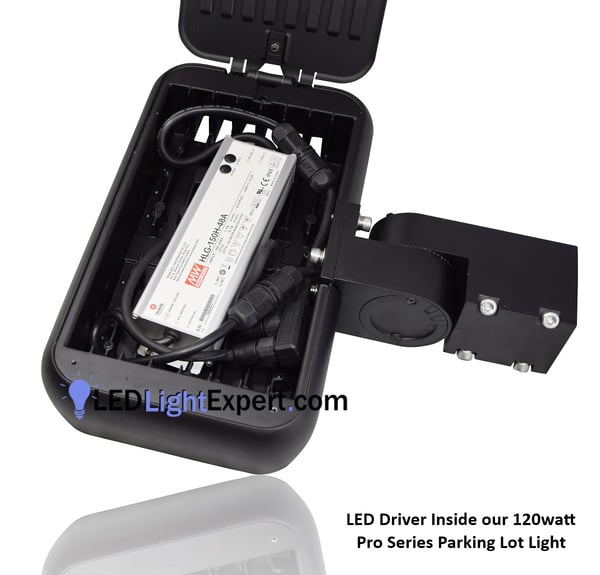
What is an LED Driver
Ballast vs Driver: What to Decide Before Retrofitting
The key question is not simply whether the old fixture has a ballast. The key question is which LED retrofit type you are installing: ballast-compatible, ballast-bypass, or a full fixture replacement. Match the wiring to the product instructions and have a qualified electrician handle line-voltage work.
- Ballast-compatible lamps are simple to install, but they still depend on the old ballast.
- Ballast-bypass lamps remove that failure point, but they require correct direct wiring.
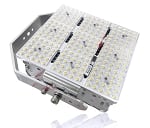
- Full LED fixtures are often cleaner for parking lots, high bays, and other higher-output applications.
Frequently Asked Questions
- Do LED lights need a ballast?
- Most LED lights do not need a traditional ballast. They use a driver, or they are wired as a ballast-compatible lamp only when the product is designed for that setup.
- Should I bypass the ballast for an LED retrofit?
- Bypassing the ballast is common for direct-wire LED lamps, but the wiring must match the product instructions and local electrical code.
- What is the difference between a ballast and an LED driver?
- A ballast limits and starts current for legacy lamps. An LED driver converts and regulates power for LED chips.
- Can a failed ballast make an LED lamp stop working?
- Yes, if the LED lamp depends on the old ballast. Direct-wire LEDs avoid that ballast failure point after the bypass is done correctly.

Ready to Upgrade Your LED Lighting?
Our lighting specialists can help compare options, confirm light levels, and quote the right products for your project.
Call 800-674-9420 or email [email protected]
Monday-Friday, 8am-5pm PST

About the Author
Dara Greaney is founder and CEO of LED Light Expert with deep expertise in commercial LED lighting, retrofits, and photometric planning.
Editing by David Peguero
Tagged Products
7 Comments
Nicholas.Maximilian
Also important to note is that ballasts provide an high voltage spike at startup to get a lamp started and then return to a lower voltage and regulate it. LEDs do not need the initial spike in voltage, in fact this can damage LEDs, which is why you want to get rid of those ballasts.
Sales
That is correct, Thanks for reaching out. Please feel free to contact us directly at 800-674-9420 or [email protected] for pricing/quotes or product info at any time
Mike
I have a T5 fluorescent fixture and I think the ballast is shot. Could I replace it with an LED tube and since the LED doesn’t need a ballast it would work?
Sales
Thanks for reaching out. Please feel free to contact us directly at 800-674-9420 or [email protected] for pricing/quotes or product info at any time
michael harrison
completely baffled. Firstly I took out ballast for 2 tube fluorescent ant put in two LED 2700 tubes . they would not light , put back ballast and put the LED tubes in, tried and both led's came on. Then changed out 3 light vanity light 2 twist and turn pins put in 2 pin LED Lights and these worked. I assume vanity lights have ballasts so why would the LED ones work with ballast still in
Helder
Some LED tubes are ballast compatible, meaning they will run with existing compatible electronic ballasts. Some LED tubes are ONLY ballast compatible and cannot be used without it, while others are hybrid. Please give us a call to 1-800-674-9420 or send us an email to [email protected] if you have any more questions, we are happy to help.
michael harrison
completely baffled. Firstly I took out ballast for 2 tube fluorescent ant put in two LED 2700 tubes . they would not light , put back ballast and put the LED tubes in, tried and both led's came on. Then changed out 3 light vanity light 2 twist and turn pins put in 2 pin LED Lights and these worked. I assume vanity lights have ballasts so why would the LED ones work with ballast still in
Sales
Thanks for reaching out. Please feel free to contact us directly at 800-674-9420 or [email protected] for pricing/quotes or product info at any time
Ron dot GOV
Early this year of 2022, our facility converted from Fluorescent to LED's . We mainly have 6 bulb fixtures. Our first problem came with one of the new LED lights flickering. Causing a strobe effect. Someone had ordered replacement LED's, in case of flawed bulbs, around the time of initial installation. The original bulbs are Parmida 4ft type A & B LED, MODEL: PLED-T818W4KV2-AB-F batch : FB2046 date code 03/21. I THINK this is straightforward. A "T8" bulb 18watt usage, 4k illumination, V2 I have no idea, AB type; F = Fluorescent style? Not understanding the mismatch bulbs, I simply thought the purchaser knew what he was doing. I also in the same frame installed the replacement bulb. It did not work, I noticed then the differnce in LED Model description. The replacements are LED14ET8/G/4/850, GE Chinese bulb. If I am guessing correctly that means this replacement is a 14Watt T8, I forgot what "G" means, "4" might mean that the bulb works in a 4 bulb fixture, or that it is a 4k lumination rating "850" I assume means the bulb life is rated for ~850 days? Please help me to know what that Bulb description really is meant to describe. Also does there need to be drivers on each bank of light fixtures? Do the drivers have to change when switching from 18w to 14w? That would not make sense, because the bulb has a list of other direct replacement bulbs. 25w/48T8, 28w/48T8, 30w/48T8, 32w/48T8 lamps only.
Jason
Thanks for reaching out, please feel free to reach out to us directly at 800-674-9420 or [email protected] for pricing/quotes or product info at any time.
Thom
How much wattage does a ballast require
Jason
Thanks for reaching out, A ballast consumes about 4 watts, and it's not required on most LED conversions. Please feel free to reach out to us directly at 800-674-9420 or [email protected] for pricing/quotes or product info at any time
Thomas Troy
Why aren't lighting contactors rated for led driver loads. I see tungston, fluorescent, metal halide, HPS, etc.
Carlos
LED has tighter tolerances than other technologies in order to avoid flicker and failure, so typically contactors are either LED-designed or they are not. The old ones will work, just increases the risk of flicker or premature failure, find an LED-specific contactor.


