

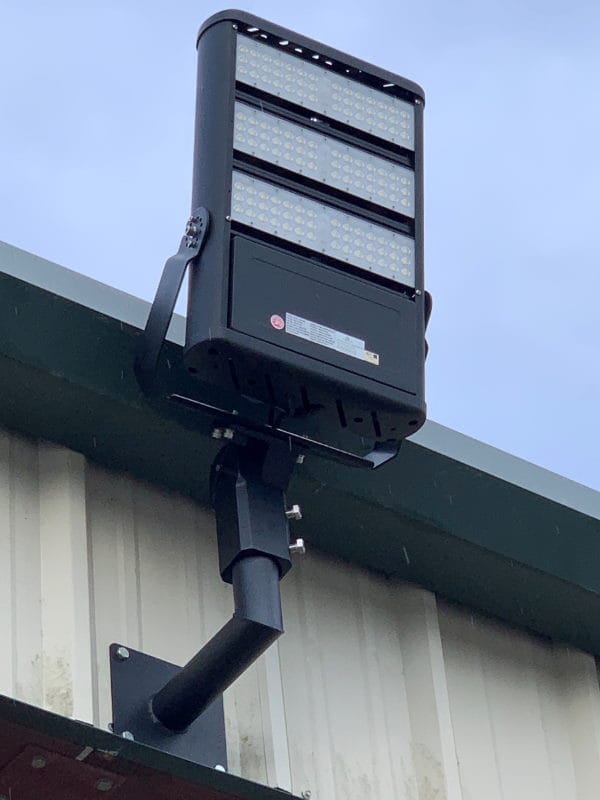
It is a fixture selected for demanding work environments, long run hours, mounting height, and environmental exposure.
Industrial Light Fixture Guide
An industrial light fixture is built for demanding spaces, not just for an industrial look. Warehouses, plants, shops, processing areas, yards, and loading zones may expose fixtures to dust, vibration, heat, moisture, impacts, dirty power, long run hours, and difficult service access. The fixture has to match the environment and the task.
What to Check First
- Identify mounting height, task, run hours, temperature, dust, moisture, vibration, and corrosion exposure.
- Check housing, lens, gasket, rating, voltage, surge protection, controls, and service access.
- Use photometric data when uniformity, glare, or safety-critical work matters.
Application Decision Table
| Use Case | Practical Guidance |
|---|---|
| Warehouse or plant | Use durable housings, efficient optics, and serviceable drivers. |
| Wet or washdown area | Check ingress rating, gasket design, corrosion resistance, and cleaning method. |
| High-vibration area | Review mounting hardware, fixture weight, and listing for the application. |
What Makes It Industrial
- Robust housing and mounting.
- Thermal design for long run hours.
- Lens and optics suited to the task.
- Environmental ratings matched to the space.
- Controls and wiring that fit the facility.
Common Mistakes to Avoid
- Buying a decorative industrial-style fixture for a real industrial environment.
- Ignoring heat, dust, vibration, and service access.
- Choosing brightness before defining the task and layout.
What Makes a Fixture Industrial?
An industrial light fixture is built for tougher spaces than a decorative or light-commercial fixture. The important differences are not cosmetic. Industrial lighting is selected around mounting height, ambient temperature, dust or moisture exposure, voltage, impact risk, glare control, service access, and the amount of light needed at the work surface.
| Environment | Common fixture choice | What to verify |
|---|---|---|
| Warehouse or shop | LED high bay, low bay, or linear strip. | Mounting height, aisle spacing, lumen package, and glare. |
| Manufacturing area | Rugged high bay or vapor-tight fixture. | Heat, dust, vibration, lens material, and controls. |
| Exterior industrial yard | Area light, flood light, or wall pack. | Wet rating, optics, pole or wall mounting, and spill light. |
Build Quality: Materials That Survive the Floor
An industrial fixture lives in harsh conditions — dirty power, corrosive atmospheres, high ambient heat, and the constant vibration of heavy machinery. The build has to earn its keep, because upgrading commercial and industrial lighting is only worth the effort if it lasts and cuts maintenance. A few things separate a real industrial fixture from an industrial-styled one:
- Higher-grade components. Rigorous, around-the-clock duty demands parts rated to withstand the environment, not consumer-grade internals.
- More aluminum. Aluminum dissipates heat far better than plastic, steel, or ceramic and carries a better weight profile, and in humid or corrosive plants a higher aluminum content lowers the risk of rust. Good thermal management is what protects the LED and the driver, so it is the single biggest driver of fixture life.
- Tempered borosilicate glass or premium acrylic. Borosilicate glass resists thermal expansion because its boron trioxide gives it a low coefficient of thermal expansion, so it will not expand and fail under high heat. Where precise optics matter, high-end acrylic can be engineered to take heat without yellowing. It is hard to tell good from bad by eye, so buy a proven brand.
- Excellent assembly and finish. An industrial fixture is not built to be admired, but tight assembly and a clean finish signal quality control and hold up after installation.
Certification: UL and DLC
Look for a UL (Underwriters Laboratories) listing — it confirms the fixture has been tested and approved for the market. Most industrial LEDs are also DLC listed; choosing DLC Premium fixtures is the simplest way to confirm a proven product and to qualify for utility rebates.
Serviceability and Spare Parts
Harsh duty means fixtures eventually need service, so confirm two things before buying. First, accessibility — an accessible compartment makes it possible to swap a lens, photocell, driver, or housing without pulling the whole fixture. Second, parts and warranty — are spare drivers and parts readily available, and is the warranty easy to use if a component fails? A fixture you cannot service is a fixture you replace.
Optics and Beam Angle
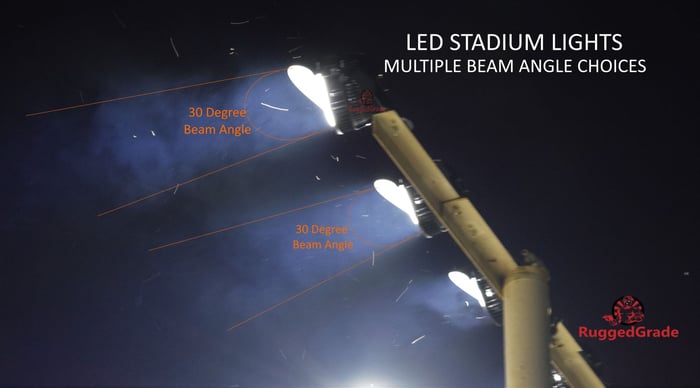
Every fixture should be installed for a reason, and uniformity is the most important measure of a lighting job. The beam angle has to suit the mounting height and the task — a wide flood and a tight spot do very different work from the same pole. Do not guess: talk to a lighting designer about the beam angles and intensity you need at that height. High-output fixtures such as LED stadium lights use precise acrylic optics to place light exactly where it is needed.
Where Industrial Fixtures Are Used
Industrial lighting is multifunctional, but the application defines the fixture. A light for a manufacturing floor is not a light for a restaurant: the industrial fixture prioritizes brightness, reach, and reliability, while a light-commercial fixture prioritizes ambiance. Three demands stand out:
- Outdoor duty. Running 24/7, 365 days a year takes a toll. An industrial-grade street, area, or parking-lot fixture has to deliver light with minimal downtime in every season.
- Large buildings and security. Sufficient, well-placed light lets security cover a facility and doubles as an architectural asset, while a well-lit workspace raises efficiency and morale. Avoid over- or under-lighting: match the level to the task.
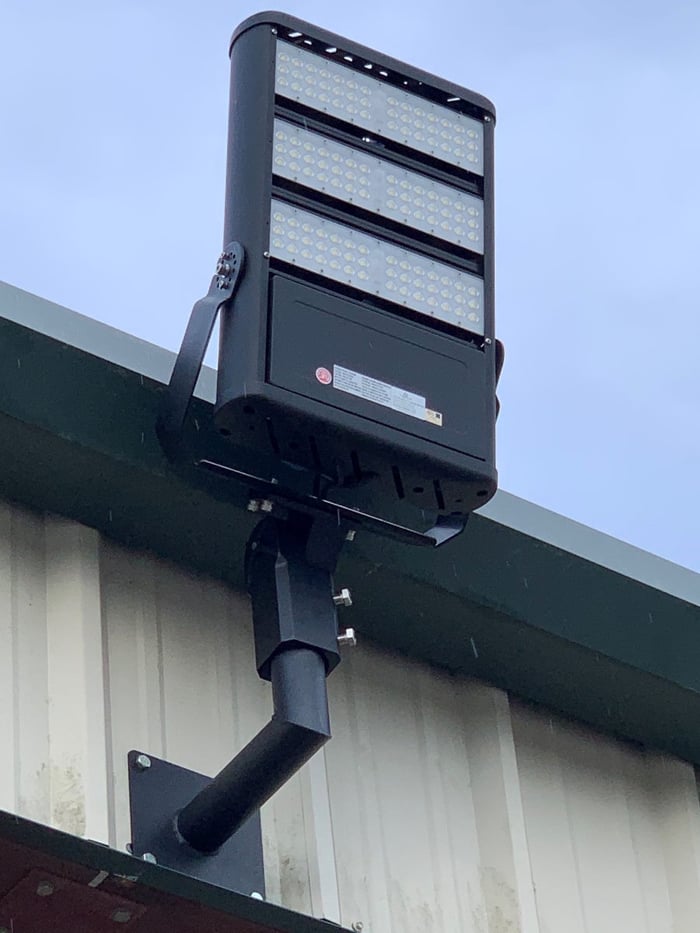
- Mounting integrity. Confirm the mounting surface can carry the fixture's weight before selecting it — the structure often decides what you can install.
More Details to Consider
An industrial light fixture is defined by application demands, not appearance. Look at heat, dust, moisture, vibration, corrosion, impact risk, voltage, mounting, optics, controls, and service access before choosing a fixture.
Housing and lens materials matter because industrial spaces can be hard on equipment. Aluminum housings, sealed lenses, gaskets, corrosion-resistant finishes, surge protection, and accessible drivers can reduce downtime when they are matched to the environment.
A fixture should also match the work. Warehouses, manufacturing lines, washdown areas, loading zones, and yards all need different light levels and distributions. Use photometrics when uniformity, safety, or inspection quality matters.
Frequently Asked Questions
- What is an industrial light fixture?
- It is a fixture selected for demanding work environments, long run hours, mounting height, and environmental exposure.
- Is industrial style the same as industrial grade?
- No. Industrial style describes appearance; industrial grade describes performance and suitability.
- Do industrial fixtures need special ratings?
- Sometimes. Wet, dusty, corrosive, high-heat, or classified areas need closer rating review.
- What should I compare first?
- Compare the task, environment, mounting, delivered light, and service access before style or wattage.

Ready to Upgrade Your LED Lighting?
Our lighting specialists can help compare fixtures, confirm light levels, and quote products that fit the site.
Call 800-674-9420 or email [email protected]
Monday-Friday, 8am-5pm PST

About the Author
Dara Greaney is founder and CEO of LED Light Expert with deep expertise in commercial LED lighting, retrofits, and photometric planning.
Editing by David Peguero

Trusted by Thousands
Our customers love us — and we love them back.


-
 Free Shipping
On orders over $49.00
-
 Free Extended Warranty
Up to 7 Years Free Warranty On LED Lights
-
100% Satisfaction Guarantee
