


Quick Answer
A 120V circuit normally uses one hot and one neutral. A 240V load normally uses two hot legs. In a 208Y/120V system, 208V is measured line-to-line between two hot legs, while 120V is line-to-neutral. In a 480Y/277V system, 277V is one hot leg to neutral, while 480V is line-to-line between hot legs; a three-phase 480V load uses three hot legs. Always follow the LED driver's voltage label and wiring diagram, and use a licensed electrician for multi-phase or high-voltage work.
Is it 2 Hot Legs — Knowing whether its one or two hot legs — 277v 480v: 2 hot legs explained
How do you wire an LED Light with two hot legs?
Things to Consider When Wiring LED Lights with Two Hot Legs
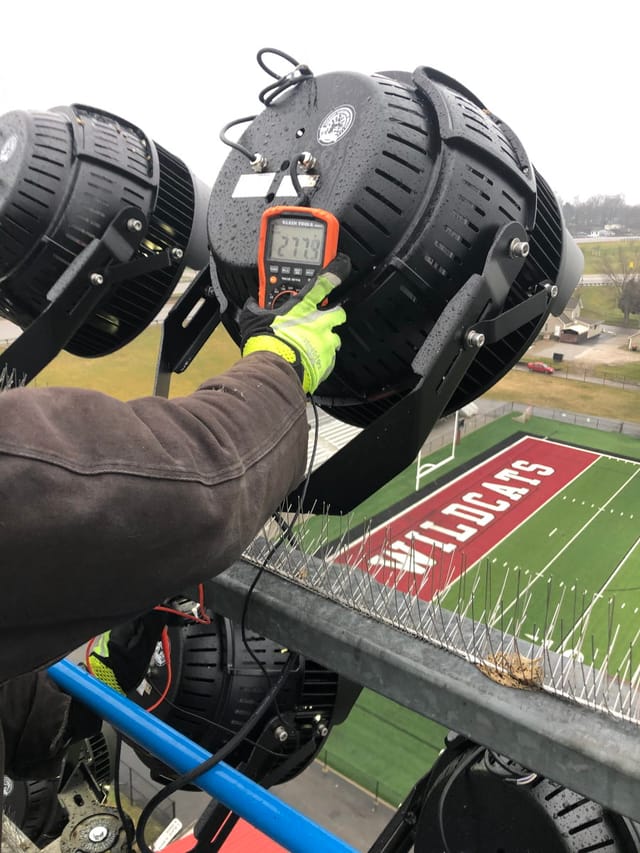
- 480 Voltage Considerations: Ensure that the combined voltage from the two hot legs does not exceed the specified voltage range of the fixture. In 480v systems, each hot leg might sometimes approach 277v (does not make sense, we know — see the image for example) and combined at 490+ volts. This situation could push the driver beyond its allowable tolerance (usually up to 5% more than its rated capacity), leading to driver failure. If this is the case, you'll need to reduce the incoming power.
- Do not run on single hot leg: While technically possible, running the LED off a single hot leg is inadvisable. This can introduce high surges and dirty power that can damage the driver. The LED drivers need stability so reduce the system voltage to be under the range and use both hot legs.
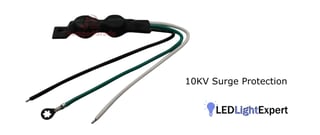
- Surge Protection: It's essential to protect your LED installation from power surges, which can significantly reduce the life of your fixtures. Ensure you have surge protection measures in place, both at the breaker and at the fixture. For outdoor installations, also add surge protection at the pole. Two locations for indoor and three for outdoor.
Is 120v 2 hots?
Is 208v 2 hots?
Is 240v 2 hots?
Is 277v 2 hots?
Is 480vac 2 Hot Legs?
Which versions of 480v that use two hot legs?
- 480 V single split-phase, which is a rare and obsolete service that features a neutral and two hot legs, 480 V to each other, and 240 V each to the neutral. This service was used for large single-phase loads such as elevators or welders.
- 480 V high-leg delta, which is a variation of the 240 V high-leg delta system that uses higher voltages. This service has three phases with 480 volts phase-to-phase for motor loads, and 240 volts for lighting loads by use of a center-tapped transformer; two of the phases are 240 volts to neutral, and one is 416 volts to neutral. This service is also uncommon and mostly found in older industrial facilities.
Which version of 480v uses one hot leg?
Is a 480v three phase 2 hots?
Which voltage is 3 phase?
Which Voltages use Two Hot Legs?
- 240 V single split-phase, which is the most common residential and small commercial service in Canada and the U.S. This voltage features a neutral and two hot legs, 240 V to each other, and 120 V each to the neutral.
- 208 V three-phase, which is another common service for commercial and industrial applications. This voltage has three hot legs, 208 V to each other and 120 V each to the neutral.
- 240 V high-leg delta, which is an older but still widely used system for motor loads and lighting loads. This voltage uses three phases with 240 volts phase-to-phase for motor loads, and 120 volts for lighting loads by use of a center-tapped transformer; two of the phases are 120 volts to neutral, and one is 208 volts to neutral.
480v Schematic and Explanation
         +480V (Hot Leg 1)
          |
          |
   +---------------------+
   |                     |
   |    Light Fixture    |
   |                     |
   +---------------------+
          |
          |
          Ground (GND)
          |
          |
         -480V (Hot Leg 2)
- "Hot Leg 1" provides the +480V potential.
- "Hot Leg 2" provides the -480V potential. (It's worth noting that in some contexts, you might not see it described as -480V, but rather just the second hot leg. But to understand the potential difference, we'll label it this way.)
- The light fixture is connected between the two hot legs, so it operates on the full 480V difference between the two hot legs.
- The "Ground" wire provides safety, ensuring that any unintentional current (due to a fault, for instance) has a path to the earth, reducing the risk of electric shock or fire.
Safety Boundary for Hot-Leg Questions
Hot-leg questions are useful for choosing the right LED driver voltage, but they are not a DIY wiring permission slip. OSHA electrical guidance emphasizes qualified-person work practices around energized parts and testing. For lighting projects, confirm the service voltage, neutral availability, grounding, breaker type, fixture label, and local code with a qualified electrician before changing wiring.
| Common question | Safe next step |
|---|---|
| Does this fixture need neutral? | Check the fixture label and wiring diagram, then verify the actual circuit. |
| Is 208V two hot legs? | Confirm the building system and measure correctly with rated test equipment. |
| Can a 120-277V driver run here? | Match the driver range to measured voltage and the wiring method. |
Hot Legs FAQ
No. A 120V system has a single hot wire and a neutral, with 120V difference between hot and ground. It powers smaller residential loads. Sometimes described as a two-phase system where the voltage difference between the two phases is zero, but in practical terms it’s single hot.
Not in single phase. Yes in three-phase. The 208V comes from a Wye configuration: 120V × 1.732 (square root of 3) = 208V between any two of the three legs. Each leg measures 120V to ground.
Yes. 240V is a split-phase (sometimes called two-phase) system with two hot legs measuring 240V between them and 120V each to ground/neutral. Most common residential and small commercial service in the U.S. and Canada.
Yes. 277V uses two hot legs measuring 277V between them. Common in commercial lighting because it lets fixtures run at a higher voltage with lower amperage on the same circuit.
Usually yes, hard to do with one hot. Depends on whether it’s a 277/480 or just 480VAC. The voltage between each hot wire and ground is typically 277V; voltage between the two hot wires is 480V. Two notable variants: 480V single split-phase (rare) and 480V high-leg delta (older industrial).
No, three-phase has three hot wires separated by 120 degrees. Each phase to ground measures 277V, and any two phases to each other measure 480V. All three legs are "hot" so it’s three hots, not two.
More Details to Consider
Is it 2 Hot Legs - Knowing whether its one or two hot legs - 277v 480v: 2 hot legs explained. When dealing with LED lighting installations, one common query pertains to wiring LED drivers and fixtures with two hot legs. Proper understanding and approach to this scenario are crucial for the optimal functioning and longevity of your LED system. How do I wire an LED Light with two hot legs?
If you are using a commercial grade fixtures or bulbs, such as any RuggedGrade or LSi branded ones that have a voltage range (standard 100-277v) or (high voltage 277-480vac) then they can accept two hot wires. Connect one to the white and one to the black. This range means it has at least a decent driver inside. (preferably fully isolated, but not necessarily) Better LED drivers work as a transformer and convert the power into DC for the LED board. If you see a single voltage on residential fixtures like any Hetria branded ones, then it cannot accept two hot wires.
Things to Consider When Wiring LED Lights with Two Hot Legs. • 480 Voltage Considerations: Ensure that the combined voltage from the two hot legs does not exceed the specified voltage range of the fixture. In 480v systems, each hot leg might sometimes approach 277v. (does not make sense, we know, see the image for example) and combine to 490+ volts. This situation could push the driver beyond its allowable tolerance (usually up to 5% more than its rated capacity), leading to driver failure. If this is the case, you'll need to reduce the incoming power. • Do not run on single hot leg: While technically possible, running the LED off a single hot leg is inadvisable.
This can introduce high surges and dirty power that can damage the driver. The LED drivers need stability so reduce the system voltage to be under the range and use both hot legs. • Surge Protection: It's essential to protect your LED installation from power surges, which can significantly reduce the life of your fixtures. Ensure you have surge protection measures in place, both at the breaker and at the fixture. For outdoor installations, also add surge protection at the pole.
Two locations for indoor and three for outdoor. A 120V system is not typically considered to have two "hot" wires. It is characterized by a single-phase electrical power system where there's a 120V difference between the hot wire and ground. This system powers smaller electrical loads such as lights and appliances.
Notably, it is a true single-phase circuit: one hot conductor and one neutral. In the realm of 208V systems, single-phase configurations don't involve dual hots. However, for three-phase variants, another common service for commercial and industrial applications, the 208V is the result of two 120V legs that sit 120 degrees apart. Deriving from the three-phase, this odd voltage comes from the calculation 120V x 1.732 (the square root of 3) = 208V, commonly seen in a Wye configuration.
The voltage difference between the hot wires in such a system stands at 208V, with each hot wire to the ground registering 120V. Yes, 240V configurations predominantly involve dual hots, in what is properly called a split-phase system. In a 240V system, the two phases are usually referred to as "hot" wires, as they carry the electrical current that powers the load. With a voltage difference of 240V between these phases, each hot wire in relation to the ground measures 120V.
The typical setting for such systems is a center-tapped split-phase transformer. In a 240V system, the voltage between each hot wire and ground is typically 120V. However, the voltage between the two hot wires is 240V, which is why it is often referred to as a 240V system. is 277v 2 hots? Usually no. 277V is normally a single hot leg to neutral - it is the phase-to-neutral voltage of the common 480Y/277 three-phase system.
In a 480Y/277 system, each hot conductor measures 277V to neutral or ground, and 480V to another hot. If your meter shows 277V between two conductors and neither one is the neutral, verify the service type before wiring anything. Depends on whether it's a 277/480 or just 480vac.
Answer is usually yes, hard to do with 1 hot. In a 480VAC system, the voltage between each hot wire and ground is typically 277V. However, the voltage between the two hot wires is 480V, which is why it is often referred to as a 480VAC system. 480VAC systems can be a tad more intricate, dependent on their specific type - be it 277/480 or solely 480VAC.
The key takeaway is that such systems generally involve dual hots. A simple calculation, 277 times the square root of 3, or (277* 1.732) is how those get 480vac. This setup comes in both three-phase, four-wire configurations. The 480VAC stands as the phase-to-phase voltage potential, while 277V emerges as the difference between a phase conductor and the neutral.
Two noteworthy versions of 480V systems include: 480V Single Split-Phase: A rare service featuring a neutral and two hots. This setup was primarily adopted for high-consumption single-phase loads. 480V High-Leg Delta: A system version with higher voltages.
This framework operates three phases, directing 480V phase-to-phase for motor loads and 240V for lighting loads using a center-tapped transformer. Which versions of 480v that use two hot legs? • 480 V single split-phase, which is a rare and obsolete service that features a neutral and two hot legs, 480 V to each other, and 240 V each to the neutral. This service was used for large single-phase loads such as elevators or welders. • 480 V high-leg delta, which is a variation of the 240 V high-leg delta system that uses higher voltages. This service has three phases with 480 volts phase-to-phase for motor loads, and 240 volts for lighting loads by use of a center-tapped transformer; two of the phases are 240 volts to neutral, and one is 416 volts to neutral.
This service is also uncommon and mostly found in older industrial facilities. All 480v systems use two or three hot legs, depending on whether they are single-phase or three-phase. The only way to get one hot leg from a 480v system is to use a transformer to step down the voltage to a lower level, such as 240v or 120v. No, a 480V three-phase electrical power system is not two hots.
A three-phase system is a system that has three voltage sources that are separated by 120 degrees. Each phase in a three-phase system is considered a "hot" wire, as it carries electrical current. In a 480V three-phase system, the voltage between each phase and ground is typically 277V. However, the voltage between the three phases is 480V, which is why it is often referred to as a 480V three-phase system.
The three phases are usually referred to as "hot" wires, as they carry the electrical current that powers the load. '. Three-phase electrical power systems are systems that have three voltage sources that are separated by 120 degrees. In a three-phase system, the voltage between each phase and ground is typically the same as the voltage in a single-phase system, such as 120V or 240V. However, the voltage between the three phases is typically three times the voltage between each phase and ground.
For example, a three-phase system with a voltage of 240V between each phase and ground would have a voltage of 720V between the three phases. This is often referred to as a 480V three-phase system, as the voltage between the three phases is 480V. Similarly, a three-phase system with a voltage of 120V between each phase and ground would have a voltage of 360V between the three phases, which is often referred to as a 240V three-phase system. Which Voltages use Two Hot Legs? • 240 V single split-phase, which is the most common residential and small commercial service in Canada and the U. S.
This voltage features a neutral and two hot legs, 240 V to each other, and 120 V each to the neutral. • 208 V three-phase, which is another common service for commercial and industrial applications. This voltage has three hot legs, 208 V to each other and 120 V each to the neutral. • 240 V high-leg delta, which is an older but still widely used system for motor loads and lighting loads. This voltage uses three phases with 240 volts phase-to-phase for motor loads, and 120 volts for lighting loads by use of a center-tapped transformer; two of the phases are 120 volts to neutral, and one is 208 volts to neutral. 480v Schematic and Explanation. +480V (Hot Leg 1). |. |. +---------------------+. |. | Light Fixture |. |. +---------------------+. |. |.
In this basic representation: "Hot Leg 1" provides the +480V potential. "Hot Leg 2" provides the -480V potential. (It's worth noting that in some contexts, you might not see it described as -480V, but rather just the second hot leg. But to understand the potential difference, we'll label it this way. ). The light fixture is connected between the two hot legs, so it operates on the full 480V difference between the two hot legs. The "Ground" wire provides safety, ensuring that any unintentional current (due to a fault, for instance) has a path to the earth, reducing the risk of electric shock or fire.
Real-world applications might have more complexity, including a neutral wire, switches, protective devices, etc. If you're looking to install, design, or troubleshoot electrical systems, it's crucial to work with a professional or electrical engineer for detailed guidance and safety considerations.
Frequently Asked Questions
- Is 120V two hot legs?
- No. A standard 120V circuit uses one hot conductor and one neutral conductor, plus equipment ground.
- Is 208V two hot legs?
- A 208V single-phase load on a 208Y/120V system is typically connected line-to-line across two hot legs. Each hot to neutral is about 120V. A 208V three-phase load uses three hot legs.
- Is 240V two hot legs?
- Yes in the common North American split-phase system. A 240V load connects across L1 and L2. Neutral is only needed if the equipment also uses 120V.
- Is 277V two hot legs?
- No in the common 480Y/277V lighting system. 277V is normally one phase conductor to neutral. 480V is the line-to-line voltage between phase conductors.
- Can an LED fixture use two hot legs?
- Only if the LED driver label and wiring diagram show the voltage range and input configuration are allowed. Multi-voltage drivers may accept line-to-line input, but single-voltage residential fixtures often cannot.
Related Articles

About the Author
Dara Greaney is founder and CEO of LED Light Expert with deep expertise in LED driver selection, multi-voltage wiring, and surge protection. LinkedIn · X (Twitter)
Editing by David Peguero
Wiring questions on a 277V or 480V install?
Our team helps spec the right multi-voltage driver, surge protection, and breaker sizing for your project. Talk to a specialist before you pull conductors.
Call 800-674-9420 or email [email protected]
Monday–Friday, 8am–5pm PST
1 Comments
Daniel Dejeu
The 240/480V system is not obsolete. FDOT is adopting 240/480 V in all their lighting systems, moving away from 480V to ground systems.
Sales
You're right — the 240/480V system is not obsolete. In fact, FDOT is adopting it as a new standard, moving away from traditional 480V-to-ground systems. The 240/480V delta setup offers improved safety, reliability, and lower voltage to ground, making it easier to maintain and safer for field crews. So yes, it’s still “2 hot legs” — but the key is knowing which system you're working with and the voltage relative to ground. Please feel free to reach out to us directly at 800-674-9420 or [email protected] for pricing/quotes or product info at any time


