California has led the charge in creating smarter, more energy-conscious building codes, and lighting is a big part of that push. With electricity demand climbing and sustainability taking center stage, the state has put in place strict requirements that impact how lighting is designed, installed, and sold. These regulations aren't just aimed at saving energy, they’re about improving performance, quality, and long-term value in residential lighting.
As part of this effort, California introduced a set of standards under Title 24 that focus specifically on lighting used in homes. These standards help eliminate underperforming products from the market and guide builders, contractors, and homeowners toward more efficient, higher-quality solutions. Whether you’re planning a new build, tackling a remodel, or simply replacing a few fixtures, understanding these rules can save you time, money, and frustration—especially during inspections.
At the center of these lighting requirements is something called JA8. If you’re working on a project that requires code compliance in California, there’s a good chance you’ve come across this term. Below, we break down what JA8 compliance means, how to identify compliant products, and why it matters for your home and your budget.
What Is JA8 Compliance?
If you’re tackling a lighting project in California, you’ve probably come across the term JA8 compliance. But what is JA8 compliance, exactly?
JA8 stands for Joint Appendix 8. It’s part of
California’s Title 24 Building Energy Efficiency Standards, which outline how homes and buildings must be constructed to meet the state’s energy goals. JA8 specifically sets the criteria that lighting products must meet in order to be classified as high efficacy under these codes.
Before JA8 came into play, there was confusion around what “high-efficacy” lighting really meant. Not all LEDs were created equal, and there was no unified testing process to weed out low-quality or underperforming products. JA8 changed that by establishing a clear set of performance standards and a testing protocol approved by the California Energy Commission (CEC).
Why JA8 Exists: Efficiency Meets Performance
The purpose of JA8 is straightforward: to set energy-efficiency and performance requirements for covered lighting products used in California homes. In the past, many energy-saving products failed to deliver on quality. Think of early CFLs that flickered, took time to warm up, or gave off unpleasant color tones. Homeowners were often forced to choose between efficiency and comfort, which led to frustration and poor user satisfaction.
JA8 was created to solve that issue. It is not just focused on reducing energy use; it also sets a higher standard for how lighting should perform in real homes. Every JA8-certified product must pass strict testing by third-party labs approved by the California Energy Commission. This removes guesswork and holds manufacturers to a consistent, verifiable benchmark.
The testing requirements are designed to reflect real-world usage. Products must do more than look good on paper. They have to meet the expectations of people using them every day. That means taking into account:
- Color rendering: Lights must accurately display natural and vibrant colors, especially for skin tones, food, and decor.
- Dimming compatibility: JA8 products must work properly with dimmers, avoiding common issues like flicker or buzzing.
- Flicker levels: Certified lights must produce stable illumination that does not cause discomfort or strain.
- Start-up time: Lighting must turn on instantly, without delays or warm-up periods.
- Performance in enclosed or recessed fixtures: Products must be safe and reliable in low-ventilation settings without overheating or degrading quickly.
By enforcing these standards, JA8 ensures that homeowners no longer have to trade lighting quality for efficiency. It brings both into one solution, improving everyday experiences while reducing energy use.
What Types of Lighting Must Be JA8-Compliant?
Under the California JA8 requirements, certain types of residential lighting must meet JA8 standards. This includes:
- Recessed downlights: These are often installed in ceilings and need to maintain performance even when enclosed, which can trap heat.
- Enclosed fixtures: Fixtures that don’t allow airflow around the bulb must be JA8-rated to avoid overheating and early failure.
- Luminaires controlled by dimmers: Since many homeowners prefer dimmable lighting for ambiance and flexibility, JA8 ensures that certified products dim smoothly without flickering.
- Luminaires in bathrooms, kitchens, garages, and outdoor covered spaces: These areas are considered high-use and are therefore subject to efficiency requirements.
Essentially, if a fixture or bulb is going to be permanently installed in a home and used frequently, chances are it needs to be JA8-certified to pass inspection in California.
"JA8 is about raising the bar. It’s not just saving energy—it’s delivering quality lighting people actually want to live with." - Bill G. - General Manager at LED Light Expert.
Understanding and choosing JA8-compliant products isn’t just ticking a box for code compliance, it’s a smart move for anyone who cares about performance and long-term savings. As the next sections will show, these requirements shape everything from efficacy and flicker to dimming and color quality.
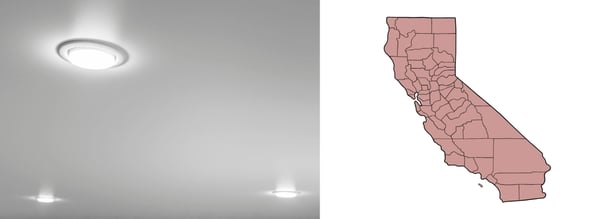
Under the California JA8 requirements, certain types of residential lighting must meet JA8 standards.
Key Requirements for JA8-Compliant Lighting
To meet JA8 compliance, a lighting product must pass a series of performance benchmarks that go far beyond just saving energy. The goal is to ensure that lighting installed in California homes not only uses electricity efficiently but also performs well in real-world settings. Here's a closer look at the main criteria products must meet:
1. High Efficacy (Lumens per Watt)
Efficacy refers to how efficiently a light source converts energy into visible light. Measured in lumens per watt (lm/W), this number tells you how much light you get for the energy used. JA8-compliant products must meet high efficacy thresholds, meaning they deliver strong illumination without wasting electricity.
2. Minimal Flicker
Flickering may not always be visible to the naked eye, but it can lead to headaches, eye strain, and discomfort over time. JA8 standards limit flicker to extremely low levels, ensuring a steady, comfortable light output, even when dimmed.
3. Dimmability
Many lighting environments today demand flexibility. JA8 requires that certified products be compatible with a range of
dimmers, offering smooth, flicker-free dimming across a wide range of light levels. This is especially important in living rooms, bedrooms, and other areas where lighting needs can change throughout the day.
4. Rapid Start Time
Gone are the days of waiting for a bulb to "warm up." JA8-compliant lighting must turn on instantly, which is essential in places like stairwells, entryways, and closets where immediate illumination is a safety factor.
5. Enclosed Fixture Safety
Lighting installed in enclosed or recessed fixtures must operate safely and reliably without overheating. JA8 products are tested to perform well in these conditions, maintaining performance and longevity even in tight or sealed environments.
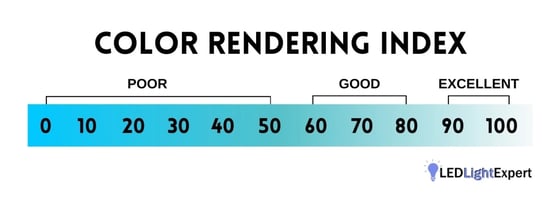
6. High Color Rendering Index (CRI = 90)
Color Rendering Index (CRI) measures how accurately a light source reveals the colors of objects compared to natural light. JA8 requires a CRI of 90 or higher, meaning that skin tones, fabrics, food, and artwork appear more vibrant and true to life under compliant lighting.
7. R9 Value (= 50 for Red Rendering)
The R9 value is a lesser-known but important part of color quality. It specifically measures how well red tones are rendered, critical for lifelike color, especially in skin tones and certain materials. JA8 sets the minimum R9 value at 50, which significantly improves color depth and richness.
JA8 requires a CRI of 90 or higher, meaning that skin tones, fabrics, food, and artwork appear
more vibrant and true to life under compliant lighting.
JA8 vs. Title 24 and Title 20: What’s the Difference?
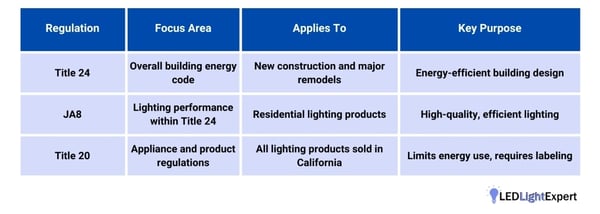
California's energy codes can be complex, and it’s easy to confuse the different parts. JA8, Title 24, and Title 20 all relate to lighting in some way, but they each serve different purposes. Here’s a breakdown of how they compare:
- Title 24: This is California’s comprehensive Building Energy Efficiency Standards. It covers all aspects of residential and commercial construction, including insulation, HVAC, windows, and lighting. JA8 is just one part of Title 24.
- JA8: A section within Title 24, Joint Appendix 8, focuses solely on residential lighting quality and performance. It defines what qualifies as high-efficacy lighting and sets the technical requirements for certification.
- Title 20: This is California’s Appliance Efficiency Regulation, which governs the energy use of appliances and electrical products, including light bulbs. If a product isn’t Title 20 compliant, it can’t legally be sold in California, regardless of its JA8 status.
Quick Comparison:
Understanding how these pieces fit together helps avoid costly project delays or failed inspections. For lighting professionals and homeowners alike, being aware of JA8 and its relationship to California’s other energy codes is essential for staying compliant and choosing lighting that works well and lasts.
How to Identify JA8-Compliant Products
When shopping for lighting in California, it’s important to know how to recognize products that meet JA8 compliance standards. Luckily, there are a couple of simple ways to verify that a product qualifies.
First, look for the JA8 marking on the packaging. This usually appears as:
- JA8-2016-E (for products approved under the 2016 standard, rated for enclosed fixtures)
- JA8-2019 (for products certified under the updated 2019 requirements)
These labels mean the product has passed testing at an approved lab and meets the current JA8 standards for performance and efficiency.
You can also cross-reference the product in the
California Energy Commission (CEC) appliance database. This official list includes all lighting products that have been tested and approved for use under California’s Title 24 and Title 20 codes.
Verifying a product through the CEC list ensures you’re getting lighting that will pass inspection and perform well over time.

When shopping for lighting in California, it’s important to know how to recognize products that
meet JA8 compliance standards.
Benefits of JA8-Compliant Lighting
Meeting JA8 requirements isn’t just about following rules. There are real benefits for contractors, homeowners, and the environment.
- Code Compliance: If you’re building or remodeling in California, your project must pass inspections. JA8-compliant lighting is required in specific areas of the home. Using non-compliant fixtures can lead to delays, fines, or the need to redo installations.
- Energy and Cost Savings: JA8 products are more energy-efficient, which translates to lower electricity bills. While the initial cost may be slightly higher, the long-term savings usually outweigh the upfront price.
- Better Lighting Quality: With a high CRI, minimal flicker, and smooth dimming, JA8 fixtures offer a much better experience than lower-quality alternatives. You’ll notice improved comfort and more natural color rendering throughout your home.
- Environmental Impact: Reducing energy usage doesn’t just help your wallet; it helps the planet. JA8 encourages the use of lighting that supports California’s broader climate goals by cutting down on greenhouse gas emissions and power grid demand.
With a high CRI, minimal flicker, and smooth dimming, JA8 fixtures offer a much better
experience than lower-quality alternatives.
Common Applications for JA8-Compliant Lighting
JA8-certified lighting plays a vital role in meeting California's energy code, especially in residential settings. The standards outlined in Joint Appendix 8 are most often applied in new construction, remodels, and additions, but their benefits make them a smart option for almost any residential lighting upgrade.
Here are the most common applications where JA8-compliant products are either required or strongly recommended:
New Construction Projects
In new homes, Title 24 requires JA8-rated lighting in nearly every space. This includes general ambient lighting, task lighting, and any fixtures that are hardwired. Builders and developers must use JA8-compliant fixtures and lamps to meet inspection requirements and avoid costly redos.
Kitchens and Bathrooms
These two rooms are considered high-use areas, which means energy efficiency and performance are especially important.
Commercial kitchens often rely on recessed lighting for both ambient and task needs, while bathrooms may feature enclosed ceiling lights, wall sconces, or mirror lights—all of which must be JA8 certified to comply with code. Since these areas also benefit from flicker-free dimming and high CRI (for accurate color reflection in grooming or cooking), JA8 lighting improves function and appearance.
Closets, Hallways, and Garages
Smaller or enclosed spaces like walk-in closets and garages often use fixtures that enclose the light source. This makes JA8 certification essential for safety, since these products are tested to withstand enclosed conditions without overheating or degrading quickly. Garages, in particular, may have ceiling-mounted lights that need to operate in various temperatures and remain efficient and safe.
Indoor-Outdoor Transition Areas
Covered patios, porches, balconies, and carports are all partially protected from the elements, but still require lighting that performs reliably and efficiently. JA8-compliant outdoor fixtures help meet code in these transitional zones while also offering better color clarity and longevity in varying conditions.
Retrofits and Remodels
If you’re updating a home in California and altering more than 10% of the lighting load in a room, JA8 rules may apply. Retrofitting with certified lamps or fixtures ensures your upgrades are code-compliant and often qualifies for utility rebates or energy incentive programs.
Even if your project isn’t strictly required to use JA8 lighting, it’s still a smart choice. The certified products typically last longer, provide more accurate color rendering, and use significantly less energy. That means better lighting experiences now, and savings that continue for years.
JA8-compliant outdoor fixtures help meet code in these transitional zones while also
offering better color clarity and longevity in varying conditions.
Conclusion
Understanding what JA8 compliance means is essential if you’re building or renovating in California. These standards go beyond energy savings—they ensure a higher quality of light, longer product lifespan, and better overall performance. Whether you're a contractor trying to pass inspection or a homeowner investing in efficient upgrades, using JA8-certified lighting is a smart move.
California continues to lead with forward-thinking energy policies, and JA8 is just one part of that vision. By knowing what to look for and where compliance applies, you can make informed decisions that benefit your home, your wallet, and the environment.





 Free Shipping
 Free Extended Warranty