Quick answer: Commercial kitchens need NSF-listed, IP65+ LED fixtures with CRI 80–90+ and 4000K–5000K color temperature. Use vapor-tight fixtures in dish areas and over cook lines, high-bay or recessed troffers for general coverage, under-cabinet task lights at prep stations, and code-compliant emergency exits throughout. Target 5,000–8,000 lumens per prep-area fixture.
Lighting in a commercial kitchen isn’t just about seeing what you’re doing—it’s about safety, productivity, and staying compliant with regulations. Whether you're running a fast-paced restaurant, a large-scale catering business, or an institutional kitchen, poor lighting can slow things down and lead to mistakes. You need bright, consistent illumination that helps your team move efficiently and safely.
Hot pans, sharp knives, and slick floors don’t mix well with shadows or flickering bulbs. Good
commercial kitchen lighting minimizes accidents, improves food quality control, and even helps your staff feel more alert during long shifts. The lighting setup can influence the overall mood and performance of your back-of-house team in ways most owners overlook.
Why LED Lighting Is Ideal for Commercial Kitchens
LED lights have quickly become the standard for restaurant kitchen lighting—and for good reason. They check all the boxes that matter in a demanding, often chaotic environment like a commercial kitchen.
Energy Efficiency & Cost Savings
LEDs use significantly less electricity than traditional fluorescent or halogen bulbs, which translates into real savings. Kitchens typically have their lights on 12–18 hours a day, and that kind of energy consumption adds up fast. Swapping to LEDs cuts down utility costs without sacrificing light quality.
Tough Enough for Heat and Moisture
Commercial kitchens are high-heat, high-moisture zones. Not every light fixture is built for that kind of stress, but LEDs are. They run cooler than traditional lighting and are available in fixtures specifically rated for wet or damp environments. That makes them a smart long-term investment for areas around dishwashing stations, cooking lines, or anywhere heat and steam are constant.
Bright, Uniform Illumination
In a kitchen, shadows are the enemy. A dim spot on the prep table or an unevenly lit cooktop creates risk. LEDs offer consistent, even lighting across work surfaces so that chefs and staff can see clearly without eye strain. The result is a safer, more accurate working environment.
Long Lifespan, Less Maintenance
No one wants to shut down the kitchen to swap out a lightbulb. Quality commercial kitchen lights can last up to 100,000 hours or more. That’s years of service without needing constant replacements. Less maintenance means fewer interruptions to your workflow and less time on a ladder.
Good for the Planet, Too
If you're aiming to meet sustainability goals or just lower your carbon footprint, LED lighting is a smart step forward. They contain no mercury, emit less heat, and reduce greenhouse gas emissions indirectly through energy savings. Many businesses are switching to LEDs not just for the bottom line—but because it's the right thing to do.
LEDs are built for the pace, pressure, and purpose of a commercial kitchen. They're efficient, durable, and reliable—qualities every kitchen operator can get behind.
LEDs use significantly less electricity than traditional fluorescent or halogen bulbs, which
translates into real savings.
Key Factors to Consider When Choosing LED Kitchen Lighting
Choosing the right LED setup isn’t just a matter of picking the brightest bulb off the shelf. Every fixture in a commercial kitchen should serve a purpose—enhancing safety, helping staff work efficiently, and standing up to the unique demands of the space. Here's what to look for when selecting commercial kitchen lighting that truly works for your operation.
Brightness and Lumen Output
In task-heavy environments like a commercial kitchen, brightness isn’t optional—it’s essential. Unlike ambient lighting in a dining area, back-of-house lighting needs to eliminate shadows and illuminate every detail.
- Prep Areas: These zones require high visibility to handle knives, slicers, and other sharp tools safely. Aim for 5,000–8,000 lumens per fixture, depending on ceiling height and room size.
- Cooking Zones: These benefit from 4,000–6,000 lumens, but avoid placing fixtures directly above heat sources unless they’re rated for high temperatures.
- Storage and Walk-ins: These spaces can get by with 2,000–4,000 lumens, but choose fixtures that start instantly and work well in cold or damp conditions.
Remember, more lumens doesn’t always mean better. It's about distributing light evenly where it’s needed most.
Color Temperature
Color temperature affects more than just aesthetics—it impacts performance.
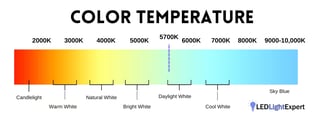
The Kelvin (K) scale measures how "warm" or "cool" a light appears. Lower numbers (2700K–3000K) give off a yellowish glow, while higher numbers (4000K–5000K) emit a brighter, bluish-white light.
For commercial kitchens, cooler color temperatures (4000K–5000K) are ideal. They:
- Mimic daylight, improving alertness and visibility
- Help staff see ingredients more clearly
- Create a cleaner, more sterile-looking environment
A consistent color temperature across the kitchen also reduces eye strain and keeps everyone on the same visual page.
CRI (Color Rendering Index)
The Color Rendering Index (CRI) tells you how accurately a light source displays colors compared to natural sunlight. This matters more than you might think in food service.
With low CRI, red meat can look gray, vegetables look dull, and plated dishes lose their visual appeal. A higher CRI helps chefs assess doneness, spot imperfections, and present food at its best.
For restaurant kitchen lighting, look for a CRI of 80+ at minimum. If food presentation is critical (such as in open kitchens or food photography settings), go with CRI 90+.
Ingress Protection (IP) Rating
Commercial kitchens are filled with steam, grease, dust, and constant cleanup. You need lights that can take a hit and keep performing. That’s where
IP ratings come in.
The IP (Ingress Protection) rating tells you how well a fixture resists solids and liquids. It’s written as IPXY, where:
- X refers to protection from solids (like dust)
- Y refers to protection from liquids (like splashes)
For example:
- IP65: Dust-tight and protected against low-pressure water jets. Great for cooking lines, dishwashing areas, and ceilings.
- IP67: Can handle full water immersion. Ideal for fixtures near sinks or deep cleaning zones.
- IP44: Acceptable for dry storage areas or outside the immediate prep zone.
Choose lights based on where they’ll go, not just how bright they are.
Certifications and Safety Standards
Not all lights are created equal. Look for fixtures with the right certifications to meet safety and hygiene regulations:
- NSF Certified: Required for many food prep areas. These lights are easy to clean and designed to avoid collecting debris.
- UL Listed: Confirms the light meets U.S. safety standards.
- DLC Qualified: Shows that the fixture is energy-efficient and may qualify for rebates.
- Shatterproof / Fire-Resistant: Especially important near cooking lines or open flames.
In a commercial kitchen, shortcuts on safety can turn into major liabilities. Stick with trusted manufacturers and verified specs.
Commercial kitchens are filled with steam, grease, dust, and constant cleanup. You need lights that
can take a hit and keep performing.
Types of LED Commercial Kitchen Lighting
The best kitchen lighting plan uses a mix of fixture types to cover every task and environment. Here’s a breakdown of the most common and useful commercial kitchen lights available.
Vapor-Tight Fixtures
These are built tough.
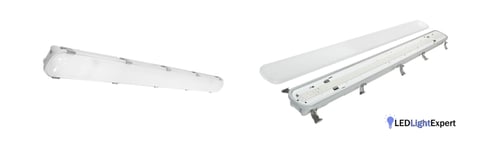
Vapor-tight LED fixtures are sealed against water, dust, and grease—making them perfect for high-moisture zones like dish areas, prep sinks, or kitchens without much ventilation. They're also a smart choice above grills or fryers, where condensation and splatter are common.
Their gasketed design keeps out contaminants, and they’re typically rated IP65 or higher, so you can wash down the space without worrying about short circuits.
Under-Cabinet and Task Lights
Sometimes overhead lighting isn’t enough. Under-cabinet lights shine directly onto cutting boards, prep tables, or ingredient bins, helping staff do precise work without casting shadows.
Look for fixtures with:
- High CRI for accurate color representation
- Cool color temperature (4000K–5000K)
- Slim profiles that don’t trap grease or crumbs
These lights improve focus and accuracy where it matters most—especially in bakeries, delis, and fine-dining kitchens.
High Bay or Ceiling-Mounted Fixtures
If you’ve got a large, open layout—like a production kitchen or commissary—
high bay ceiling LEDs or wide-beam ceiling lights provide the blanket coverage you need.
They’re installed at higher mounting heights (typically 4 meters or more) and distribute light evenly across wide workspaces. Choose models with a diffused lens to reduce glare and flickering.
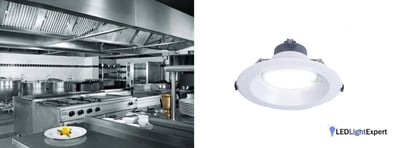
Recessed or Flush-Mounted LEDs
For kitchens where design matters just as much as function—like open kitchens that are visible to diners—
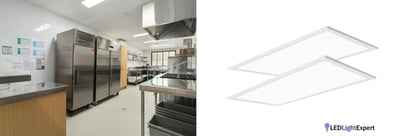
recessed LEDs offer a clean, modern appearance. They sit flush with the ceiling, minimizing visual clutter and making cleanup easier.
These are ideal in newer builds or remodeled kitchens where aesthetics and hygiene both need to be tight.
Emergency Exit and Backup Lights
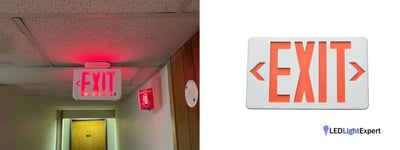
Code compliance isn’t optional. Every kitchen needs emergency lighting and clear exit signs that activate in case of power failure. Many LED models include built-in battery backup so they continue working even if the main grid fails.
Even better,
LED emergency lights require less maintenance and can run up to 90 minutes on backup power—plenty of time to evacuate safely.
Applications by Kitchen Zone
Every part of a commercial kitchen has its own lighting needs. You can’t treat the prep station the same way you treat a dish pit, and lighting should reflect those functional differences. Here's how to match the right type of commercial kitchen lighting to each workspace.
Prep Areas – Task Lighting with High CRI
The prep station is where precision matters most. Slicing, dicing, sorting ingredients—none of that should happen in poor light. Here, bright task lighting is essential.
Use fixtures with:
- CRI of 90+ to accurately see food color and texture
- Color temperature of 4000K–5000K to keep the area bright and clean-looking
- Focused light distribution to avoid casting shadows over cutting boards
Under-cabinet LEDs or adjustable task lights work well here. Mount them close to the work surface, and make sure they're sealed and easy to clean.
Cooking Lines – Heat-Resistant, Durable Fixtures
This area sees constant heat, grease, and movement. Overhead lighting should be high-lumen, well-distributed, and capable of withstanding intense temperatures and airborne contaminants.
Best fixture types:
- High bay or surface-mounted LEDs rated for high heat
- IP65 or higher ingress protection
- Housing made of heat-tolerant materials, such as aluminum or stainless steel
Also, choose shatterproof covers. If a bulb ever breaks, the last place you want glass is in a sauté pan.
Dishwashing Areas – Moisture-Sealed Vapor-Tight Lights
Between steam, splashes, and detergent, the dish area is a hostile environment for standard lights. Vapor-tight LED fixtures are the safest choice here.
Look for:
- IP66 or IP67 rating to handle direct water spray
- Enclosed, gasketed housings to prevent internal corrosion
- Long lifespan to reduce maintenance in this tough-to-reach zone
These fixtures are often ceiling-mounted and linear, providing full illumination over the entire area.
Walk-Ins and Storage – Bright, Energy-Saving Fixtures
In storage areas and walk-in refrigerators, lighting should be energy-efficient, quick to start, and low-maintenance. Cold temperatures can slow down older bulbs, but LEDs perform well even in freezing conditions.
Recommendations:
- Low-wattage LED strip lights or low-bay fixtures
- Instant-on capabilities
- Fixtures with polycarbonate lenses to resist cracking in cold air
Motion sensors are a smart add-on here—they save energy by turning lights off automatically when not in use.
Customer-Facing Kitchen Areas – Aesthetic + Functional Balance
If diners can see into your kitchen (like in many open-kitchen concepts), lighting pulls double duty. It needs to function well for cooking but also look clean, polished, and professional.
Good options include:
- Recessed or flush-mount LEDs for a sleek appearance
- Fixtures with consistent color temperatures
- High CRI to keep dishes looking appetizing even before they leave the line
It’s about blending form and function without cutting corners on safety or code requirements.
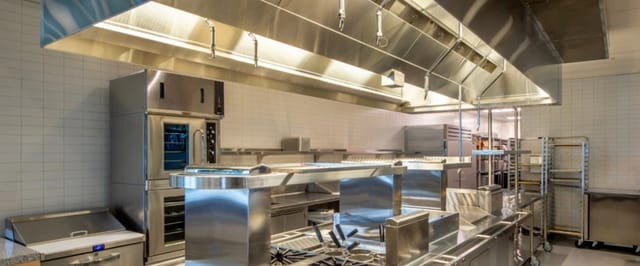
Every part of a commercial kitchen has its own lighting needs
Tips for Installation or Retrofit Projects
Upgrading to LED lighting in a commercial kitchen doesn’t have to mean tearing everything out and starting over. With a little planning, you can get the benefits of better light without disrupting your whole operation.
1. Assess Current Lighting and Energy Use
Start by reviewing:
- What fixtures you have
- How much energy they use
- Where lighting is insufficient or overkill
This helps you identify quick wins—like replacing outdated fluorescent tubes in prep areas or adding task lighting where shadows fall.
Many utility companies offer energy audits and rebates, which can make a retrofit more affordable.
2. Plan Layout by Task and Safety Zones
Your layout should match how your team works. Place high-lumen fixtures where detail work happens. Use wide-distribution lights for general areas. Keep emergency lights near exits and cook lines.
Tips:
- Avoid overlapping beam patterns that create glare
- Use diffused covers to cut down on eye strain
- Place switches or controls in logical zones for easy access
Mapping this out before installation avoids costly rewiring later.
3. Work with Licensed Electricians for Code Compliance
Commercial kitchens have strict rules, especially around fire safety, hygiene, and energy efficiency. Working with a licensed electrician ensures your project:
- Meets local building and fire codes
- Includes approved fixture types (e.g., NSF-rated for food zones)
- Uses grounded, water-resistant connections
Don't risk fines or shutdowns over lighting—get the job done right the first time.
4. Schedule Upgrades During Downtime
Minimize disruptions by timing installs or retrofits:
- Overnight, between service shifts
- During seasonal closings or renovations
- On slower weekdays when labor demands are lighter
Planning ahead means fewer surprises and keeps your staff working smoothly through the upgrade.
Color Selectable 3500K/4000K/5000K - 4 Foot LED Vapor Tight Light - Waterproof IP67 Light
Conclusion: Lighting That Sells
Choosing the right commercial kitchen lights is one of the smartest investments you can make—not just for your budget, but for your team’s safety, speed, and morale. With the right combination of brightness, temperature, protection, and placement, your kitchen can operate more efficiently and more safely.
From vapor-tight fixtures in the dish area to high-CRI task lighting on the line, LED technology gives you flexibility and reliability that older lighting systems just can’t match. It’s not just about seeing better—it’s about working smarter.
Whether you're starting fresh or planning a retrofit, take your time, assess your needs, and partner with professionals who understand the demands of your space. Great lighting might not be the flashiest part of your kitchen, but it's one of the most important.
Commercial Kitchen LED Lights: Buyer and Maintenance Checks
A good decision on commercial kitchen LED lights starts with the real installation conditions, not just the product name. Check the application, mounting height, voltage, light level, glare, controls, wet or dust exposure, service access, and whether a photometric layout or qualified installer is needed before ordering.
| Check | Why it matters |
|---|
| Application | Confirms the fixture, lamp, control, or accessory fits the actual space and task. |
| Mounting and wiring | Prevents fit, voltage, access, and safety problems during installation. |
| Controls and maintenance | Protects energy savings, usability, troubleshooting, and long-term performance. |
Frequently Asked Questions
What color temperature is best for a commercial kitchen?
Use 4000K–5000K (neutral-to-cool white) in commercial kitchens. It mimics daylight, improves alertness during long shifts, helps staff judge food doneness accurately, and creates a cleaner, more sterile visual environment than warmer 2700K–3000K residential tones.
What IP rating do commercial kitchen lights need?
IP65 is the minimum for most kitchen zones — dust-tight and resistant to low-pressure water jets. Use IP66 or IP67 for dishwashing areas, direct wash-down zones, and near sinks. IP44 is acceptable only for dry storage outside the immediate prep zone.
Do commercial kitchen lights need to be NSF certified?
Many food-service inspection codes require NSF-listed fixtures in food prep areas. NSF certification confirms the fixture is constructed without debris-catching gaps, uses cleanable materials, and meets sanitation standards for food zones. Always verify NSF status on fixtures installed over prep surfaces.
What CRI should I look for in restaurant kitchen lighting?
CRI 80+ is the minimum for restaurant kitchens. Choose CRI 90+ for open kitchens visible to diners, food photography, or plating stations where accurate color rendering matters most. Low CRI makes red meat look gray and vegetables appear dull, affecting both quality control and presentation.
How many lumens do commercial kitchen prep areas need?
Prep areas need 5,000–8,000 lumens per fixture for safe knife and slicer work. Cooking zones use 4,000–6,000 lumens (not directly above heat sources unless high-temp rated). Storage and walk-ins can work with 2,000–4,000 lumens, but fixtures must start instantly in cold conditions.
Are vapor-tight lights required in commercial kitchens?
Vapor-tight fixtures are strongly recommended — often required by inspection — for dish areas, above cook lines, and anywhere steam, grease, or splatter occurs. Their gasketed, sealed housings (typically IP65+) prevent moisture ingress and let you wash down the space without damaging the fixture.
Frequently Asked Questions
- What color temperature is best for a commercial kitchen?
- Use 4000K–5000K (neutral-to-cool white) in commercial kitchens. It mimics daylight, improves alertness during long shifts, helps staff judge food doneness accurately, and creates a cleaner, more sterile visual environment than warmer 2700K–3000K residential tones.
- What IP rating do commercial kitchen lights need?
- IP65 is the minimum for most kitchen zones — dust-tight and resistant to low-pressure water jets. Use IP66 or IP67 for dishwashing areas, direct wash-down zones, and near sinks. IP44 is acceptable only for dry storage outside the immediate prep zone.
- Do commercial kitchen lights need to be NSF certified?
- Many food-service inspection codes require NSF-listed fixtures in food prep areas. NSF certification confirms the fixture is constructed without debris-catching gaps, uses cleanable materials, and meets sanitation standards for food zones. Always verify NSF status on fixtures installed over prep surfaces.
- What CRI should I look for in restaurant kitchen lighting?
- CRI 80+ is the minimum for restaurant kitchens. Choose CRI 90+ for open kitchens visible to diners, food photography, or plating stations where accurate color rendering matters most. Low CRI makes red meat look gray and vegetables appear dull, affecting both quality control and presentation.
- How many lumens do commercial kitchen prep areas need?
- Prep areas need 5,000–8,000 lumens per fixture for safe knife and slicer work. Cooking zones use 4,000–6,000 lumens (not directly above heat sources unless high-temp rated). Storage and walk-ins can work with 2,000–4,000 lumens, but fixtures must start instantly in cold conditions.
- Are vapor-tight lights required in commercial kitchens?
- Vapor-tight fixtures are strongly recommended — often required by inspection — for dish areas, above cook lines, and anywhere steam, grease, or splatter occurs. Their gasketed, sealed housings (typically IP65+) prevent moisture ingress and let you wash down the space without damaging the fixture.
Ready to Upgrade Your Lighting?
Our LED lighting experts can help you find the right fixtures for your project.
Call 800-674-9420
Monday–Friday, 8am–5pm PST
or email [email protected]
Dara Greaney is founder and CEO of LED Light Expert with deep expertise in LED fixtures and light design.